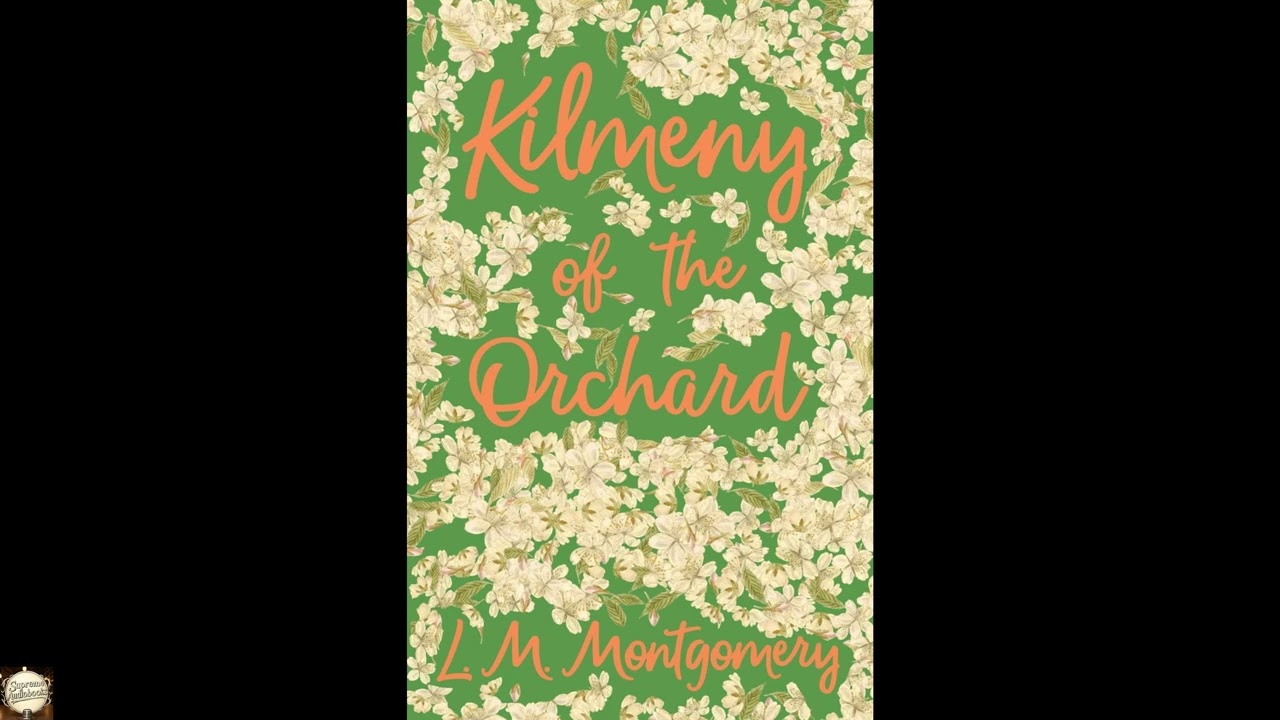
Kilmeny of the Orchard
For those who know L. M. Montgomery primarily through the spirited antics of Anne Shirley, "Kilmeny of the Orchard" offers a different, yet equally enchanting, taste of her beloved Prince Edward Island. Published in 1910, this standalone romance distills Montgomery's gifts for lyrical prose, vivid natural description, and profound human sympathy into a story that, while perhaps less widely known than her flagship series, resonates with a quiet power. It’s a tale steeped in the beauty of unvarnished feeling and the extraordinary nature of ordinary lives, making it a perfect listen for anyone seeking respite from the clamor of the modern world and a gentle reminder of love's unexpected paths. The book asks us to consider what truly constitutes communication, and how the deepest connections can form even in silence. Our story introduces Eric Marshall, a promising young law student whose future seems neatly laid out before him. Driven by ambition and a practical mind, Eric arrives on Prince Edward Island to take up a temporary teaching post in the quaint community of Glen St. Mary. He views the position as a mere stepping stone, a brief interlude before returning to the more serious pursuits of law. However, his carefully constructed plans begin to unravel the moment he catches sight of a mysterious, ethereal young woman in a secluded apple orchard. This is Kilmeny Gordon, a creature of breathtaking beauty and grace, who lives a life apart, almost a recluse, within the fragrant confines of her family's property. Eric is immediately drawn to her, captivated by her wistful charm and the profound sadness in her eyes. Soon, he discovers the secret that sets Kilmeny apart from her neighbors: she is mute, seemingly unable to utter a single sound. Kilmeny’s silence poses a profound challenge to Eric's rational world. He is accustomed to understanding and resolving problems through logic and language, yet here is a woman who communicates through gestures, expressions, and a profound, wordless presence. As Eric endeavors to bridge the gap between them, he finds himself increasingly drawn into Kilmeny's unique world, a world where the beauty of nature speaks volumes and where love must find unconventional avenues of expression. He observes her quiet life with her guardian, old Neil Gordon, and the gentle rhythm of the orchard that seems to cradle her. The community, with its mixture of curiosity, pity, and a touch of superstition regarding Kilmeny, forms a subtle backdrop to their developing bond. Eric’s initial pity evolves into a deep affection and an unwavering determination to help Kilmeny find her voice, both literally and figuratively, even as his own understanding of love and happiness undergoes a complete transformation. The creative force behind "Kilmeny of the Orchard" was Lucy Maud Montgomery, born in Clifton (now New London), Prince Edward Island, in 1874. Her early life was marked by loss; orphaned before the age of two, she was raised by her strict, Presbyterian maternal grandparents in Cavendish. This formative period, characterized by solitude and the expansive beauty of the island landscape, profoundly shaped her imagination and her literary output. Montgomery found solace and companionship in books and the imaginary worlds she conjured, and she began writing poetry and short stories at a young age, seeing her first poem published at sixteen. She trained as a teacher and worked in various schools on PEI while continuing to write, often rising before dawn to dedicate hours to her craft. Despite widespread adoration for her fictional creations, Montgomery’s personal life was often fraught with challenges. Her marriage in 1911 to Ewan Macdonald, a Presbyterian minister, brought her to Ontario, where she spent much of her adult life. While she continued to write prolifically—producing not only the beloved "Anne of Green Gables" series but also other cherished works like the "Emily of New Moon" books, "Pat of Silver Bush," and numerous standalone novels and short stories—she privately grappled with depression, the mental illness of her husband, and the pressures of motherhood and public life. Her ability to craft such enduring tales of hope, resilience, and idyllic rural life, often infused with a powerful sense of place, stands in poignant contrast to her private struggles. Montgomery passed away in 1942, leaving behind a literary legacy that continues to touch generations of readers around the globe and firmly establishing her as one of Canada's most celebrated authors. At its core, "Kilmeny of the Orchard" gracefully enacts several compelling themes, most notably the power of love to transcend barriers and the profound nature of non-verbal communication. Kilmeny's muteness is not merely a plot device; it serves as a powerful metaphor for the ways people can be misunderstood or isolated. Eric's steadfast attempts to connect with her, moving beyond spoken words to a deeper understanding rooted in empathy and observation, highlight love’s ability to find its own language. For example, their interactions in the orchard, where shared moments of silence and simple gestures convey a wealth of feeling, demonstrate how true intimacy doesn't always rely on eloquence. Another significant theme is that of identity and finding one's authentic voice, both literally and figuratively. Kilmeny's physical inability to speak is tied to a deeper psychological block, a fear of revealing her true self to a world that might judge her. Her growth throughout the story is not just about the potential recovery of her speech but about gaining the confidence to express her inner world. Similarly, Eric, initially driven by external ambitions, undergoes a transformation, recognizing that his greatest fulfillment lies not in societal expectations but in a connection that nurtures his heart. The secluded orchard itself serves as a recurring motif of sanctuary, a place where nature's beauty offers healing and freedom from societal constraints, allowing characters to shed their inhibitions and discover their truest selves. When "Kilmeny of the Orchard" was published in 1910, the world was on the cusp of significant change. The Edwardian era, characterized by a sense of stability and decorum, was drawing to a close, with the shadows of World War I beginning to gather on the horizon. Culturally, there was still a strong emphasis on traditional gender roles and societal expectations, yet Montgomery’s work often subtly challenged these norms by presenting intelligent, capable female characters who sought more than conventional domesticity. The book emerged during a period when sentimental romance and stories of rural idealism offered a comforting counterpoint to the accelerating pace of industrialization and the complexities of urban life. It spoke to a yearning for simpler times and the enduring appeal of nature, reflecting a widespread appreciation for regional literature that celebrated specific landscapes and communities. Montgomery’s ability to evoke the picturesque charm of Prince Edward Island provided an escape into a world of beauty and gentler human concerns, appealing to a broad readership seeking heartfelt narratives. Listening to "Kilmeny of the Orchard" as an audiobook allows the lyrical beauty of Montgomery’s prose to truly sing. A skilled narrator can bring to life the picturesque descriptions of Prince Edward Island—the sun-drenched orchards, the whispering breezes, the quiet rhythms of rural life—immersing the listener in its tranquil atmosphere. Pay attention to the subtle shifts in the narrator's voice, which can convey the youthful exuberance of Eric, the profound stillness of Kilmeny, and the various nuances of the supporting characters. The pacing of the narration often mirrors Montgomery’s own gentle, contemplative style, inviting a relaxed and reflective listening experience. The dialogue, whether it's Eric's earnest pronouncements or the observations of the local islanders, reveals character with a charming wit and sincerity. Let the narration guide you through the emotional landscape of the story, highlighting the tenderness, the quiet yearning, and the eventual triumph of connection that makes this a uniquely touching tale.
Enjoyed Kilmeny of the Orchard? A few ways to support us
Audible & Amazon links are affiliate; we may earn a small commission at no extra cost.
About this production
Human narration by a volunteer reader from LibriVox.org, the public-domain audiobook project. LibriVox volunteers record literary works whose copyright has expired in the United States, releasing the resulting recordings into the public domain.
Kilmeny of the Orchard by Lucy Maud Montgomery. The underlying text is in the U.S. public domain. We do not republish any modern copyrighted edition, translation, or commentary.
The 4K cinematic visuals accompanying this audiobook are generated by an AI image model from prompts derived from the source text. No copyrighted photos, paintings, or stock footage are used. AI generation is disclosed on every video on our YouTube channel as required by YouTube's altered/synthetic content policy.
English subtitles are transcribed from the LibriVox recording with OpenAI Whisper. Translations into the 11 other supported languages are produced by Meta's NLLB-200 neural translation model. No human translator's copyrighted translation is used.
Questions about sourcing or rights? See our DMCA & Sourcing policy or contact us.
Enjoyed this audiobook?
If you'd like to own a copy of Kilmeny of the Orchard or hear a professionally produced edition, the links below help support free audiobook production at no extra cost to you.
As an Amazon Associate we earn from qualifying purchases. Audible / print links are affiliate.