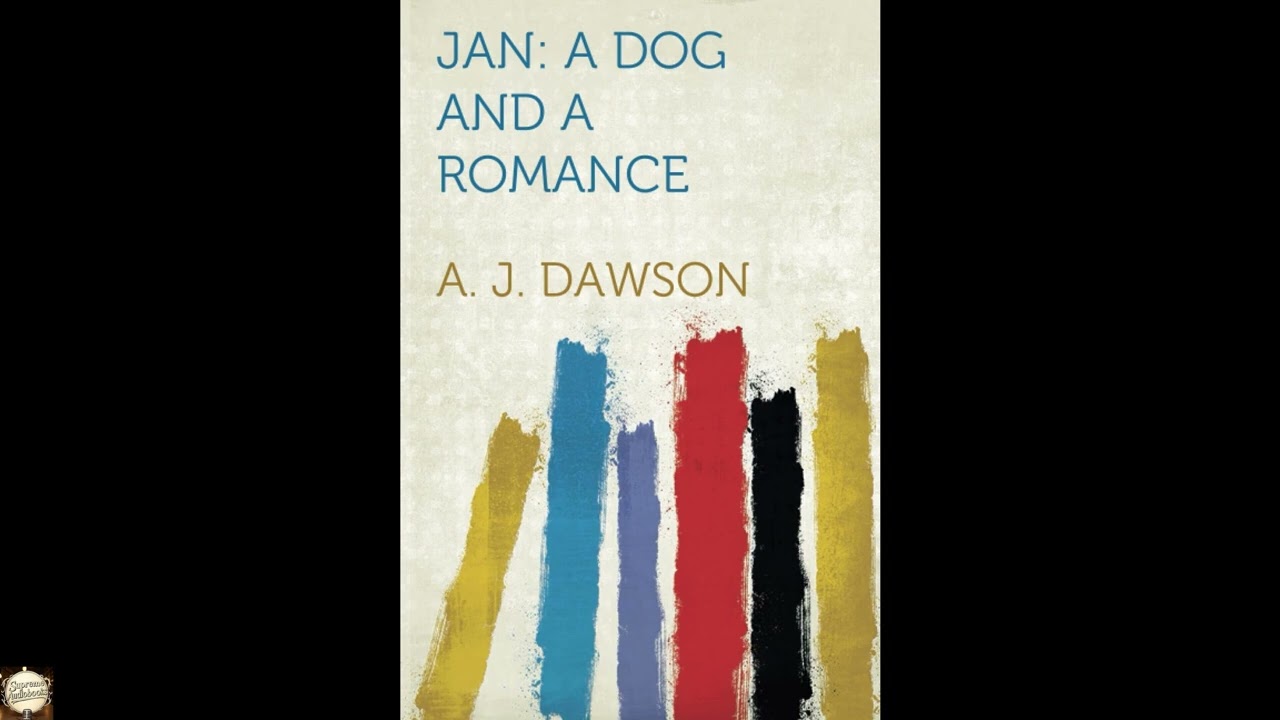
Jan: A Dog and a Romance
Step into a world where the most profound connections often arrive on four paws, and where love blossoms in the quietest corners of the heart. A. J. Dawson’s Jan: A Dog and a Romance is more than simply a story about a man, a woman, and a dog; it is an enduring testament to the power of loyalty, the solace found in companionship, and the subtle ways life guides us toward healing. In a hurried age, this narrative offers a gentle invitation to slow down, to appreciate the unspoken bonds that sustain us, and to recognize the profound influence our animal friends have on our human relationships. Listeners today will find its warmth and sincerity a welcome respite, reminding us that sometimes the simplest tales hold the greatest truths about connection and belonging. The narrative unfolds in a secluded village nestled amidst the rolling hills of the English countryside, a place where the rhythms of nature dictate daily life more than the demands of modernity. Here, we meet Arthur Penhaligon, a man of quiet demeanor who has sought refuge from a recent, unspecified sorrow. He lives a solitary existence, his days marked by routine and introspection, his heart guarded against further pain. His only solace comes from long, reflective walks through the fields and along the riverbanks, where the natural world seems to mirror his own subdued spirit. It is on one such walk that fate intervenes in the form of Jan, a stray collie-mix with watchful, intelligent eyes and a spirit both gentle and resolute. Jan, initially wary, slowly earns Arthur’s trust with an unwavering devotion that chips away at the man’s emotional walls. The dog’s presence introduces a new purpose into Arthur’s life, a daily rhythm of walks, care, and quiet interaction that begins to mend his wounded spirit. Through Jan, Arthur starts to notice the world again, the beauty of the changing seasons, and the subtle nuances of human interaction he had long ignored. This nascent awakening is further nurtured by the arrival of Eleanor Vance, a spirited and kind-hearted woman who has recently moved to the village. Eleanor, an independent spirit with a keen understanding of both people and animals, sees beyond Arthur’s reserved exterior, drawn by the genuine affection he shows for Jan. Their initial encounters are tentative, often facilitated by Jan’s playful antics and a shared appreciation for the village’s quiet charm, gradually deepening into conversations that hint at a profound, burgeoning connection. A. J. Dawson, though a less prominent name in the pantheon of British literature, occupies a special place for those who cherish authentic depictions of rural life and the human-animal bond. Born in the late 1860s, Dawson emerged from a generation of writers who straddled the Victorian era’s sentimentalism and the burgeoning realism of the Edwardian period. Details of his personal life remain somewhat elusive, suggesting a preference for privacy, a characteristic often reflected in the thoughtful, observant tone of his writings. It is believed he spent much of his life in the English countryside, drawing inspiration from the landscapes and the unpretentious lives of its inhabitants, honing an eye for the quiet dramas played out in village settings. Dawson’s reputation rests primarily on a handful of novels and short stories that often featured strong, relatable protagonists navigating personal challenges against a backdrop of rural existence. Works such as The Fenland Echoes and Harvest’s End are remembered for their sensitive portrayal of character and atmosphere, though Jan: A Dog and a Romance remains his most celebrated and widely read contribution. He was not one to engage in literary polemics or chase fashionable trends; instead, Dawson focused on universal human experiences—loss, hope, the search for connection—filtered through an unvarnished lens. His prose, clean and unpretentious, made him a quiet but respected voice among his contemporaries, admired for its sincerity and emotional resonance, cementing his standing as a master of pastoral storytelling. The story enacts several compelling themes. Foremost among these is the healing power of companionship, particularly the unique solace offered by animals. Arthur's transformation from a withdrawn, grief-stricken man to one capable of finding joy again is directly attributable to Jan's steadfast loyalty. The simple act of daily walks with his dog, watching Jan chase a squirrel or simply rest his head on Arthur's lap, gradually pulls him out of his self-imposed isolation, demonstrating how an animal's unconditional affection can open a closed heart. Furthermore, the book eloquently speaks to the nature of love and connection, not just between humans but across species. Jan acts as a bridge between Arthur and Eleanor, their shared concern and affection for the dog serving as a safe space for their own developing feelings. The way they discuss Jan's needs, or laugh at his antics, forms an unforced intimacy that allows their own romance to blossom organically, highlighting how shared values and kindness can forge lasting bonds. Another significant theme centers on resilience and the capacity for renewal after adversity. Arthur’s initial state of despair represents a profound challenge to his spirit. His slow, arduous return to engagement with life—first through Jan, then through Eleanor—is a testament to the human spirit's ability to find light even after darkness. The book suggests that healing is not a sudden event but a gradual process, often aided by unexpected sources of comfort and purpose. Finally, the narrative celebrates the enduring charm and simple beauty of rural life. Dawson paints vivid pictures of the countryside’s changing seasons, the quiet hum of village life, and the inherent dignity of working the land. This backdrop not only provides a serene setting for the story but also underscores a broader commentary on finding contentment away from the clamor of modernity, valuing genuine connections over material pursuits. Jan: A Dog and a Romance emerged at a time of considerable flux in British society, likely published in the early years of the twentieth century, during the Edwardian era or shortly before the Great War. This period was characterized by rapid industrialization and urbanization, which paradoxically led to a growing nostalgia for simpler, more traditional ways of life. Literature often reflected this tension, with many authors turning to the countryside for inspiration, seeking to preserve an idealized vision of England before it was irrevocably altered by progress. It was also a time when the role of animals, particularly dogs, in human lives was evolving. No longer seen purely as working beasts, dogs were increasingly recognized as companions, their emotional impact on their owners becoming a subject of growing interest in both popular culture and literature. Dawson's book resonated deeply within this cultural context, offering a heartwarming affirmation of values—loyalty, simplicity, connection to nature—that many felt were being lost amidst the march of modernity. Listening to Jan: A Dog and a Romance as an audiobook offers a singular opportunity to fully immerse oneself in its gentle world. The narrative, spanning several hours, is perfectly suited for extended periods of quiet contemplation, whether you are taking a leisurely walk, enjoying a peaceful afternoon at home, or commuting to work. A skilled narrator can amplify the warmth and sincerity of Dawson’s prose, giving voice to Arthur’s inner thoughts, Eleanor’s engaging spirit, and even imbuing Jan’s presence with a palpable sense of loyalty and mischief. Listen for the narrator’s pacing, which should mirror the measured, thoughtful unfolding of the story, allowing space for the evocative descriptions of the countryside and the subtle nuances of character development. The dialogue, though understated, holds significant emotional weight, and a sensitive reading will highlight the growing affection and understanding between Arthur and Eleanor, ultimately enhancing the deeply moving atmosphere of connection and quiet triumph that defines this beloved story.
Enjoyed Jan: A Dog and a Romance? A few ways to support us
Audible & Amazon links are affiliate; we may earn a small commission at no extra cost.
About this production
Human narration by a volunteer reader from LibriVox.org, the public-domain audiobook project. LibriVox volunteers record literary works whose copyright has expired in the United States, releasing the resulting recordings into the public domain.
Jan: A Dog and a Romance by A. J. Dawson. The underlying text is in the U.S. public domain. We do not republish any modern copyrighted edition, translation, or commentary.
The 4K cinematic visuals accompanying this audiobook are generated by an AI image model from prompts derived from the source text. No copyrighted photos, paintings, or stock footage are used. AI generation is disclosed on every video on our YouTube channel as required by YouTube's altered/synthetic content policy.
English subtitles are transcribed from the LibriVox recording with OpenAI Whisper. Translations into the 11 other supported languages are produced by Meta's NLLB-200 neural translation model. No human translator's copyrighted translation is used.
Questions about sourcing or rights? See our DMCA & Sourcing policy or contact us.
Enjoyed this audiobook?
If you'd like to own a copy of Jan: A Dog and a Romance or hear a professionally produced edition, the links below help support free audiobook production at no extra cost to you.
As an Amazon Associate we earn from qualifying purchases. Audible / print links are affiliate.