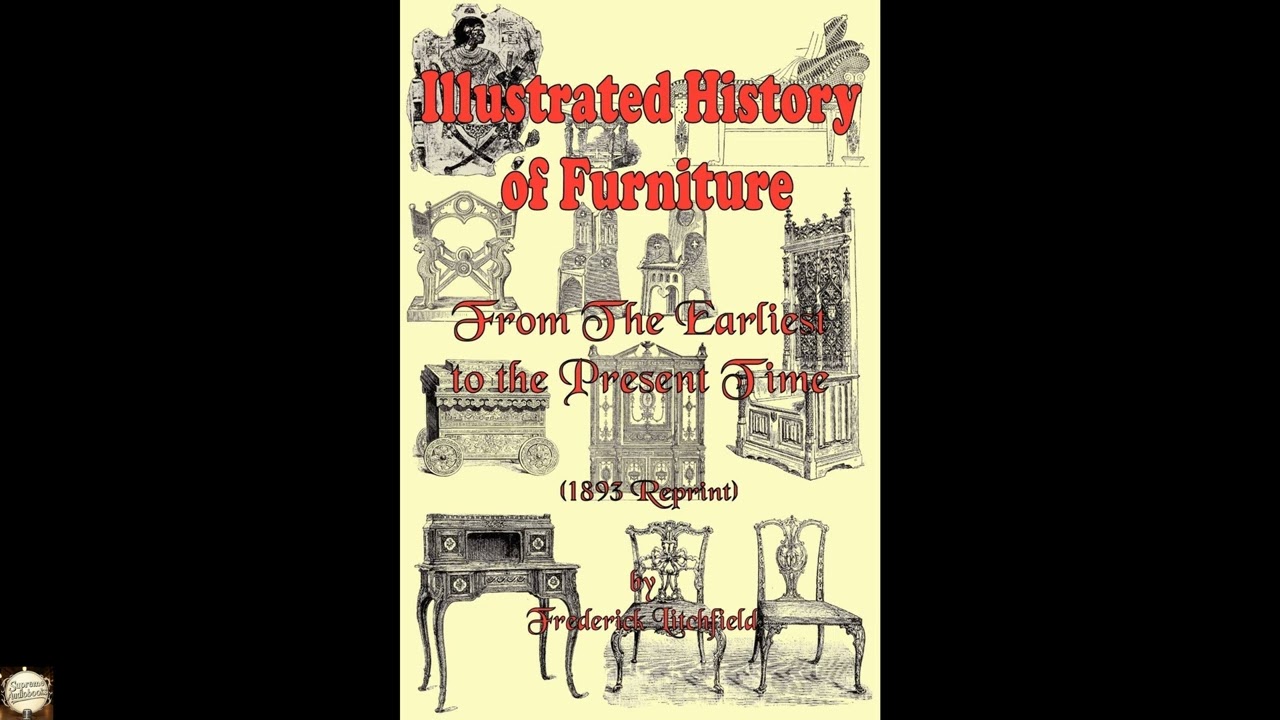
Illustrated History of Furniture: From the Earliest to the Present Time
What if the most fundamental objects in our daily lives—the chairs we sit on, the tables we eat from, the beds we sleep in—told the entire story of human civilization? Imagine an expansive narrative spanning millennia, where evolving forms and materials whisper tales of societal change, artistic innovation, and the very definition of comfort and status. This is the profound promise of Illustrated History of Furniture: From the Earliest to the Present Time. More than a mere catalog, it is a grand chronicle, a sweeping survey that illuminates how our most intimate surroundings have mirrored our aspirations, technologies, and cultures. For anyone curious about the intersection of art, craft, and everyday existence, or those who simply wish to understand the silent partners of our domestic lives, this comprehensive account offers an unparalleled perspective on the human story as told through its designed spaces. The story begins in the dawn of recorded history, in the sun-baked lands of ancient Egypt and Mesopotamia, where rudimentary forms slowly gave way to monumental, symbolic pieces crafted for pharaohs and priests. We witness the evolution from simple stools and chests, carved from local woods and adorned with sacred hieroglyphs, to the opulent, lion-footed furniture of the New Kingdom, designed to assert divine authority. The narrative then shifts westward to classical Greece and Rome, where the emphasis subtly moved towards comfort and aesthetics for a burgeoning leisure class. Imagine the elegant klismos chair, with its curved legs and back, or the triclinium couches upon which Romans reclined for elaborate feasts, each piece reflecting a society’s priorities regarding social interaction and domestic display. The arc of this history, then, becomes a fascinating progression from the purely functional to the increasingly ornamental, from objects of necessity to emblems of power and taste. As the story continues, we follow the trail of design through the often-austere practicality of the early medieval period, where furniture was scarce, built for portability, and primarily found in churches and castles. Here, the central conflict often seems to be humanity's struggle against harsh conditions, reflected in sturdy, unadorned chests and trestle tables. With the advent of the Gothic era, a new spiritual and architectural impulse transforms wooden forms, incorporating tracery and pointed arches, echoing the soaring cathedrals. The Renaissance then marks a decisive turning point, reintroducing classical motifs and a heightened sense of proportion and grandeur. Italian cassoni, often painted with mythological scenes, become statements of wealth and learning. Later, the Baroque period erupts with dramatic curves, gilding, and theatricality, followed by the delicate sinuosity and intimate charm of Rococo, expressing a lighter, more playful sensibility among the aristocracy. The story unfolds as a dynamic dialogue between different eras, materials, and philosophical outlooks, each period building upon or reacting against what came before. The author of this monumental survey is unknown, a common circumstance for comprehensive works that distill vast amounts of knowledge from various sources, likely compiled by dedicated scholars and researchers of the late nineteenth or early twentieth century. This period, characterized by a burgeoning interest in archaeology, art history, and the cataloging of human achievements, saw the creation of numerous detailed surveys across various disciplines. Such works often represented a collaborative effort, even if a single editor or compiler brought them to fruition. The absence of a named author does not diminish its authority; rather, it speaks to a tradition of collective scholarship aimed at creating an accessible, definitive record for the public. These foundational texts served as crucial educational tools, democratizing knowledge of design and craftsmanship during an era when industrialization was rapidly changing how objects were made and perceived. The enduring value of such a work lies in its meticulous compilation and its commitment to presenting a coherent, visually supported narrative of stylistic evolution. This comprehensive overview stands as a testament to diligent research and a passion for historical detail, making it a valuable addition to the canon of classic literature, not for its fictional narrative, but for its foundational role in understanding cultural history through tangible objects. It represents a significant contribution to the study of design history, offering a structured framework for understanding the development of furniture across cultures and centuries. Its anonymous origin only emphasizes its quality as a scholarly aggregate, drawing on the collective understanding and visual records of an era fascinated by the material culture of the past. Several compelling themes emerge from this historical account, each illustrated by concrete examples across different epochs. One dominant theme is Innovation and Adaptation, showcasing how furniture design constantly responded to new technologies, materials, and evolving social needs. Consider, for instance, the invention of the mortise and tenon joint by the Egyptians, allowing for more stable and complex forms, or the later development of turning for legs and spindles during the Renaissance, which introduced new aesthetic possibilities. Another significant theme is Status and Symbolism, as furniture has almost always served as a visual indicator of wealth, power, and social hierarchy. The highly ornate, gilded chairs of Louis XIV's court were not merely places to sit; they were thrones in miniature, proclaiming the grandeur of the monarchy, while the simplicity of Shaker furniture later reflected an ethos of humility and utility. A third prominent theme is Cultural Exchange and Influence, demonstrating how ideas and styles traveled across geographical and chronological boundaries. For example, the influence of Roman design on Renaissance Italy, or the impact of Chinese lacquering techniques on 18th-century European cabinetry, reveals a dynamic global conversation in design. Finally, the perennial tension between Function and Form runs through the entire history. From the practical, multipurpose chest of the medieval period that served as storage, seat, and even bed, to the purely aesthetic, highly decorative side tables of the Rococo era that emphasized beauty over strict utility, furniture design constantly navigates this balance. These examples illustrate how furniture is not static but a dynamic reflection of humanity's constant effort to shape its environment, blending practicality with artistry. The cultural landscape in which such a detailed "illustrated history" would have gained prominence was likely the late nineteenth or early twentieth century. This period saw a rise in systematic scholarship, a fascination with historical accuracy, and the widespread availability of printing technologies that could reproduce detailed illustrations. It was an era when museums were being established, archaeological discoveries were captivating the public, and a renewed interest in decorative arts and craftsmanship was taking hold, partly as a response to industrialization. The Arts and Crafts movement, for instance, championed a return to traditional techniques and honesty in materials, creating a fertile ground for a work that meticulously chronicled the evolution of craftsmanship. This climate fostered a desire to document, categorize, and understand the origins and development of design, making a comprehensive history of furniture not just an academic pursuit but a widely appreciated cultural endeavor. Listening to Illustrated History of Furniture as an audiobook transforms a potentially academic subject into an absorbing oral narrative. The narrator becomes your expert guide, leading you through millennia of design, articulating the subtle shifts in aesthetic, material, and purpose with clarity and evocative description. Without the visual aid of the illustrations present in the original printed text, the narrator's voice becomes crucial, painting vivid pictures with words—the solidity of an ancient Egyptian throne, the delicate curves of a French fauteuil, the sleek lines of a mid-century modern chair. The generous run length allows for a comprehensive, unhurried appreciation of the details, enabling you to absorb the grand sweep of history at your own pace. Pay attention to the descriptions of specific decorative motifs and construction techniques; the narrator's pacing will often highlight these essential elements, making the evolution of design audible and immediate, truly bringing the silent world of furniture to life.
Enjoyed Illustrated History of Furniture: From the Earliest to the Present Time? A few ways to support us
Audible & Amazon links are affiliate; we may earn a small commission at no extra cost.
About this production
Human narration by a volunteer reader from LibriVox.org, the public-domain audiobook project. LibriVox volunteers record literary works whose copyright has expired in the United States, releasing the resulting recordings into the public domain.
Illustrated History of Furniture: From the Earliest to the Present Time by Frederick Litchfield. The underlying text is in the U.S. public domain. We do not republish any modern copyrighted edition, translation, or commentary.
The 4K cinematic visuals accompanying this audiobook are generated by an AI image model from prompts derived from the source text. No copyrighted photos, paintings, or stock footage are used. AI generation is disclosed on every video on our YouTube channel as required by YouTube's altered/synthetic content policy.
English subtitles are transcribed from the LibriVox recording with OpenAI Whisper. Translations into the 11 other supported languages are produced by Meta's NLLB-200 neural translation model. No human translator's copyrighted translation is used.
Questions about sourcing or rights? See our DMCA & Sourcing policy or contact us.
Enjoyed this audiobook?
If you'd like to own a copy of Illustrated History of Furniture: From the Earliest to the Present Time or hear a professionally produced edition, the links below help support free audiobook production at no extra cost to you.
As an Amazon Associate we earn from qualifying purchases. Audible / print links are affiliate.