Hypnerotomachia Poliphili: The Strife of Love in a Dream
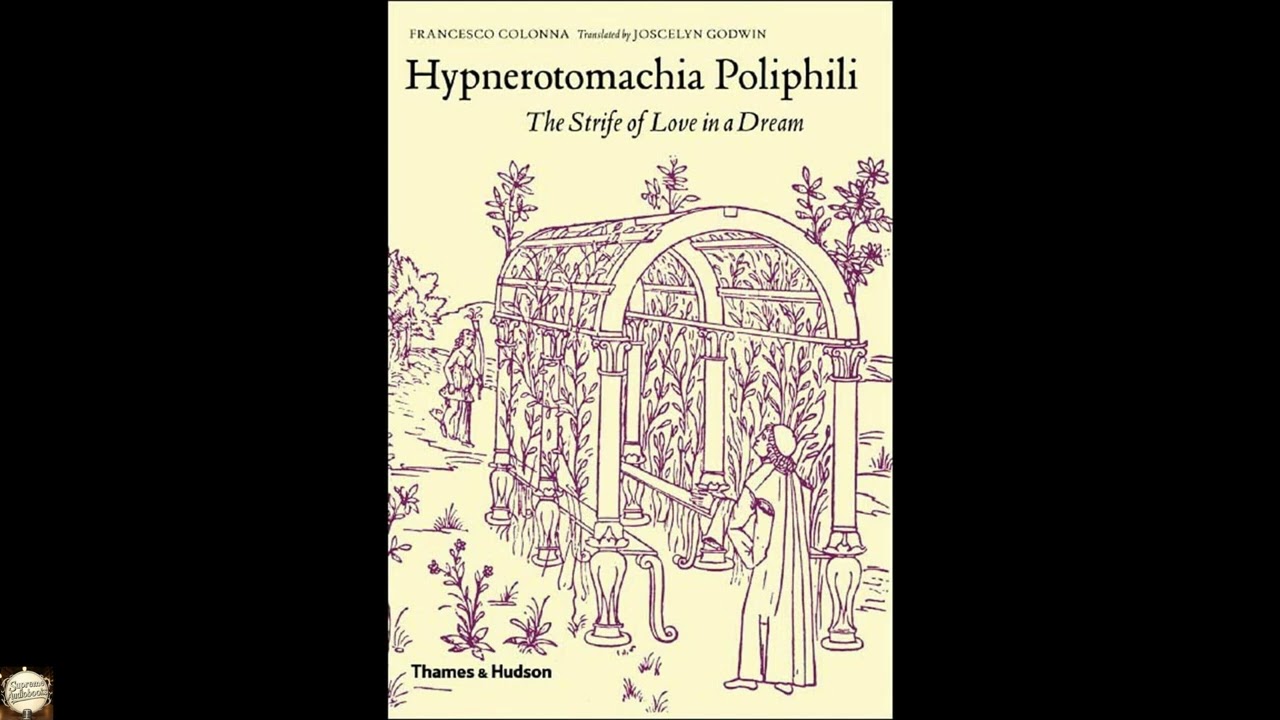
Stepping into the world of Hypnerotomachia Poliphili: The Strife of Love in a Dream is like unwrapping a centuries-old puzzle box, a literary marvel that continues to beguile and intrigue scholars and artists alike. This remarkable creation, penned by Francesco Colonna, stands as a singular testament to the intellectual fervor and aesthetic ambition of the Italian Renaissance. Originally published in 1499, it is more than a book; it is a meticulously crafted artifact of human ingenuity, celebrated in its original form for its revolutionary typography and woodcut illustrations. Yet, beneath its visual splendor lies a narrative core of profound philosophical depth and emotional resonance, a dream allegory that speaks to the enduring human pursuit of beauty, knowledge, and an ideal love. To experience it today in audio is to strip away its visual reputation and confront its extraordinary verbal artistry, inviting a direct engagement with its poetic language and symbolic landscapes, making its archaic wisdom accessible to a new generation of listeners. The story unfolds within the labyrinthine passages of a vivid, often disorienting dream, where our protagonist, Poliphilo – whose name means "lover of many things" – wanders through a fantastical rendition of classical antiquity. Tormented by unrequited love for his beloved Polia, Poliphilo's subconscious mind constructs an elaborate quest to find her. His path is populated by a bewildering array of architectural wonders, ruined temples, exotic gardens, and allegorical figures. He encounters nymphs, satyrs, and wise hermits who challenge his perceptions and offer cryptic guidance. His progress is marked by a series of detailed descriptions of these structures and landscapes, each laden with classical allusions and symbolic meaning, often demanding intellectual decipherment. The setting shifts from sun-drenched ruins to shadowed groves, each location reflecting a stage of Poliphilo’s emotional and intellectual development. As Poliphilo navigates this surreal dreamscape, his longing for Polia propels him forward, past trials of logic and emotion. He faces challenges presented by personifications of love and lust, engaging in philosophical debates and observing elaborate pageants that illustrate various facets of desire and beauty. Though he frequently glimpses figures he believes to be Polia, she remains elusive, a shimmering ideal just beyond his grasp. The story traces his arduous traversal through these allegorical realms, culminating in a reunion with his beloved and an almost mystical experience of their profound connection. This spiritual union forms the climax of his dream, a moment of transcendent understanding and fulfillment that offers respite from his long suffering. Francesco Colonna, the widely recognized author of this unique volume, was a Dominican friar living in 15th-century Venice. While little is definitively known about his personal life beyond his religious vocation, his singular literary output suggests a mind deeply steeped in classical learning, architecture, Neoplatonic philosophy, and esoteric symbolism. Born around 1433 and living until at least 1527, Colonna was a man of the Renaissance, immersed in the intellectual currents that sought to reconcile ancient pagan wisdom with Christian theology. Hypnerotomachia Poliphili is his only known literary work, a testament to what must have been decades of dedicated scholarship and artistic vision. It does not fit neatly into any established literary movement of its time, standing instead as a profoundly individual expression of humanist ideals. His background as a friar allowed him access to extensive libraries and scholarly discourse, enabling him to synthesize an extraordinary range of knowledge into a coherent, albeit complex, narrative structure. This work enacts several significant themes with breathtaking scope. Foremost among them is Neoplatonic love, a concept that views love as an ascent from earthly beauty to a divine ideal. Poliphilo's quest for Polia is not merely physical longing, but a spiritual pilgrimage. For example, he witnesses the elaborate processions and allegorical figures in the gardens of Venus, each representing a different aspect of love, prompting him to understand desire as a stepping stone towards a more perfect, intellectual union. Another prominent theme is the veneration of classical antiquity. Colonna meticulously describes imagined ancient architecture, sculptures, and rituals, meticulously detailing their forms and symbolic significance. Poliphilo's encounters with ruined temples and their elaborate inscriptions serve as a form of intellectual archaeology, attempting to reconstruct and understand the lost wisdom of the classical world. A third major theme concerns the power and symbolism of dreams. The entire narrative is framed as a dream, allowing for a fluid, often contradictory reality where logic yields to metaphor. Poliphilo's visions are not random but deeply symbolic, reflecting his subconscious anxieties, desires, and intellectual pursuits. The shifting landscapes and encounters within his dream mirror the internal struggles of the human psyche. Finally, the text also subtly foregrounds the fusion of pagan and Christian elements, a hallmark of Renaissance humanism. While the imagery and philosophy are predominantly classical, there are underlying moral and spiritual lessons that resonate with Christian thought, demonstrating an intellectual attempt to synthesize disparate belief systems into a unified understanding of truth and beauty. The emergence of Hypnerotomachia Poliphili in 1499 was a landmark event in the context of the Italian Renaissance. This was an age of fervent intellectual rebirth, driven by the rediscovery of classical Greek and Roman texts and a profound admiration for ancient learning. The printing press, a relatively new technology, was rapidly transforming the dissemination of knowledge, and Venice, under the influence of master printer Aldus Manutius, was a leading center of this revolution. Humanist scholars sought to integrate classical wisdom into contemporary thought, and artists looked to antiquity for inspiration in architecture, sculpture, and painting. Colonna's work, with its encyclopedic knowledge of classical forms, its Neoplatonic philosophy, and its revolutionary integration of text and image, was a direct product of this cultural ferment. It spoke to an elite, educated audience eager for intellectual stimulation and aesthetic perfection, eager to see the world's most beautiful book produced by the most skilled printers. Listening to Hypnerotomachia Poliphili as an audiobook offers an immersive and singularly intimate encounter with this monumental work. With its run length of several hours, it demands a sustained engagement, allowing the listener to truly inhabit Poliphilo's dreamscape. The narrator's voice becomes the guiding thread through its ornate, often Latinate prose, rendering complex architectural descriptions and philosophical dialogues with clarity and pacing that allows for comprehension. Rather than visually consuming its famed woodcuts, the listener is invited to construct their own mental images from the richness of Colonna's language. The cadence and tone of the narration can enhance the dreamlike atmosphere, distinguishing between Poliphilo's inner thoughts and his encounters with other characters. This audio format transforms a text often perceived as daunting into a deeply personal, auditory experience, inviting contemplation and wonder as the world of Poliphili slowly unfurls in the mind's ear.
Enjoyed Hypnerotomachia Poliphili: The Strife of Love in a Dream? A few ways to support us
Audible & Amazon links are affiliate; we may earn a small commission at no extra cost.
About this production
Human narration by a volunteer reader from LibriVox.org, the public-domain audiobook project. LibriVox volunteers record literary works whose copyright has expired in the United States, releasing the resulting recordings into the public domain.
Hypnerotomachia Poliphili: The Strife of Love in a Dream by Francesco Colonna. The underlying text is in the U.S. public domain. We do not republish any modern copyrighted edition, translation, or commentary.
The 4K cinematic visuals accompanying this audiobook are generated by an AI image model from prompts derived from the source text. No copyrighted photos, paintings, or stock footage are used. AI generation is disclosed on every video on our YouTube channel as required by YouTube's altered/synthetic content policy.
English subtitles are transcribed from the LibriVox recording with OpenAI Whisper. Translations into the 11 other supported languages are produced by Meta's NLLB-200 neural translation model. No human translator's copyrighted translation is used.
Questions about sourcing or rights? See our DMCA & Sourcing policy or contact us.
Enjoyed this audiobook?
If you'd like to own a copy of Hypnerotomachia Poliphili: The Strife of Love in a Dream or hear a professionally produced edition, the links below help support free audiobook production at no extra cost to you.
As an Amazon Associate we earn from qualifying purchases. Audible / print links are affiliate.