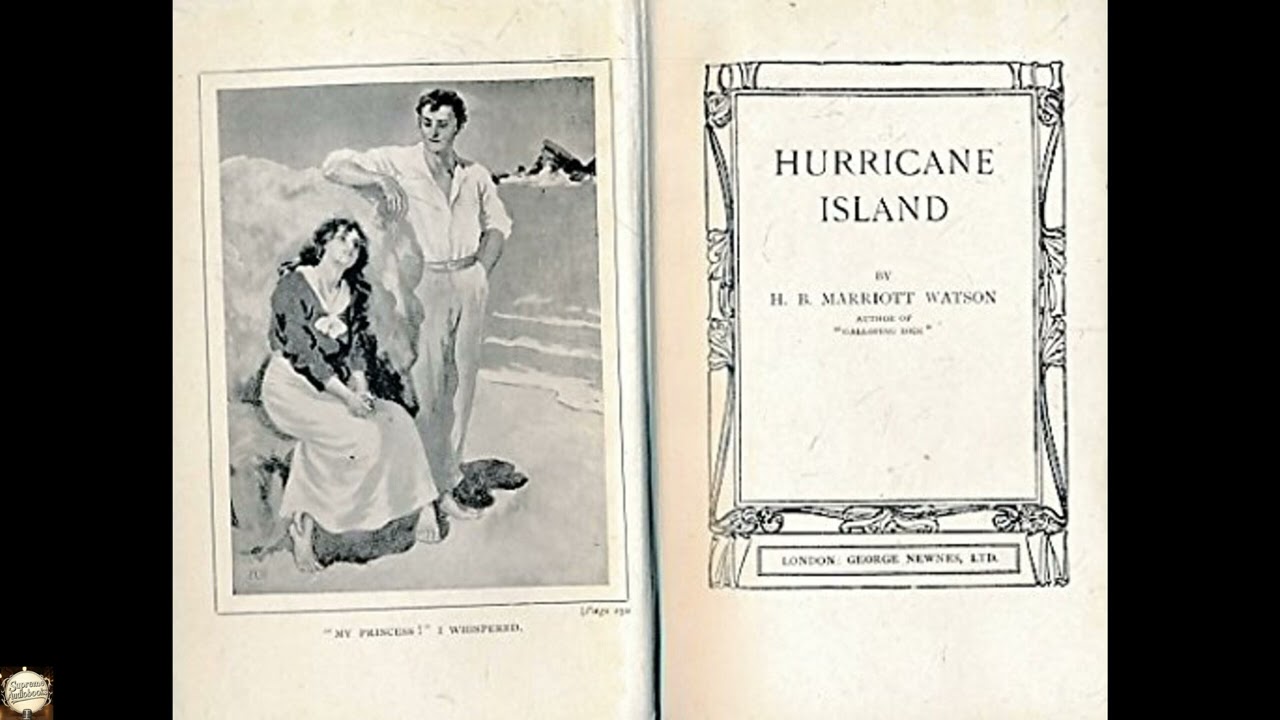
Hurricane Island
Step onto the windswept shores of a forgotten realm, where the lure of discovery meets the brutal realities of survival in H.B. Marriott Watson’s Hurricane Island. This classic adventure tale, first published at the dawn of the twentieth century, beckons listeners into a world where courage is tested, loyalties are strained, and the very concept of civilization is stripped to its rawest form. More than just a thrilling narrative of castaways and hidden kingdoms, this story offers a compelling look at human nature under duress, a psychological tension that resonates deeply even today, inviting us to question what truly defines power and justice when removed from the structures of the familiar world. Our story begins with the unwitting hero, Stephen Dale, a man adrift in his own life, who finds himself aboard a yacht bound for the distant Pacific. What starts as a seemingly innocuous voyage soon devolves into a desperate fight for survival when circumstances force Dale and his fellow passengers—including the mysterious and alluring Mrs. Ainslee and her younger sister, Ada—to take refuge on a remote, uncharted island. This is no idyllic paradise; Hurricane Island, as it is known, pulses with a dangerous, untamed energy. Far from being uninhabited, the island harbors a hidden society, a complex and ancient civilization ruled by a despotic sovereign and his ruthless court. As Dale and his companions navigate this perilous landscape, they become inextricably entangled in the island’s internal power struggles. The beautiful Ada, initially a figure of delicate vulnerability, soon reveals a deeper connection to the island’s past and its future, becoming a central figure in a burgeoning revolution. Dale, caught between a desire for escape and a burgeoning sense of duty, finds himself drawn into a conflict far greater than mere survival, one that challenges his perceptions of right and wrong, and forces him to confront the moral ambiguities of colonial ambition and the true cost of freedom. The narrative spirals through political intrigue, daring escapes, and tense confrontations, always maintaining a tight grip on the listener’s attention as the fate of the island and its inhabitants hangs precariously in the balance. H.B. Marriott Watson, born Herbert Brereton Marriott Watson in Christchurch, New Zealand, in 1863, was a prominent voice in the late Victorian and Edwardian literary landscape. After an early life spent in New Zealand, he moved to England for his education, attending Trinity College, Cambridge. He established himself as a prolific writer, contributing widely to periodicals and publishing a substantial body of novels and short stories across various genres, including historical romances, adventure tales, and crime fiction. Watson was a contemporary of authors like Robert Louis Stevenson and H. Rider Haggard, often grouped with them as part of the "New Romance" movement that emerged in reaction to the prevailing realism and naturalism of the era. He was known for his elegant prose and his ability to craft narratives of high suspense and exotic settings, often blending psychological insight with thrilling plotlines. Watson continued writing steadily until his passing in 1929, leaving behind a legacy of imaginative and engaging fiction. Hurricane Island enacts several potent themes that elevate it beyond a simple adventure yarn. One prominent theme is the nature of civilization versus savagery. The castaways, hailing from purportedly "civilized" Europe, find themselves confronted by a sophisticated, albeit brutal, indigenous society, forcing them—and the listener—to question the very definition of barbarism and refinement. The island's ruler, for example, embodies a paradox of order and cruelty, mirroring some of the darker aspects of Western imperial power dynamics. Another key theme is identity and transformation. Characters like Ada discover hidden strengths and ancestral ties, undergoing profound changes in their understanding of self and purpose amidst the island’s trials. Stephen Dale, too, grapples with his own moral compass, evolving from a passive observer to an active participant in the island's destiny, illustrating how extreme circumstances can forge or reveal true character. The turn of the 20th century, when Hurricane Island was published in 1904, was a period marked by significant cultural and political shifts. The British Empire, though still vast, was beginning to feel the stresses of its immense reach, leading to public fascination with exotic, remote lands and the "unknown." This era saw a boom in adventure fiction, often set in far-flung corners of the world, reflecting both a romanticized view of discovery and underlying anxieties about colonialism and racial encounters. Works like Watson's appealed to a public eager for escapism from the rapidly industrializing and increasingly complex urban life, offering tales of heroism, peril, and romance in distant, untamed settings. The novel also tapped into the fascination with "lost worlds" and hidden civilizations, a popular trope that allowed authors to comment on contemporary society through the lens of fantastical or ancient cultures. Listening to Hurricane Island as an audiobook offers a singular opportunity to immerse oneself fully in its richly drawn world. The medium allows the narrative’s carefully constructed atmosphere to truly settle around the listener, enhancing the sense of isolation and wonder. A skilled narrator can bring out the nuanced voices of the characters—from Dale’s contemplative internal monologue to the forceful declarations of the island’s denizens—making the dialogue crackle with tension and urgency. The several hours of listening time provide ample scope to become thoroughly absorbed, perfect for extended sessions of focused listening, or broken into segments while commuting or relaxing. Pay attention to the pacing, which builds suspense gradually then accelerates into thrilling action, and how the vocal performances create distinct personalities and transport you directly to the strange, compelling beauty and danger of Hurricane Island.
Enjoyed Hurricane Island? A few ways to support us
Audible & Amazon links are affiliate; we may earn a small commission at no extra cost.
About this production
Human narration by a volunteer reader from LibriVox.org, the public-domain audiobook project. LibriVox volunteers record literary works whose copyright has expired in the United States, releasing the resulting recordings into the public domain.
Hurricane Island by H B Marriott Watson. The underlying text is in the U.S. public domain. We do not republish any modern copyrighted edition, translation, or commentary.
The 4K cinematic visuals accompanying this audiobook are generated by an AI image model from prompts derived from the source text. No copyrighted photos, paintings, or stock footage are used. AI generation is disclosed on every video on our YouTube channel as required by YouTube's altered/synthetic content policy.
English subtitles are transcribed from the LibriVox recording with OpenAI Whisper. Translations into the 11 other supported languages are produced by Meta's NLLB-200 neural translation model. No human translator's copyrighted translation is used.
Questions about sourcing or rights? See our DMCA & Sourcing policy or contact us.
Enjoyed this audiobook?
If you'd like to own a copy of Hurricane Island or hear a professionally produced edition, the links below help support free audiobook production at no extra cost to you.
As an Amazon Associate we earn from qualifying purchases. Audible / print links are affiliate.