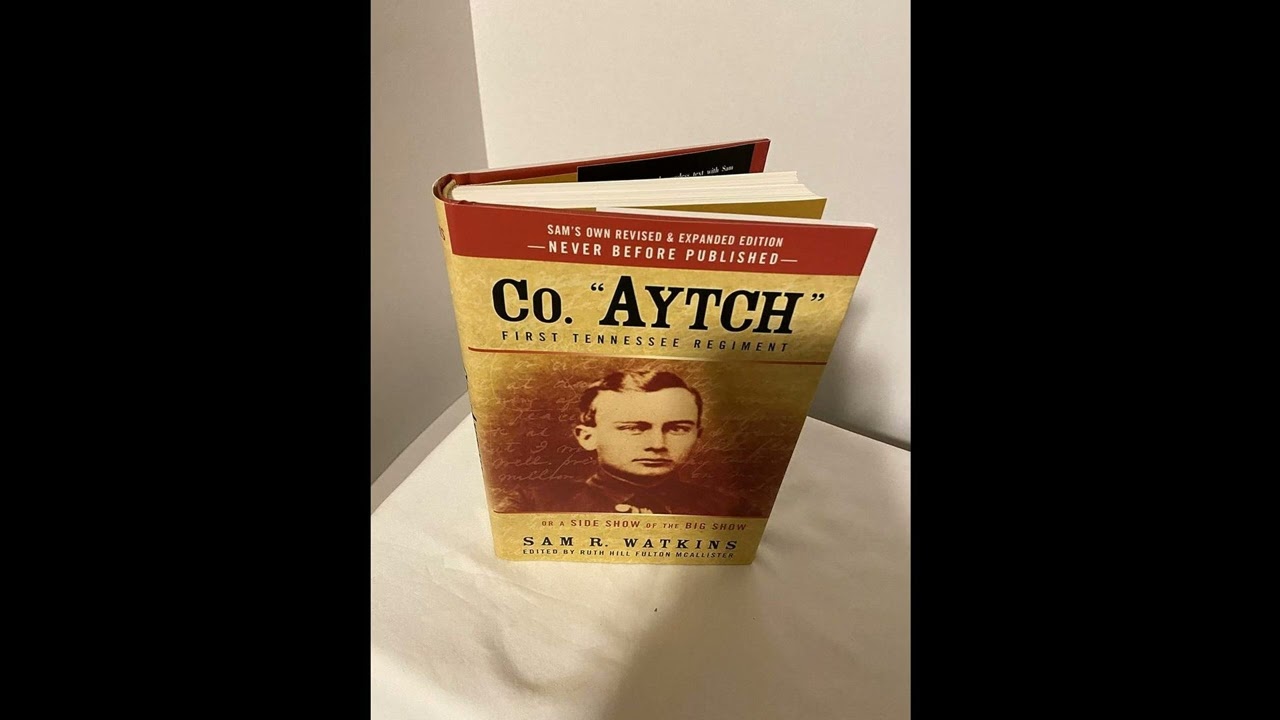
Co. Aytch, Maury Grays, First Tennessee Regiment: Or, a Side Show of the Big Show
When the cannons roared and the Union and Confederate armies clashed, countless personal stories were forged in fire, but few survive with the raw honesty and enduring power of Co. Aytch, Maury Grays, First Tennessee Regiment: Or, a Side Show of the Big Show. This remarkable firsthand account throws open a window onto the American Civil War, not from the perspective of generals or statesmen, but from the gritty, unvarnished viewpoint of a common foot soldier. It is a vital historical document and a compelling human drama, offering an unparalleled look at the experience of combat, the bonds of brotherhood, and the profound cost of a nation divided, reminding us even today of the universal human spirit tested in extreme conditions. The narrative begins in the spring of 1861, with the enthusiastic, almost festive, rush to war that swept across the South. Young Sam Watkins, along with his friends and neighbors from Maury County, Tennessee, volunteers for Company H of the First Tennessee Regiment. Their initial excitement is palpable, full of bravado and confidence, as they train and march, convinced of a swift victory. The early days are marked by the naivete of recruits, the mundane routines of camp life, and the budding camaraderie among men suddenly thrust together. However, this hopeful idealism quickly shatters on the battlefields of Shiloh, one of the war's bloodiest early engagements. From that brutal encounter onward, the story traces the relentless campaigning of the Confederate Army of Tennessee, plunging listeners into the heart of major engagements like Chickamauga, Missionary Ridge, the grueling Atlanta Campaign, and the devastating battles of Franklin and Nashville. Watkins details the constant hunger, the gnawing fear, the pervasive sickness that thinned the ranks more effectively than enemy bullets, and the stark reality of seeing friends fall in combat. The narrative follows the regiment's ebb and flow, its victories and crushing defeats, the long, arduous marches, and the desperate struggle for survival against overwhelming odds, painting a vivid picture of the sheer physical and psychological toll war extracts from its participants, all without ever revealing the ultimate fate of these embattled soldiers. The true "author" behind Co. Aytch is Sam R. Watkins, a private who faithfully served with Company H throughout the entirety of the Civil War. Born in Columbia, Tennessee, in 1840, Watkins was a young man of twenty-one when he enlisted in the Confederate army in April 1861. He endured the full four years of the conflict, participating in nearly every major battle of the Western Theater, an astonishing feat of survival given the high casualty rates. After the war concluded, Watkins returned to his native Tennessee, where he settled into a life as a farmer and store clerk. It wasn't until nearly two decades later, in 1881, that he began to serialize his memoirs in the Columbia Herald. These highly popular serialized accounts were eventually compiled and published as Co. Aytch in 1882. Unlike many post-war narratives that aimed to glorify the "Lost Cause" or offer a grand strategic overview, Watkins's intention was simply to tell the story of the common soldier, as he put it, "a private's story of the privates' war." He wrote with a distinctive blend of wit, sarcasm, and profound sorrow, immortalizing his comrades and their trials. Though Co. Aytch stands as his singular literary achievement, its directness and authenticity have cemented its place as one of the most significant and honest memoirs to emerge from the American Civil War, a work admired by historians and general readers alike for its vivid, human-scale perspective on a monumental conflict. At its core, Co. Aytch compellingly enacts the brutal reality of armed conflict. Watkins unflinchingly describes the carnage of battle, the constant threat of disease, and the pervasive scarcity of food and supplies. For instance, his accounts of the battle of Franklin are particularly harrowing, illustrating the sheer chaos and immense loss of life as Confederate forces launched desperate, frontal assaults. He writes of witnessing fellow soldiers torn apart by cannon fire and the grim details of amputations performed without anesthesia, shattering any romantic notions of warfare with stark, visceral scenes that convey the true horror faced by those on the front lines. Yet, amidst this stark depiction of hardship, the memoir also highlights the powerful theme of comradeship and loyalty. Watkins vividly portrays the deep bonds that formed among the soldiers of Company H, men who faced death together daily. They shared meager rations, nursed each other's wounds, and found ways to lighten the unbearable load with jokes and pranks. His anecdotes about specific individuals, like the perpetually hungry Private Billy or the brave and stoic Captain, illustrate how these men relied on each other for survival and sanity, forging an unbreakable sense of shared purpose and familial connection that transcended the larger political aims of the war. When Co. Aytch was published in 1882, the United States was well into the post-Reconstruction era. The immediate bitterness of the war had begun to recede, but memories remained vivid, and the market for personal accounts of the conflict was strong. Many published narratives at this time were either highly romanticized tales of heroism or official histories written by officers, often serving to justify or glorify their actions. Watkins's memoir arrived as a breath of fresh air, providing a much-needed counterpoint: a narrative from the perspective of an ordinary man, unburdened by rank or political agenda. His plainspoken style and emphasis on the individual experience of the enlisted man aligned with a nascent literary realism that would gain prominence in American literature during the late nineteenth century. The era was also marked by a desire to understand the profound societal changes wrought by the war, and works like Watkins's offered intimate insights into the experiences of the generation that fought it, helping to shape the collective memory of a pivotal and scarring period in the nation's history. Listening to Co. Aytch as an audiobook offers a uniquely powerful way to experience Sam Watkins's enduring story. The memoir's first-person voice and conversational tone lend themselves perfectly to audio, allowing the narrator to fully embody Watkins's distinctive blend of dry wit, wry observation, and deep-seated pathos. A skilled performance brings to life the cadence and dialect of the Southern soldier, enriching the descriptions of camp life, battle, and camaraderie. Listeners can fully appreciate the shifts in Watkins's mood, from the initial enthusiasm of a young recruit to the weariness of a seasoned veteran, simply by hearing the subtle changes in vocal expression. The length, several hours, makes it an excellent choice for extended listening, providing ample time to become immersed in this remarkable and authentic portrayal of a soldier's life during the American Civil War, offering a direct conduit to the past through the power of the spoken word.
Enjoyed Co. Aytch, Maury Grays, First Tennessee Regiment: Or, a Side Show of the Big Show? A few ways to support us
Audible & Amazon links are affiliate; we may earn a small commission at no extra cost.
About this production
Human narration by a volunteer reader from LibriVox.org, the public-domain audiobook project. LibriVox volunteers record literary works whose copyright has expired in the United States, releasing the resulting recordings into the public domain.
Co. Aytch, Maury Grays, First Tennessee Regiment: Or, a Side Show of the Big Show by Sam R. Watkins. The underlying text is in the U.S. public domain. We do not republish any modern copyrighted edition, translation, or commentary.
The 4K cinematic visuals accompanying this audiobook are generated by an AI image model from prompts derived from the source text. No copyrighted photos, paintings, or stock footage are used. AI generation is disclosed on every video on our YouTube channel as required by YouTube's altered/synthetic content policy.
English subtitles are transcribed from the LibriVox recording with OpenAI Whisper. Translations into the 11 other supported languages are produced by Meta's NLLB-200 neural translation model. No human translator's copyrighted translation is used.
Questions about sourcing or rights? See our DMCA & Sourcing policy or contact us.
Enjoyed this audiobook?
If you'd like to own a copy of Co. Aytch, Maury Grays, First Tennessee Regiment: Or, a Side Show of the Big Show or hear a professionally produced edition, the links below help support free audiobook production at no extra cost to you.
As an Amazon Associate we earn from qualifying purchases. Audible / print links are affiliate.
More Audiobooks
A Soldier of Virginia (A Tale of Colonel Washington and Braddock's Defeat)
A Boy Trooper With Sheridan First Massachusetts Cavalry
Ailsa Paige
Si Klegg, Book 6 : Si and Shorty, with Their Boy Recruits, Enter on the Atlanta Cam