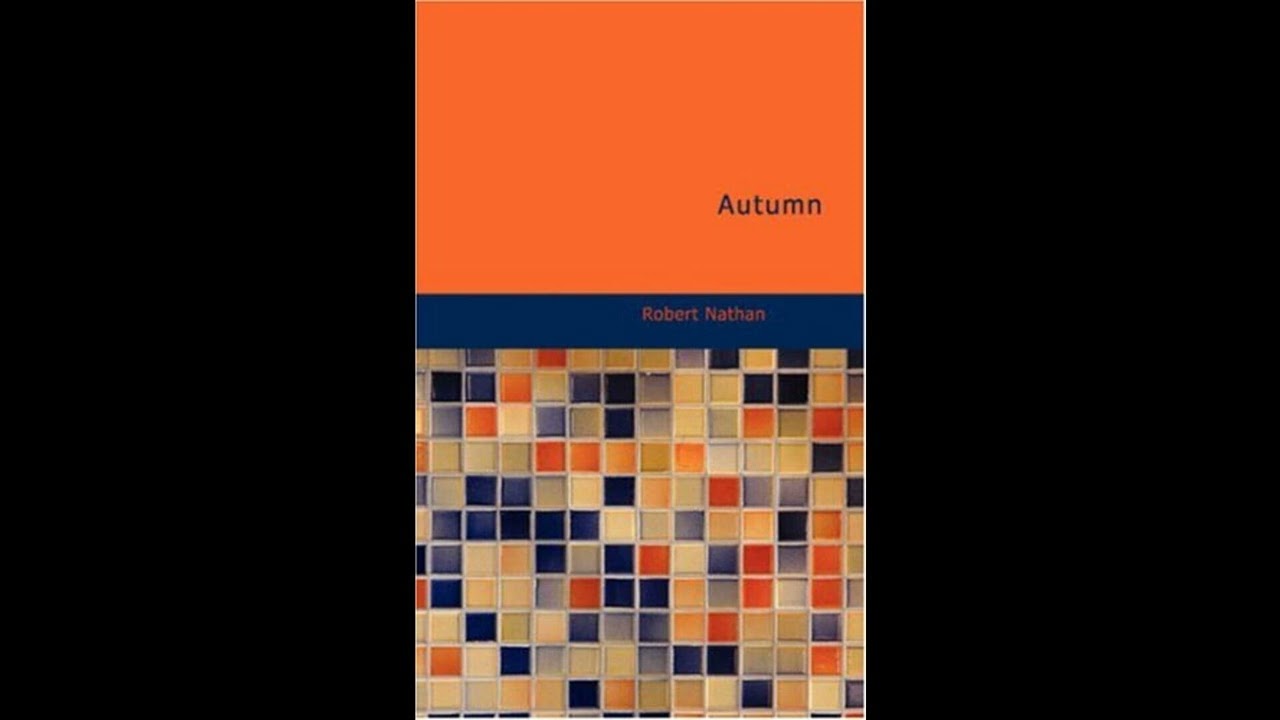
Autumn
Robert Nathan’s Autumn arrives like a whispered secret carried on a cooling breeze—a spare, profoundly moving novella that, despite its seemingly quiet demeanor, holds a powerful resonance for listeners today. This story, published in 1921, invites us into the inner world of an elderly New England schoolteacher as she confronts the twilight of her years and the bittersweet melodies of memory. It is a work that asks us to pause, to breathe, and to consider the beauty and poignancy found in the ordinary rhythms of life, love, and loss. In a world often rushing forward, Nathan’s gentle prose offers a necessary moment of reflection, reminding us that even in stillness, profound emotional landscapes can unfold. The story introduces us to Miss Jemima Snow, a woman whose life has been as regular and predictable as the changing seasons in the small New England town she calls home. For decades, she has taught the local children, her days marked by the school bell, the turning pages of textbooks, and the quiet companionship of her pet canary. As the narrative opens, the season is shifting, and Miss Snow feels the chill of autumn not just in the air, but in her bones. She is aware of the passage of time, the fading of her own youth, and the creeping solitude that often accompanies old age. Her internal world, however, is anything but quiet; it is a space filled with vivid recollections of a lost love from her younger days, a romance that never quite came to fruition but continues to shape her understanding of happiness and regret. This serene but emotionally charged existence is gently disturbed by the impending arrival of a new, young temporary teacher, Mr. Wetherby, who is coming to assist during the colder months. Mr. Wetherby, though a figure only glimpsed and anticipated for much of the narrative, becomes a focal point for Miss Snow’s hopes and anxieties. He represents the vitality of youth she feels slipping away, a potential new connection in her isolated life, and a catalyst for her to re-evaluate her past choices and the meaning she has found in her quiet vocation. The central conflict is not one of external drama, but an deeply internal one: Miss Snow's struggle to reconcile her memories, her present loneliness, and her gentle acceptance of what life has given her, all against the backdrop of an advancing autumn that mirrors her own stage of life. Robert Nathan, born in New York City in 1894, was a prolific American novelist and poet whose distinctive voice made him a beloved author for many decades. Educated briefly at Harvard, Nathan pursued writing as his lifelong calling, producing over fifty novels and numerous volumes of poetry throughout his long career. His first novel appeared in 1919, and he continued writing until his death in 1986. Nathan quickly developed a unique style characterized by a blend of realism, fantasy, and philosophical whimsy. He often crafted allegorical tales, imbuing everyday situations with a subtle, almost mythic quality. While Autumn may be one of his earlier works, it showcases the lyrical prose and introspective depth that would become hallmarks of his later, more widely known successes. He gained significant recognition for novels such as One More Spring (1933), a poignant story of three down-and-out individuals finding solace during the Great Depression, and Portrait of Jennie (1939), a highly acclaimed and fantastical romance that was later adapted into a celebrated film. Nathan's writing frequently dealt with themes of love, loneliness, and the pursuit of meaning, often through the lens of characters who are a little outside the mainstream, demonstrating a quiet dignity in their struggles. He occupied a unique place in American literature, distinct from the hard-boiled realism or experimental modernism of many of his contemporaries, offering instead a gentle, poetic perspective. Autumn enacts several profound themes that resonate deeply. One central idea is the passage of time and mortality. Miss Snow’s constant awareness of the changing seasons, especially the arrival of autumn, functions as a powerful metaphor for her own aging. She observes the leaves turning color, feeling the chill, and understanding that these natural shifts parallel the quiet ebbing of her own life. Another significant theme is memory and the way it shapes identity. Miss Snow frequently revisits a specific youthful romance, recalling the details with a clarity that suggests these past moments are as real and present to her as her current surroundings. This act of remembering is not a nostalgic indulgence but a vital process through which she defines herself and finds meaning in a solitary existence. The book also addresses the theme of loneliness and the human yearning for connection. Miss Snow’s daily routines are marked by a profound isolation, alleviated only by the chirp of her canary. The anticipation of Mr. Wetherby's arrival highlights her underlying desire for companionship and a shared human experience, even if it's just a fleeting one. This quiet longing is universal, making Miss Snow’s plight feel deeply personal to anyone who has experienced solitude. Finally, the novel touches upon the beauty and quiet dignity found in an ordinary life. Despite her unfulfilled dreams and her sense of isolation, Miss Snow’s dedication to her profession and her deep appreciation for the natural world around her portray a life lived with grace and purpose, demonstrating that a life free of grand events can still be profoundly rich. When Autumn was published in 1921, American society was undergoing rapid transformation. The aftermath of World War I brought a mix of disillusionment and a booming economy that would usher in the "Roaring Twenties." While many writers of the period, often associated with the "Lost Generation," were reacting to the trauma of the war and the perceived moral decay of society with cynicism and experimental forms, Robert Nathan offered a contrasting sensibility. His work provided a quieter, more reflective, and often sentimental counterpoint to the stark realities portrayed by authors like F. Scott Fitzgerald or Ernest Hemingway. The book’s setting in rural New England and its focus on the internal life of an elderly schoolteacher also spoke to a nation grappling with the push-pull of modernization and tradition. As cities grew and industrialization advanced, works like Autumn gently celebrated the enduring human spirit in a more pastoral, unchanging environment, offering a sense of stability and timelessness amidst rapid social change. It appealed to readers who sought solace and beauty in lyrical prose and introspective storytelling, rather than the sharp social commentary or psychological intensity of many contemporary works. Listening to Autumn as an audiobook offers a particularly resonant experience. The story's intimate nature, largely unfolding within Miss Snow’s thoughts and memories, lends itself perfectly to the spoken word. The narrator's voice becomes crucial, embodying Miss Snow’s gentle wisdom, her quiet yearnings, and her deep sense of observation. With a run length of several hours, this allows for a focused, yet unhurried immersion into her world. Listen for the subtle pacing, which often mirrors the slow, deliberate unfolding of Miss Snow's reflections and the quiet rhythm of her days. The sparse dialogue takes on added weight when delivered aloud, each word carrying the full force of its emotional meaning. An adept narration will enhance the book’s serene atmosphere, allowing listeners to fully appreciate the lyrical quality of Nathan’s prose and the delicate interplay of memory, desire, and acceptance that defines Miss Snow’s moving final act.
Enjoyed Autumn? A few ways to support us
Audible & Amazon links are affiliate; we may earn a small commission at no extra cost.
About this production
Human narration by a volunteer reader from LibriVox.org, the public-domain audiobook project. LibriVox volunteers record literary works whose copyright has expired in the United States, releasing the resulting recordings into the public domain.
Autumn by Robert Nathan. The underlying text is in the U.S. public domain. We do not republish any modern copyrighted edition, translation, or commentary.
The 4K cinematic visuals accompanying this audiobook are generated by an AI image model from prompts derived from the source text. No copyrighted photos, paintings, or stock footage are used. AI generation is disclosed on every video on our YouTube channel as required by YouTube's altered/synthetic content policy.
English subtitles are transcribed from the LibriVox recording with OpenAI Whisper. Translations into the 11 other supported languages are produced by Meta's NLLB-200 neural translation model. No human translator's copyrighted translation is used.
Questions about sourcing or rights? See our DMCA & Sourcing policy or contact us.
Enjoyed this audiobook?
If you'd like to own a copy of Autumn or hear a professionally produced edition, the links below help support free audiobook production at no extra cost to you.
As an Amazon Associate we earn from qualifying purchases. Audible / print links are affiliate.