About Bernard Shaw
A towering figure of modern theatre and a prolific voice in social and political commentary, George Bernard Shaw—known universally as Bernard Shaw—was born on July 26, 1856, in Dublin, Ireland, and passed away on November 2, 1950, in Ayot St Lawrence, England. His remarkable life spanned significant social change, and his writing consistently challenged established norms.
Shaw's early life in Dublin was marked by an unconventional upbringing. Though he attended various schools, his formal education was intermittent and largely disliked by him, leading him to consider himself self-taught. He developed a deep appreciation for music and art through his mother’s influence. At age twenty, he moved to London, following his mother and sisters, seeking to establish himself as a writer in the bustling literary scene.
His initial forays into writing were challenging, with five unpublished novels failing to find an audience. Shaw found his voice and an outlet for his formidable intellect through journalism, music criticism, and art criticism. He became deeply involved with the Fabian Society, a socialist organization advocating for gradual reform, which sharpened his understanding of societal issues and his polemical skills. This period laid the groundwork for his dramatic career, as he began writing plays that interrogated contemporary social problems rather than merely entertaining. His first significant play, *Widowers' Houses*, staged in 1892, openly critiquing slum landlordism, signalled the arrival of a new kind of theatre rooted in social realism.
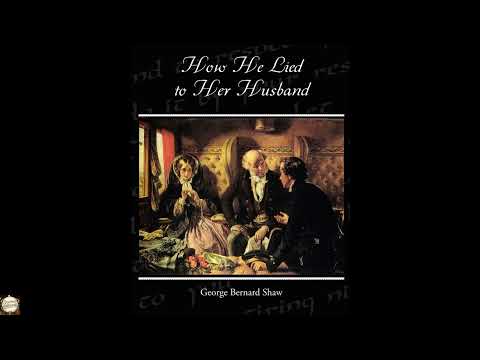
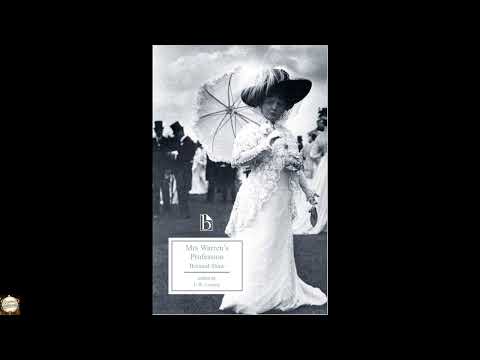
Shaw’s plays rapidly gained recognition for their intellectual vigor and sharp wit. Among his most notable works is *Mrs Warren's Profession*, which incisively exposes the hypocrisy surrounding societal attitudes toward prostitution. *Pygmalion* humorously recounts the transformation of a Cockney flower seller under the tutelage of a phonetics professor, raising questions of class and identity. In *Man and Superman*, he stages a philosophical debate on evolution and the “Life Force” through a comedy of courtship. *Androcles and the Lion* offers a satirical look at religious faith and persecution by reimagining a classical fable. Later, *Saint Joan* brings the historical figure to life, examining her persecution and ultimate canonization through a modern lens. Shorter pieces like *How He Lied to Her Husband* and *Augustus Does His Bit: A True-to-Life Farce* further showcase his versatility and comedic precision in dissecting human foibles.
Throughout his writing, Shaw consistently employed a distinctive style characterized by extended, often paradoxical debates, trenchant wit, and the dramatic inversion of conventional morality. He believed theatre should be a forum for ideas, not just entertainment, and his plays frequently feature characters who articulate opposing viewpoints with compelling conviction. A recurring theme is the critique of social institutions and the exposure of hypocrisy; for instance, in *Mrs Warren's Profession*, he demonstrates how society itself creates and profits from the very problems it condemns. His detailed prefaces to his plays, often longer than the plays themselves, further elaborated on his philosophical and social arguments.
Shaw’s impact on literary history is immense. He revitalized English theatre, moving it away from Victorian melodrama towards a more intellectually engaging and socially conscious form. Awarded the Nobel Prize in Literature in 1925, he left behind a vast body of work that influenced countless subsequent playwrights, essayists, and thinkers. His daring discussions of morality, class, religion, and gender continue to provoke thought and conversation. His incisive wit and fearless social commentary remain as potent and relevant today as when they were first penned.
To listen to his plays as free audiobooks is to experience the enduring power of his dramatic debates and the brilliance of a mind committed to stirring both laughter and profound reflection.
More on Wikipedia →