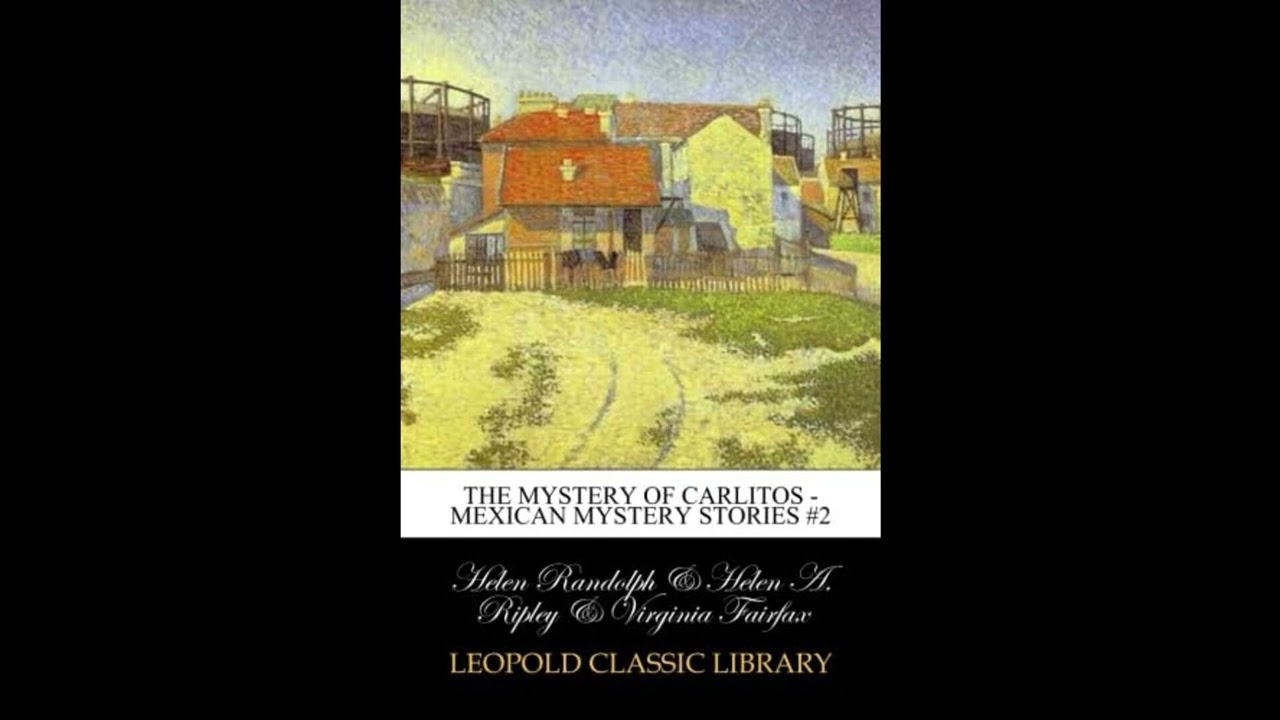
The Mystery of Carlitos - Mexican Mystery Stories #2
Step into a realm where shadows stretch long over sun-drenched plazas and the whispers of the past refuse to be silenced. “The Mystery of Carlitos – Mexican Mystery Stories #2” brings to life a world both familiar and deeply enigmatic, inviting listeners into a classic narrative that grapples with loss, deception, and the relentless human quest for truth. This particular story, one of a collection, stands as a testament to the enduring power of a well-told mystery, offering not just a puzzle to solve but a profound window into cultural perspectives and the intricate workings of a community under duress. It is a story whose questions resonate today, speaking to universal anxieties about disappearance and the secrets that bind people together—or tear them apart. The story centers on the inexplicable disappearance of Carlitos, a young man from a close-knit Mexican community. His absence casts a pall over daily life, transforming the familiar streets and homes into a landscape filled with uneasy silences and unspoken fears. From the first hesitant questions asked among neighbors to the increasingly frantic searches that spread beyond the village limits, the narrative slowly peels back the layers of normalcy, revealing the hidden currents of suspicion and loyalty that define its inhabitants. Carlitos was, in many ways, an ordinary figure, yet his sudden vanishing acts as a catalyst, forcing everyone to look at their lives and relationships with fresh, often unsettling, eyes. As the days turn into weeks, the initial shock gives way to a grim determination to uncover what truly happened. Characters—from the worried mother and bewildered siblings to the stoic local authorities and the various townsfolk who knew Carlitos in different capacities—each bring their own perspectives and prejudices to the unfolding drama. Their efforts to piece together the fragments of his last known movements lead them down unexpected paths, challenging their preconceived notions of who Carlitos was and what secrets he might have kept. The mystery deepens with every unearthed clue, every contradictory statement, painting a compelling picture of a community grappling with an event that defies easy explanation and threatens to unravel its very fabric. The origins of "The Mystery of Carlitos" are shrouded in the mists of time, much like the enigma it describes. While specific dates of authorship or publication remain unrecorded, this anonymity is a distinguishing feature of many treasured classic texts. It suggests a genesis not from a single, widely recognized literary figure but perhaps from an oral tradition, a collective cultural memory, or an early form of written storytelling passed down through generations. Such works often serve as foundational narratives, shaping the literary landscape long before the concept of individual authorship became a celebrated cultural norm. The story likely circulated and evolved, its core elements persisting due to their resonance with the human experience, rather than the fame of its creator. In Mexico, the tradition of anonymous or collectively-shaped narratives runs deep, mirroring the country's rich history of indigenous myth, colonial chronicles, and folk tales. These stories frequently reflect communal values, local lore, and the moral complexities of everyday life, serving as both entertainment and instruction. "The Mystery of Carlitos" belongs to this stream, where the narrative itself, its characters, and the questions it poses take precedence over the identity of the storyteller. It stands as a testament to the enduring power of narrative to capture the spirit of a place and its people, irrespective of a named author, securing its position within the broader canon of traditional Mexican literature. Several key themes emerge from the narrative, giving it its enduring resonance. Foremost among these is the theme of community, especially how a shared crisis can both unify and fracture a populace. The disappearance of Carlitos immediately galvanizes the town into a collective search, with neighbors setting aside petty grievances to aid the distressed family. Yet, this shared purpose soon gives way to suspicion, as whispers spread and fingers point, revealing the undercurrents of distrust and jealousy that had always existed just beneath the surface. For instance, an early scene describing a town meeting shows the initial outpouring of support, quickly followed by nervous glances and hesitant accusations, illustrating how quickly unity can dissolve into division when faced with an unexplained event. Another prominent theme concerns the nature of truth and deception. As the investigation progresses, characters often find themselves caught between what they believe to be true, what they wish were true, and what evidence actually suggests. A recurring motif involves characters carefully choosing their words, or omitting details, driven by fear, loyalty, or a desire to protect others—or themselves. This ambiguity forces the listener to question every piece of information, mirroring the investigator's own struggle to separate fact from fiction. The story frequently hints at cultural beliefs, perhaps superstitions or ancient customs, that complicate logical inquiry, blurring the lines between the rational and the mystical in the pursuit of answers. The cultural and political landscape of Mexico has always been fertile ground for storytelling, and tales like "The Mystery of Carlitos" likely emerged from periods marked by societal change or a strong sense of local identity. Whether it gained prominence during the late colonial era, reflecting tensions between different social strata, or in the post-independence period, as communities grappled with new forms of governance and the forging of a national identity, the story’s themes would have resonated. It might also speak to the concerns of rural communities, where justice often relied on local custom and communal effort rather than distant legal systems. Such stories frequently serve as a cultural mirror, reflecting societal anxieties about order, justice, and the inexplicable aspects of human experience. The period when "The Mystery of Carlitos" solidified into its current form, or was first compiled, probably saw a keen interest in defining national character through narrative, blending indigenous wisdom with European literary influences. This type of mystery, rooted in local life and human emotion, would have provided both entertainment and a means of processing the complexities of a developing nation, offering a lens through which to understand the very fabric of Mexican society at a particular, if unnamed, point in its history. Listening to "The Mystery of Carlitos" as an audiobook offers a singular opportunity to immerse oneself fully in its evocative atmosphere. The length, spanning several hours, makes it an ideal companion for extended listening sessions—during a long drive, while engaging in household chores, or simply when seeking a period of focused quiet reflection. A skilled narrator brings each character to life, lending distinct voices to the worried townspeople, the determined investigators, and the enigmatic figure of Carlitos himself. Listen closely for the subtle shifts in pacing, the dramatic pauses that heighten suspense, and the way dialogue reveals unspoken tensions and hidden motives. The aural presentation allows the story's setting, its sounds and silences, to become a palpable presence, drawing you deeper into the heart of the mystery and the rich cultural landscape it inhabits.
Enjoyed The Mystery of Carlitos - Mexican Mystery Stories #2? A few ways to support us
Audible & Amazon links are affiliate; we may earn a small commission at no extra cost.
About this production
Human narration by a volunteer reader from LibriVox.org, the public-domain audiobook project. LibriVox volunteers record literary works whose copyright has expired in the United States, releasing the resulting recordings into the public domain.
The Mystery of Carlitos - Mexican Mystery Stories #2 by Mexican Mystery Stories #2. The underlying text is in the U.S. public domain. We do not republish any modern copyrighted edition, translation, or commentary.
The 4K cinematic visuals accompanying this audiobook are generated by an AI image model from prompts derived from the source text. No copyrighted photos, paintings, or stock footage are used. AI generation is disclosed on every video on our YouTube channel as required by YouTube's altered/synthetic content policy.
English subtitles are transcribed from the LibriVox recording with OpenAI Whisper. Translations into the 11 other supported languages are produced by Meta's NLLB-200 neural translation model. No human translator's copyrighted translation is used.
Questions about sourcing or rights? See our DMCA & Sourcing policy or contact us.
Enjoyed this audiobook?
If you'd like to own a copy of The Mystery of Carlitos - Mexican Mystery Stories #2 or hear a professionally produced edition, the links below help support free audiobook production at no extra cost to you.
As an Amazon Associate we earn from qualifying purchases. Audible / print links are affiliate.