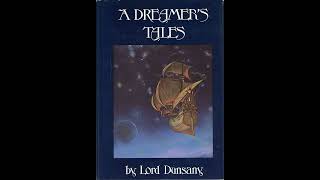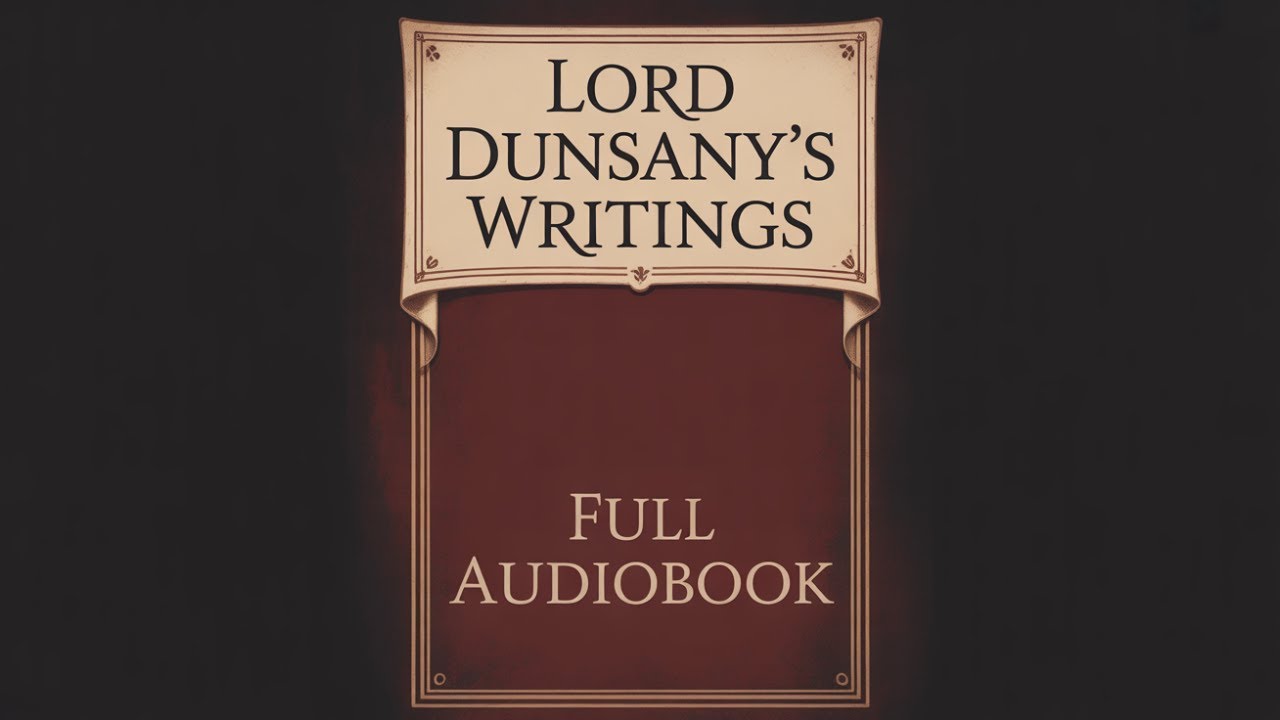
Selections from the Writings of Lord Dunsany
Step into a realm where forgotten gods slumber on peaks of cloud, where ancient cities gleam under alien suns, and where the very fabric of reality bends to the whim of dreamers and poets. Edward John Moreton Drax Plunkett, better known as Lord Dunsany, was a true progenitor of modern fantasy, a writer whose imagination conjured entire pantheons and continents from his own unique vision. This collection, "Selections from the Writings of Lord Dunsany," offers an illuminating portal into his distinct literary universe. For listeners today, Dunsany provides not merely an escape, but a profound contemplation on the nature of belief, the fleetingness of human ambition, and the enduring power of myth, inviting us to see the world not just as it is, but as it could be, filtered through the extraordinary lens of his genius. Lord Dunsany's stories rarely concern themselves with conventional heroes or villains, instead preferring to cast humanity as small, often bewildered figures against a backdrop of cosmic grandeur and ancient, indifferent powers. His narratives frequently unfold in a setting that is at once familiar and utterly alien – lands beyond the edges of maps, cities whose names only whisper in forgotten lore. Listeners will find themselves transported to realms like Pegana, where the greater and lesser gods conduct their affairs with a blend of boredom and terrifying caprice, or to the fabled cities of the Golden Age, now crumbling to dust, their glories long since faded into myth. Characters might be kings seeking immortality, humble farmers stumbling upon a lost god, or adventurers daring to peer beyond the veil of the known world. The central conflict in many of these tales often arises from humanity's audacious attempts to exert control or understanding over forces far beyond its comprehension. A prophet might seek to establish a new religion, only to find the old gods more resilient—or more dangerous—than anticipated. A monarch might strive to build an empire that defies time, only to discover its inevitable decay etched into the very stones. Dunsany’s plots are less about dramatic confrontation and more about the slow, inexorable unfolding of fate, the revelation of deep truths, or the quiet, profound realization of human insignificance in the face of the universe's vast indifference. The arc of these stories often moves from a sense of wonder or curiosity to an encounter with the sublime or the terrible, culminating not in a clear victory or defeat, but in a shift in perspective, a deeper understanding of the world's hidden mechanisms, or a poignant sense of loss for things that can never truly be grasped. The man behind these fantastical visions, Edward John Moreton Drax Plunkett, 18th Baron of Dunsany, lived a life almost as storied as his fiction. Born in London in 1878, he spent the greater part of his life at Dunsany Castle in County Meath, Ireland, a family seat dating back to the 12th century. This ancient lineage and setting undoubtedly influenced his preoccupation with history, decay, and the long echoes of the past. Educated at Eton College and then the Royal Military College, Sandhurst, Dunsany served with the Coldstream Guards in the Second Boer War and later with the Royal Inniskilling Fusiliers during World War I, experiences that perhaps sharpened his awareness of conflict and the impermanence of human affairs. Beyond his military career, he was a keen sportsman, an accomplished cricketer and chess player, and a passionate conservationist. Dunsany's literary career truly began in the early 1900s, with his early collections of short stories establishing his unique voice. His first book, The Gods of Pegana (1905), introduced a pantheon of deities and a fully realized cosmology, laying the groundwork for much of what followed. Other notable works include Time and the Gods, The Book of Wonder, and his most famous novel, The King of Elfland's Daughter. While often associated with the Irish Literary Revival, Dunsany distinguished himself by creating his own original mythologies rather than drawing directly from Irish folklore, though a certain Celtic lyrical quality often permeates his prose. He became a crucial figure in the emergence of speculative fiction, influencing a diverse array of writers from H.P. Lovecraft and J.R.R. Tolkien to Ursula K. Le Guin and Jorge Luis Borges, earning him a significant place in the literary canon as a foundational author of modern fantasy. He passed away in 1957. Among the many powerful currents flowing through Dunsany's writings, a prominent theme is the fragility of human endeavor when juxtaposed against the inexorable march of time and the indifference of cosmic forces. His stories frequently depict once-mighty empires reduced to dust, their names forgotten, their gods unremembered. In one tale, a city's proud inhabitants believe their works will last forever, only for the narrative to show its eventual decay into forgotten ruins, serving as a stark reminder of humanity's fleeting impact. Another significant theme is the allure and danger of the unknown, especially when humans attempt to transcend their natural limits or seek forbidden knowledge. Characters who trespass into the domains of the gods or seek to alter their destiny often face consequences that are both awe-inspiring and terrifying, demonstrating a profound respect for the boundaries between worlds and the perils of seeking what lies beyond. Dunsany also frequently returns to the power of imagination and dreams as a potent force, capable of shaping—or even replacing—reality. His mythologies often originate in the very act of dreaming, suggesting that the interior world holds as much validity and consequence as the external. A character might find that their waking life is merely a shadow of a more vivid dream-existence, or that the gods themselves were born from the slumber of an even greater deity. This intertwines with a profound sense of melancholy beauty concerning transience. There is often a bittersweet acceptance of decay, a quiet reverence for things past, and a recognition that even the most magnificent creations are destined to fade. The beauty often lies in that fading, in the lingering echoes of lost glory, providing a poignant reflection on cycles of creation and destruction. Dunsany wrote primarily during the early decades of the 20th century, a period of immense change and shifting worldviews. Culturally, the late Victorian era's certainties were giving way to the uncertainties of modernism. There was a growing fascination with ancient myths, spiritualism, and the exotic, partially fueled by increased archaeological discoveries and a broadening cultural perspective, though sometimes problematic through the lens of colonialism. Politically, the British Empire was still a dominant force, but the seeds of its decline were being sown, and the specter of World War I loomed large, profoundly impacting European society. Literarily, Dunsany offered a distinct alternative to the prevailing realism of the time. While figures like Yeats and Lady Gregory were leading the Irish Literary Revival by reclaiming national myths, Dunsany forged entirely new ones, providing a unique form of escapism that nonetheless touched upon deep philosophical questions. He emerged as a singular voice, creating a distinct literary space that prefigured much of modern fantasy, offering wonder and existential musing in equal measure. Listening to "Selections from the Writings of Lord Dunsany" as an audiobook offers a particularly rewarding experience. With a run length of several hours, this collection provides ample opportunity to immerse oneself fully in Dunsany's distinctive voice and world. His prose, often described as poetic and grand, with a slightly archaic cadence, truly comes alive when read aloud. A skilled narrator can emphasize the lyrical quality of his sentences, the solemnity of his pronouncements, and the delicate balance between humor and profound awe that characterizes his work. Listen for the deliberate pacing, which allows the listener to absorb the intricate details of his imagined landscapes and the weight of his philosophical observations. The nuanced vocalizations of dialogue, whether between gods or mortals, help to define characters who might otherwise seem archetypal, making their struggles and revelations all the more resonant, enveloping you in the unique, dreamlike atmosphere of his unparalleled creation.
Enjoyed Selections from the Writings of Lord Dunsany? A few ways to support us
Audible & Amazon links are affiliate; we may earn a small commission at no extra cost.
About this production
Human narration by a volunteer reader from LibriVox.org, the public-domain audiobook project. LibriVox volunteers record literary works whose copyright has expired in the United States, releasing the resulting recordings into the public domain.
Selections from the Writings of Lord Dunsany by Edward John Moreton Drax Plunkett D. The underlying text is in the U.S. public domain. We do not republish any modern copyrighted edition, translation, or commentary.
The 4K cinematic visuals accompanying this audiobook are generated by an AI image model from prompts derived from the source text. No copyrighted photos, paintings, or stock footage are used. AI generation is disclosed on every video on our YouTube channel as required by YouTube's altered/synthetic content policy.
English subtitles are transcribed from the LibriVox recording with OpenAI Whisper. Translations into the 11 other supported languages are produced by Meta's NLLB-200 neural translation model. No human translator's copyrighted translation is used.
Questions about sourcing or rights? See our DMCA & Sourcing policy or contact us.
Enjoyed this audiobook?
If you'd like to own a copy of Selections from the Writings of Lord Dunsany or hear a professionally produced edition, the links below help support free audiobook production at no extra cost to you.
As an Amazon Associate we earn from qualifying purchases. Audible / print links are affiliate.