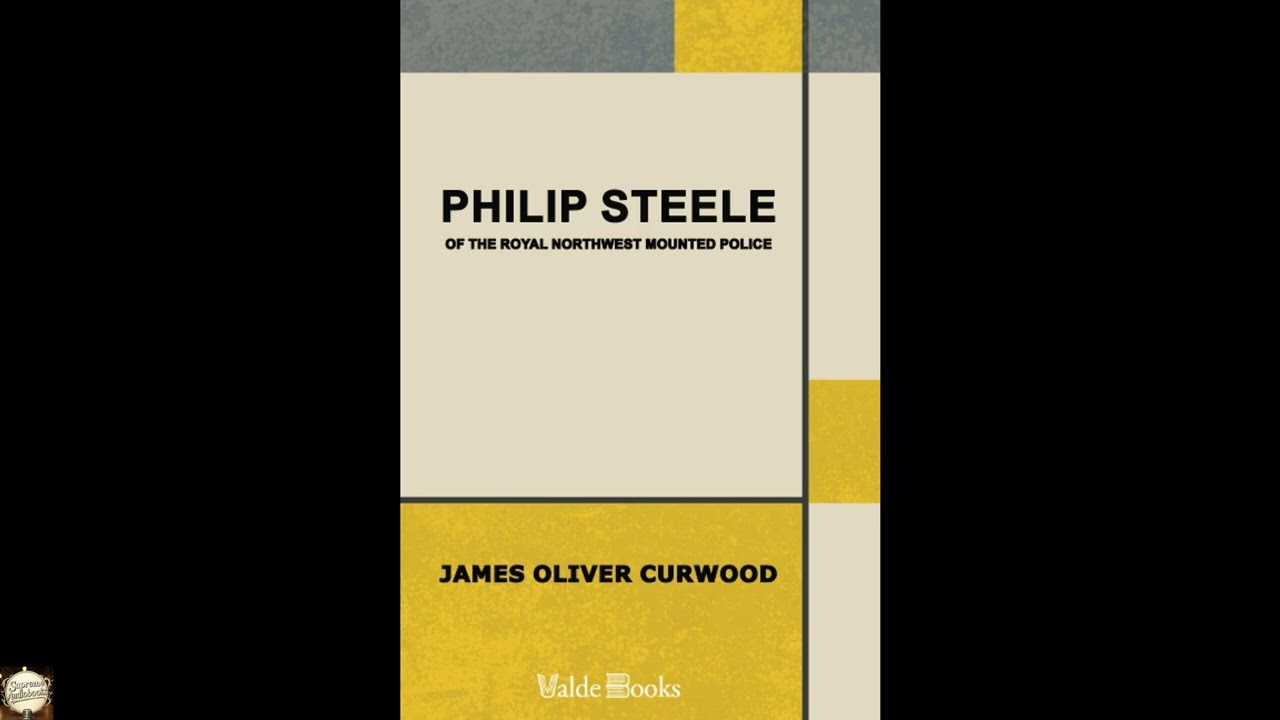
Philip Steele of the Royal Northwest Mounted Police
Step into a world where the vast, untamed wilderness of the Canadian North stretches endlessly, demanding grit, courage, and an unshakeable sense of duty from those who dare to tame its fringes. Philip Steele of the Royal Northwest Mounted Police by James Oliver Curwood plunges listeners into an era of stark beauty and starker danger, presenting a timeless tale of a man wrestling with the elements and the darker side of human nature. This classic adventure, first published over a century ago, continues to resonate today, offering a stirring portrayal of heroism, the price of justice, and the profound allure of the wild. It’s a story that speaks to our enduring fascination with the frontier, where the law is often only as strong as the man who upholds it, and survival itself is a daily triumph. Our story centers on the titular character, Philip Steele, a young, idealistic, yet formidable officer of the Royal Northwest Mounted Police. Assigned to a remote and demanding post deep within the frozen heart of Canada's wilderness—a region of boundless snowfields, formidable forests, and isolated settlements—Steele finds himself quickly immersed in a world where civilization's thin veneer often cracks under the immense pressure of solitude and greed. His beat covers hundreds of square miles, peopled by a hardy mix of Indigenous communities, French-Canadian trappers, grizzled prospectors, and the occasional desperate outlaw. The setting itself, with its relentless blizzards, treacherous frozen rivers, and silent, watchful pine forests, becomes a character in its own right, testing the limits of human endurance and moral conviction. Steele's central challenge emerges not long after his arrival, as he encounters a complex web of deceit, lawlessness, and personal vendettas simmering beneath the deceptively quiet surface of the frontier. He becomes entangled in a dangerous pursuit, tracking a band of ruthless individuals whose transgressions threaten the fragile peace of the region. This mission forces Steele to confront not only external adversaries but also his own beliefs about justice and mercy in a land where conventional rules often hold little sway. Through unforgiving terrain and perilous encounters, Steele's resolve is tested, his ingenuity pushed to its limits, and his understanding of humanity stretched to its breaking point, all while he strives to bring order to a chaotic landscape without compromising his own moral compass. James Oliver Curwood, the author who so vividly brought Philip Steele's world to life, was a remarkable figure whose own life deeply informed his fiction. Born in Owosso, Michigan, in 1878, Curwood nurtured an early passion for the outdoors that would eventually define his literary career. After a brief stint as a reporter for the Detroit News-Tribune, he found his true calling venturing into the vast wilderness of the Canadian North, an environment he would subsequently spend many months of each year inhabiting. These extensive travels, often covering thousands of miles by dog sled, canoe, and snowshoe, provided him with unparalleled authenticity and detail for his stories, allowing him to depict the landscapes, flora, and fauna with a naturalist's precision. Curwood penned over thirty adventure novels and numerous short stories, many of which became bestsellers, establishing him as one of the most popular authors of his time. Works like Kazan, the Wolf Dog (1914) and The Grizzly King (1916), the latter of which later inspired the acclaimed film The Bear, cemented his reputation as a master storyteller of the wild. He was more than just an adventure writer; he was an early and passionate conservationist, using his platform to advocate for the preservation of North America's pristine wilderness and its animal inhabitants, long before environmentalism became a mainstream concern. His novels often blend thrilling narratives with a deep reverence for nature, earning him a unique place in the canon of American nature writing and adventure literature before his untimely death in 1927. Beneath its surface as a thrilling adventure narrative, Philip Steele of the Royal Northwest Mounted Police enacts several enduring themes. One prominent thread is the profound struggle between humanity and the untamed wilderness. Curwood repeatedly showcases the raw power of nature—the crushing cold, the isolation, the relentless blizzards—as an antagonist that can break even the strongest will. We see Steele and others battling against freezing temperatures, struggling to find shelter, and pushing their physical limits across vast, unforgiving distances. These moments emphasize humanity's fragile place in the face of such overwhelming natural forces, yet also highlight the resilience and ingenuity required to survive. Another powerful theme is that of unwavering duty and the pursuit of justice in a lawless land. Philip Steele embodies the iconic image of the Royal Northwest Mounted Police officer: resolute, fair, and dedicated to upholding the law, even when doing so puts his life in extreme peril. When Steele confronts corruption or violence, his actions are driven not by personal gain, but by a deep-seated commitment to principle. This is exemplified in scenes where he must choose between the easy path and the moral imperative, often at great personal cost, illustrating the ideal of a lone figure bringing order and accountability to a frontier often defined by its disregard for both. The narrative also touches on the moral ambiguities of survival, where desperate circumstances can push individuals to actions that blur the lines between right and wrong, prompting reflection on human character under duress. Published in 1911, Philip Steele of the Royal Northwest Mounted Police emerged during a fascinating period in North American history and literature. The early 20th century marked the perceived "closing" of the American frontier, yet Canada's vast northern territories still represented a boundless expanse of unexplored wilderness, ripe for adventure and resource exploitation. This cultural context fueled a popular appetite for stories set in these wild, remote places, romanticizing the rugged individualism of trappers, prospectors, and, of course, the stoic Mounties who represented the distant arm of civilization. Authors like Jack London, Zane Grey, and Curwood himself capitalized on this fascination, crafting tales that transported readers to landscapes of challenge and heroism. This was also a time when the nascent conservation movement was beginning to gather momentum, and Curwood was very much a part of it. His writings, while entertaining, often carried an underlying message about the majesty and vulnerability of the natural world, subtly urging readers to appreciate and protect these vanishing wild spaces. Philip Steele reflects this broader cultural moment, presenting a world where nature's grandeur is both a source of awe and a constant threat, and where human actions—both virtuous and vile—leave an indelible mark on the landscape and its inhabitants. The book stands as a testament to the era's spirit of adventure, its lingering frontier mythology, and a growing consciousness of environmental stewardship. Listening to Philip Steele of the Royal Northwest Mounted Police as an audiobook transforms the printed page into an immersive auditory experience. The run length of several hours makes it an ideal companion for long commutes, a steady presence during household tasks, or a deeply engaging way to unwind. A skilled narrator can make the harsh crackle of a winter night, the whisper of wind through the pines, and the urgent dialogue of confrontation incredibly vivid. Listen for the subtle shifts in the narrator's voice as they portray Steele's quiet determination, the gruffness of a seasoned trapper, or the menacing tones of an antagonist. The pacing often mirrors the story's own rhythm, moving from moments of stark, silent contemplation in the vast wilderness to bursts of intense action and suspense. Through careful vocal performance, the isolation, the beauty, and the inherent dangers of the Canadian North become not just ideas, but palpable sensations, drawing you deep into the heart of this classic tale.
Enjoyed Philip Steele of the Royal Northwest Mounted Police? A few ways to support us
Audible & Amazon links are affiliate; we may earn a small commission at no extra cost.
About this production
Human narration by a volunteer reader from LibriVox.org, the public-domain audiobook project. LibriVox volunteers record literary works whose copyright has expired in the United States, releasing the resulting recordings into the public domain.
Philip Steele of the Royal Northwest Mounted Police by James Oliver Curwood. The underlying text is in the U.S. public domain. We do not republish any modern copyrighted edition, translation, or commentary.
The 4K cinematic visuals accompanying this audiobook are generated by an AI image model from prompts derived from the source text. No copyrighted photos, paintings, or stock footage are used. AI generation is disclosed on every video on our YouTube channel as required by YouTube's altered/synthetic content policy.
English subtitles are transcribed from the LibriVox recording with OpenAI Whisper. Translations into the 11 other supported languages are produced by Meta's NLLB-200 neural translation model. No human translator's copyrighted translation is used.
Questions about sourcing or rights? See our DMCA & Sourcing policy or contact us.
Enjoyed this audiobook?
If you'd like to own a copy of Philip Steele of the Royal Northwest Mounted Police or hear a professionally produced edition, the links below help support free audiobook production at no extra cost to you.
As an Amazon Associate we earn from qualifying purchases. Audible / print links are affiliate.