I Spy
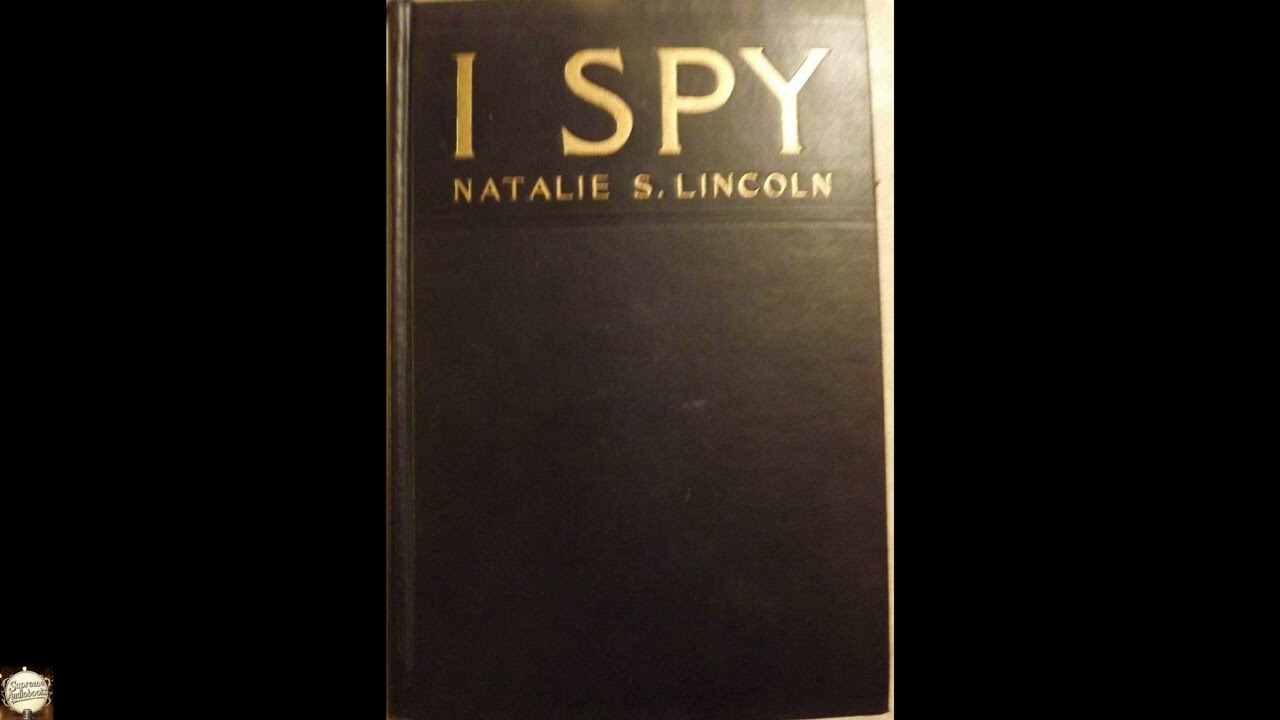
Natalie Sumner Lincoln’s I Spy stands as a quintessential early twentieth-century American mystery, a thrilling plunge into a world of espionage and secrets published at the height of the First World War. This novel invites listeners into a web of intrigue that feels remarkably current even a century later, grappling with themes of national security, personal loyalty, and the deceptive nature of appearances. It’s a compelling listen for anyone who appreciates the foundational works of detective fiction, offering both a gripping narrative and a window into a pivotal historical moment. For those seeking suspense that builds with careful precision, presenting a puzzle demanding keen attention, I Spy promises an experience both intellectually stimulating and deeply entertaining. The story unfolds in Washington D.C., a city already humming with political tension and social machinations even before the global conflict intensified. Our tale centers on the unsettling discovery of a missing letter from the desk of the Secretary of War, a document of immense national importance that seems to vanish without a trace. The immediate suspicion falls upon a seemingly innocent young woman, Ruth Ainsworth, who was the last person seen near the secretary's private office. Her initial denials and confused demeanor only deepen the mystery, drawing her into the harsh glare of an official investigation. As suspicion mounts, Ruth finds herself entangled with a cast of characters whose motives are far from clear: a distinguished diplomat with a cryptic past, a charming socialite whose allegiances seem to shift like the wind, and a driven federal agent determined to uncover the truth, no matter the personal cost. As the narrative progresses, Lincoln skillfully weaves together clues and red herrings, creating a labyrinth of suspicion where no one can be fully trusted. Ruth, determined to clear her name and preserve her reputation, begins her own quiet investigation, navigating the treacherous waters of wartime Washington society. She soon discovers that the missing letter is merely the tip of a much larger conspiracy, one that threatens to compromise national secrets and potentially alter the course of the war. With each new revelation, the danger to Ruth and her country grows, forcing her to confront uncomfortable truths about those she thought she knew, and to question the very fabric of loyalty and patriotism in a time of widespread uncertainty. The tension steadily mounts as Ruth races against time to identify the true perpetrator and prevent a disaster, all while battling the persistent doubts of the authorities and the very real threat posed by the elusive spy. Natalie Sumner Lincoln was born in Washington D.C. in 1871, a city that would become the frequent and atmospheric backdrop for many of her most popular works. She established herself as a prolific author of detective and mystery novels during the early decades of the twentieth century, distinguishing herself through her ability to craft intricate plots and believable characters. Lincoln often focused her narratives on the elite circles and political undercurrents of her hometown, providing readers with an insider's view of the nation's capital. Her output was considerable, with titles like The Official Chaperon (1915), The C.O.D. (1919), and The Red Seal (1920) earning her a dedicated readership. Lincoln's writing placed her firmly within the burgeoning tradition of American detective fiction, a period that saw the genre moving beyond its early, more sensational forms towards a greater emphasis on logical deduction and psychological suspense. She is often mentioned alongside contemporaries like Mary Roberts Rinehart, another prominent female author who popularized the "had-I-but-known" school of mystery writing, though Lincoln tended towards slightly more direct and less overtly romantic plots. Her contributions helped solidify the mystery novel's place as a mainstream form of entertainment, and her works remain valuable examples of how authors of her era used genre fiction to comment on societal anxieties and the changing roles of women. She passed away in 1935, leaving behind a body of work that continues to attract readers interested in the roots of American crime literature. I Spy adeptly navigates several compelling themes, making it more than just a simple whodunit. Central to the narrative is the theme of deception and the fallibility of appearances. Virtually every character in the story operates behind a veneer, whether it's the innocent facade of the suspected Ruth, the patriotic guise of a hidden antagonist, or the ambiguous intentions of those attempting to help. The text consistently challenges the listener to look beyond initial impressions, revealing how easily trust can be manipulated and how difficult it is to discern truth from falsehood, especially when national stakes are high. One key scene early on shows Ruth struggling to recall her precise movements, a moment of genuine confusion that is interpreted by others as evasion, illustrating how quickly misperception can solidify into conviction. Another prominent theme is loyalty versus betrayal, particularly in the context of wartime. The story constantly probes the boundaries of allegiance—personal, national, and ethical. Characters are forced to make difficult choices, and the potential for a trusted friend or colleague to be a hidden enemy creates a pervasive sense of unease. The tension surrounding the missing document, and the broader conspiracy it represents, forces the protagonist to question everyone around her, highlighting the fragility of trust when patriotism is weaponized. Furthermore, the novel touches upon the changing role of women in early 20th-century society, as Ruth, though initially a victim of circumstance, develops into an active and intelligent investigator, challenging conventional expectations for female characters in the genre. Historically, I Spy emerged into a world grappling with the profound impact of World War I. Published in 1916, at a point when America's eventual entry into the conflict seemed increasingly likely, the novel tapped directly into widespread anxieties about espionage, sabotage, and the loyalty of foreign nationals living within the United States. The fear of "the enemy within" was a potent cultural force, reflected in a surge of popular literature that capitalized on spy thrillers and tales of national defense. Washington D.C. itself was undergoing a dramatic transformation, evolving from a relatively quiet political center into a bustling hub of wartime activity, making it an ideal, recognizable, and relevant setting for a story of international intrigue. Lincoln’s decision to place the heart of her conspiracy within the very chambers of power resonated deeply with a public anxious about the security of their nation. Listening to I Spy as an audiobook offers a particularly immersive and suspenseful experience. The pacing of the narration is critical, allowing the listener to absorb the intricate details of the plot and the subtle shifts in character motivations. A skilled narrator can bring to life the distinctive voices of wartime Washington’s elite and its hidden agents, making the dialogue crackle with unspoken tension and veiled threats. The run length of several hours makes this a perfect companion for extended periods of focused listening, whether during long commutes, household tasks, or simply as an evening escape. Pay close attention to the delivery of descriptions of the D.C. setting, which add a layer of historical realism, and to the escalating urgency in the narrative voice as Ruth closes in on the truth—these elements truly amplify the novel’s enduring power as a classic American mystery.
Enjoyed I Spy? A few ways to support us
Audible & Amazon links are affiliate; we may earn a small commission at no extra cost.
About this production
Human narration by a volunteer reader from LibriVox.org, the public-domain audiobook project. LibriVox volunteers record literary works whose copyright has expired in the United States, releasing the resulting recordings into the public domain.
I Spy by Natalie Sumner LINCOLN. The underlying text is in the U.S. public domain. We do not republish any modern copyrighted edition, translation, or commentary.
The 4K cinematic visuals accompanying this audiobook are generated by an AI image model from prompts derived from the source text. No copyrighted photos, paintings, or stock footage are used. AI generation is disclosed on every video on our YouTube channel as required by YouTube's altered/synthetic content policy.
English subtitles are transcribed from the LibriVox recording with OpenAI Whisper. Translations into the 11 other supported languages are produced by Meta's NLLB-200 neural translation model. No human translator's copyrighted translation is used.
Questions about sourcing or rights? See our DMCA & Sourcing policy or contact us.
Enjoyed this audiobook?
If you'd like to own a copy of I Spy or hear a professionally produced edition, the links below help support free audiobook production at no extra cost to you.
As an Amazon Associate we earn from qualifying purchases. Audible / print links are affiliate.