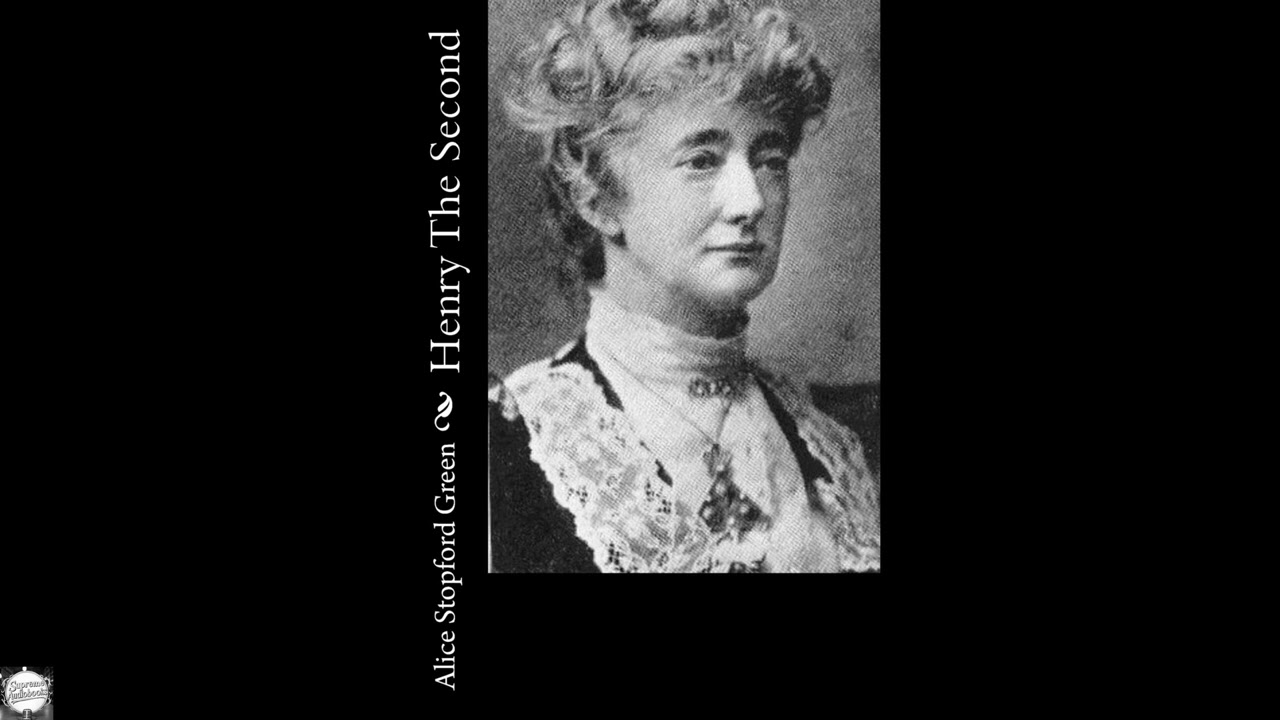
Henry The Second
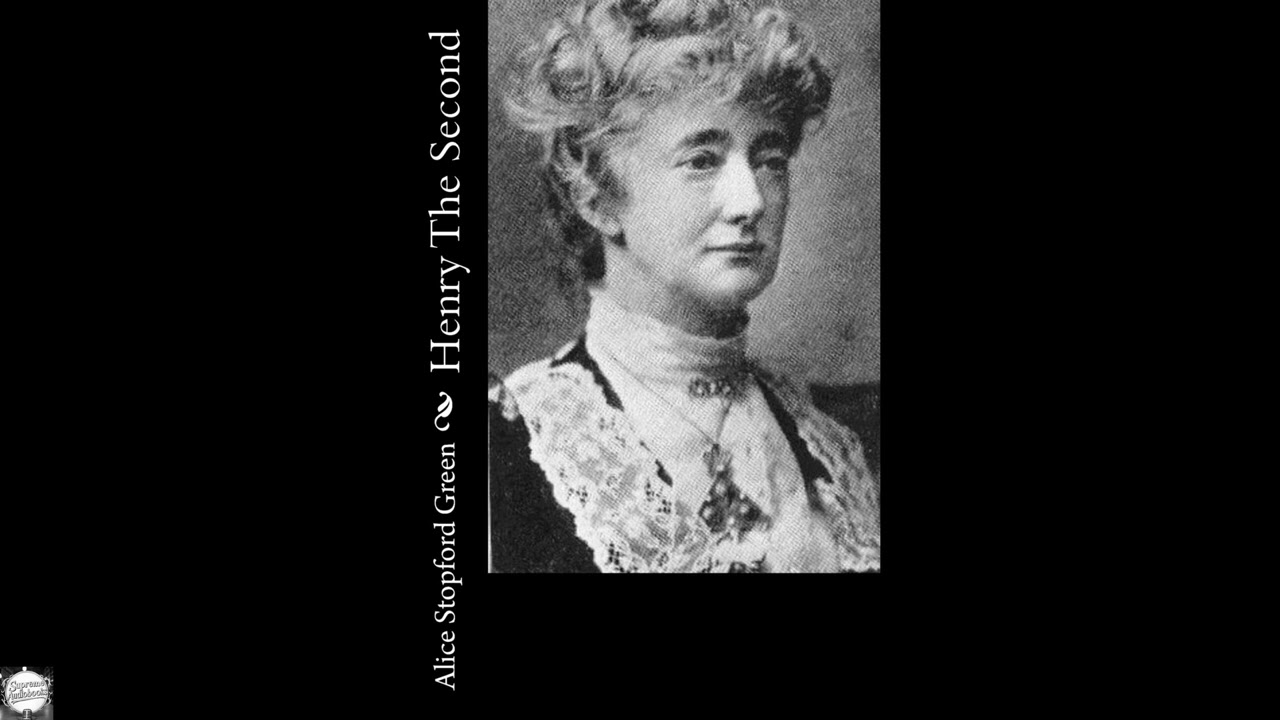
Few rulers in history have left as indelible a mark on the fabric of a nation as Henry II of England, and few historical accounts bring his monumental reign to life with the clarity and keen insight found in Alice Stopford Green's "Henry The Second." This is not merely a recounting of battles and decrees, but a penetrating study of a king who, in his furious energy and uncompromising will, reshaped medieval Europe and laid the foundational stones of English law and governance that persist even today. Why should a listener care about a twelfth-century monarch? Because Henry's struggles – to consolidate power, to define the relationship between church and state, to assert royal authority, and to contend with the ambitions of his own family – echo through every age where leaders grapple with profound institutional change, personal loyalties, and the enduring quest for a just and orderly society. His story is a powerful reminder that the grand sweep of history is often forged in the crucible of individual character and ambition. The narrative plunges the listener into the tumultuous twelfth century, a period often described as a dark age, yet one brimming with intellectual ferment and political ambition. Henry II, a scion of the powerful Plantagenet dynasty, inherited a kingdom ravaged by civil war and a sprawling continental empire stretching from England to the Pyrenees. Green expertly sets the stage for a monarch destined not merely to rule, but to innovate. We meet Henry as a young, vigorous, and exceptionally intelligent ruler, driven by an almost obsessive desire to restore order and establish a unified system of law across his disparate dominions. His court became a hub of intellectual activity, attracting scholars and administrators, all focused on his grand vision for a centralized, efficient state. The central drama of Henry's reign, and indeed of this book, unfolds around his complex and ultimately tragic relationship with Thomas Becket. Initially, Becket was Henry's most trusted chancellor, a boon companion and formidable administrator who helped the king assert his authority. Henry, convinced that a loyal churchman would align with royal objectives, elevated Becket to Archbishop of Canterbury. However, Becket's transformation from loyal servant to fervent defender of ecclesiastical independence ignited a profound and bitter conflict between the two men. The book meticulously details the escalating confrontations, the clash of wills over the jurisdiction of church courts versus royal justice, and the fundamental question of who held ultimate authority in England—the Crown or the Church. This intellectual and spiritual battle, which saw Becket eventually flee into exile, forms the compelling heart of the account, showing two powerful personalities locked in an unyielding struggle for principle and dominance. Alice Stopford Green, born Alice Sophia Amelia Stopford in Dublin in 1847, carved a distinguished career as an eminent historian and, later, a significant political figure in her native Ireland. Her early life was shaped by intellectual curiosity and a strong scholarly environment; her father was Archdeacon of Meath, and she was educated at home. Her most formative experience came through her marriage to the renowned historian John Richard Green, whose work, "A Short History of the English People," revolutionized the study of English history by focusing on social and cultural developments rather than solely on kings and battles. Alice became an indispensable collaborator, assisting him in his research and writing until his premature death in 1883. Following her husband's death, Alice Stopford Green continued his legacy, editing and completing his unfinished works, while also forging her own independent path as a historian. "Henry The Second," published in 1888, was one of her earliest solo ventures, demonstrating her considerable talent for historical narrative and analysis. She went on to author other significant works, including the influential "Town Life in the Fifteenth Century" (1894) and "Irish Nationality" (1911), which reflected her growing engagement with Irish history and politics. In her later years, she became a staunch advocate for Irish self-governance, moving to Dublin in 1918 and becoming a prominent figure in the Irish Free State, serving as a senator from 1922 until her death in 1929. Her work, including this biography of Henry II, reveals a historian deeply interested in the origins of national identity, legal systems, and the complex interplay between personality and the broader currents of history. One of the central themes running through "Henry The Second" is the relentless pursuit of law and order. Henry’s reign was characterized by monumental legal reforms that effectively created England’s common law system. Green illustrates this by detailing the establishment of circuit judges, the Assize of Clarendon, and the Assize of Northampton, which formalized trial by jury and laid the groundwork for modern judicial procedures. For instance, the descriptions of these itinerant judges traveling across the country, dispensing royal justice and thus undermining local feudal lords' power, provides a vivid picture of Henry's systematic approach to governance. Another prominent theme is the enduring conflict between secular and ecclesiastical authority. The clash with Becket is a potent example, demonstrating the deep-seated tension over jurisdiction and power, a struggle that defined much of medieval Europe. The King's assertion that even clerics should be subject to royal courts directly challenged centuries of church privilege, a confrontation depicted with clarity and dramatic force. A third significant theme is the nature of ambition and its profound consequences. Henry was a man of immense ambition, driven to restore stability, expand his empire, and leave a lasting legacy. Yet, this very ambition often led to isolation and bitter conflict, not only with the Church but also with his formidable wife, Eleanor of Aquitaine, and tragically, with his own sons, who repeatedly rebelled against him. Green’s narrative captures how Henry’s relentless drive for control and his sometimes ruthless methods, while yielding revolutionary results, also sowed seeds of discord that plagued his later years, showing the human cost of his grand designs. The book presents Henry not as a flawless hero, but as a complex figure whose extraordinary achievements were often shadowed by personal and political turmoil stemming directly from his own uncompromising nature. Alice Stopford Green's "Henry The Second" emerged in a fascinating period of intellectual and historical inquiry during the late nineteenth century. Victorian England saw a burgeoning interest in understanding the historical roots of its institutions, its legal system, and its national character. Historians were moving beyond purely anecdotal chronicles to more analytical and evidence-based approaches, influenced by German scholarship and the scientific method. This era also coincided with a growing sense of imperial destiny, and figures like Henry II, who built a vast empire and centralized authority, held particular resonance. Green’s work fits perfectly into this context, offering a rigorously researched yet engaging biography that contributed to the ongoing national conversation about governance, law, and the defining moments of English history. Her book, while deeply scholarly, was also accessible, reflecting a Victorian desire to make history comprehensible and inspiring to a broader educated public. It also foreshadowed her later critical stance towards imperial power, even as it examined the foundations of English statecraft. Listening to "Henry The Second" as an audiobook offers a singular experience, particularly for a work of such historical depth and narrative precision. The spoken word allows the listener to absorb Green's intricate arguments and detailed accounts at a pace that encourages thoughtful reflection. A skilled narrator can bring out the gravitas of Henry's pronouncements, the tension in the confrontations with Becket, and the sheer scale of the administrative reforms being described. With several hours of listening time, this is an excellent choice for extended periods of focused concentration, whether during commutes, while performing household tasks, or simply in quiet contemplation. The subtle nuances of the narrator's voice can illuminate the political maneuvering and the psychological complexities of the historical figures, transforming what might otherwise be dense historical prose into a compelling oral history, allowing the listener to truly inhabit the world of a pivotal twelfth-century monarch.
Enjoyed Henry The Second? A few ways to support us
Audible & Amazon links are affiliate; we may earn a small commission at no extra cost.
About this production
Human narration by a volunteer reader from LibriVox.org, the public-domain audiobook project. LibriVox volunteers record literary works whose copyright has expired in the United States, releasing the resulting recordings into the public domain.
Henry The Second by Alice Stopford Green. The underlying text is in the U.S. public domain. We do not republish any modern copyrighted edition, translation, or commentary.
The 4K cinematic visuals accompanying this audiobook are generated by an AI image model from prompts derived from the source text. No copyrighted photos, paintings, or stock footage are used. AI generation is disclosed on every video on our YouTube channel as required by YouTube's altered/synthetic content policy.
English subtitles are transcribed from the LibriVox recording with OpenAI Whisper. Translations into the 11 other supported languages are produced by Meta's NLLB-200 neural translation model. No human translator's copyrighted translation is used.
Questions about sourcing or rights? See our DMCA & Sourcing policy or contact us.
Enjoyed this audiobook?
If you'd like to own a copy of Henry The Second or hear a professionally produced edition, the links below help support free audiobook production at no extra cost to you.
As an Amazon Associate we earn from qualifying purchases. Audible / print links are affiliate.