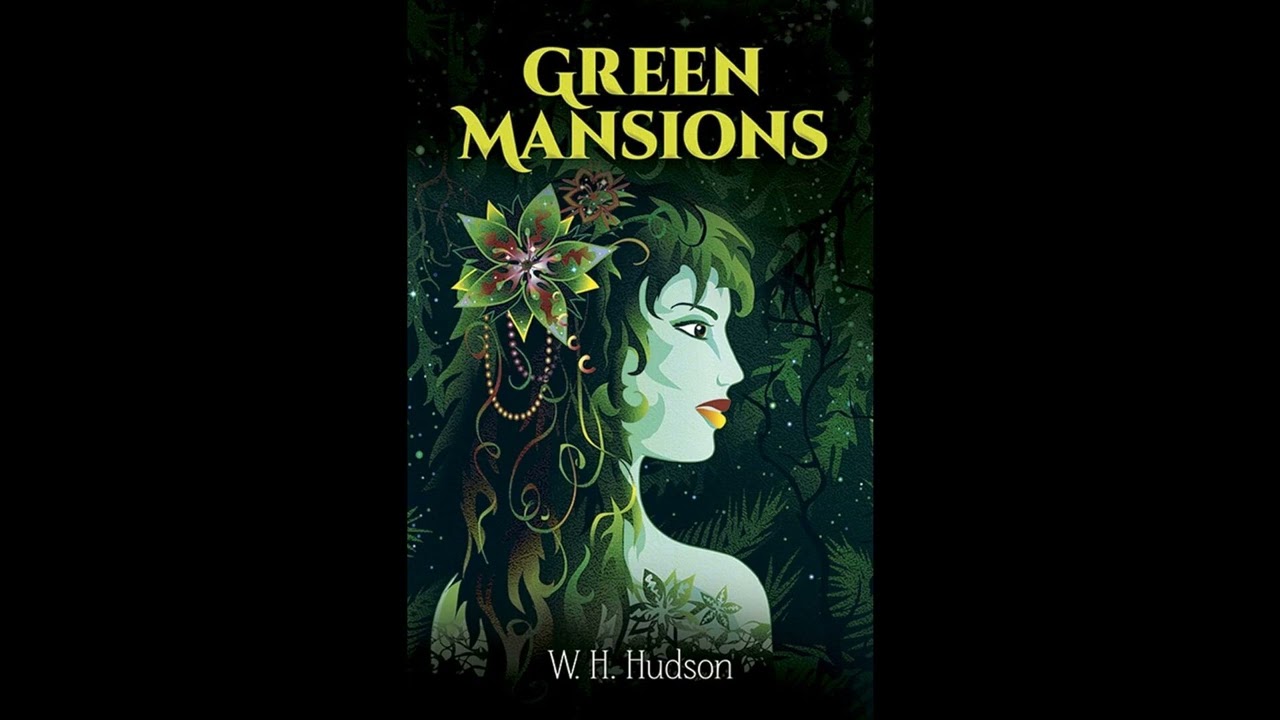
Green Mansions: A Romance of the Tropical Forest
"Green Mansions: A Romance of the Tropical Forest" invites listeners into a realm where the untamed heart of nature beats in rhythm with human yearning and mystery. This enduring classic transports us far from the clamor of cities, deep into the primordial South American rainforest, to witness a love story unlike any other. It is a narrative that speaks to our deepest instincts—the desire for escape, the search for an ideal, and the profound, often perilous, connection between humanity and the wild world. Even today, the questions this romance poses about innocence, civilization's impact, and the elusive nature of beauty resonate, offering a compelling reflection on what it means to find paradise, and perhaps, to lose it forever. Our story begins with Abel, a young Venezuelan political refugee, forced to flee the city and seek refuge in the vast, unexplored depths of the Guiana wilderness. Alone and adrift, he finds companionship in the grizzled, superstitious Nuflo, an older man who serves as his guide and protector in this alien landscape. Abel, haunted by his past and drawn by an inexplicable yearning, pushes ever deeper into the forest, a place the indigenous tribes refer to with a mixture of awe and terror. He finds himself mesmerized by the sheer power and beauty of the "Green Mansions," the impenetrable verdant canopy that stretches endlessly, concealing both wonder and danger. It is in this hidden world that Abel encounters Rima, an enigmatic "bird-girl" who seems as much a creature of the forest as its countless winged inhabitants. She possesses an otherworldly grace, a unique, melodic language understood only by the animals and the wind, and an intimate knowledge of the jungle's secrets. Abel is instantly smitten, his fascination quickly deepening into a profound, almost spiritual affection. Rima, with her elusive presence and profound innocence, becomes an embodiment of the wild itself, a living myth amidst the ancient trees. Their burgeoning connection forms the heart of the narrative, a delicate bond forged in the crucible of the wild. However, their idyllic existence is constantly threatened. The superstitions and fears of the local indigenous tribes, who view Rima with a mixture of reverence and dread, create an escalating tension. Abel struggles to reconcile his idealized vision of Rima and her sanctuary with the harsh realities and ancient prejudices of the jungle's human inhabitants. As the narrative unfolds, external forces and internal conflicts converge, putting their fragile haven and their very lives at risk, testing the boundaries of love and the endurance of innocence against the encroaching shadows of human ignorance and destruction. The enduring power of "Green Mansions: A Romance of the Tropical Forest" comes partly from its unique place in literature, a story that seems to have sprung organically from the very soil it describes. While specific biographical details about a named author remain elusive, the narrative itself speaks with an authority and an imaginative sweep that suggests a profound understanding of both human emotion and the natural world. This kind of tale—one that blends exotic adventure with deep philosophical currents—often arises from a collective fascination with the unknown, a period when the maps of the world still held blank spaces waiting to be filled by both scientific discovery and romantic fantasy. Instead of a single, identifiable literary figure, one might consider the narrative as emerging from the broader literary impulses of an age captivated by natural wonders and the allure of distant, untamed lands. It aligns with a tradition of romantic naturalism, where the wild is not merely a backdrop but a character in its own right, shaping destinies and revealing elemental truths about human nature. The poetic descriptions of the jungle, the keen observation of its flora and fauna, and the almost mythical rendering of Rima herself, suggest a voice deeply attuned to the rhythms of the earth, one that perhaps sought to give voice to the unspoken beauty and tragedy of disappearing wildernesses. This work resonates as a testament to the power of storytelling to transcend individual authorship, becoming a kind of shared dream or warning. It stands among those classic narratives that, irrespective of their precise origins, have carved out a significant space in the collective literary consciousness. Its enduring presence underscores the human need for stories that transport us, challenge our perceptions, and remind us of the precious, often fragile, balance between progress and preservation, especially in the face of nature's awesome majesty. "Green Mansions" enacts several powerful themes that contribute to its lasting appeal. Foremost among these is the stark contrast between nature and civilization. Rima herself is the living embodiment of untamed nature, her unique communication with animals and her intrinsic connection to the forest serving as a profound counterpoint to Abel's European sensibility. A poignant scene demonstrating this involves Rima's effortless navigation through dense undergrowth, communicating with birds through their own calls, while Abel, a product of society, struggles to adapt, his civilized sensibilities often making him a clumsy intruder in her world. This theme extends to the "Green Mansions" themselves—a symbolic sanctuary of purity and primeval beauty, constantly threatened by the encroachment of human fear, greed, and misunderstanding. Another central theme is the illusory nature of paradise and the painful reality of its loss. Abel discovers in the "Green Mansions" a kind of Eden, and in Rima, an innocent, uncorrupted Eve. However, this paradise is fragile, built on an idealized vision that clashes with the harsh realities of human nature and tribal superstitions. For instance, the growing fear and suspicion of the local Didi tribesmen towards Rima, fueled by their own ancient beliefs and Abel's perceived intrusion, highlights how quickly harmony can shatter. This escalating tension culminates in events that irrevocably alter Abel's perception of his sanctuary, demonstrating that even the most perfect of worlds can be tragically undone by the outside world's influence and internal conflicts. The story thus becomes a haunting meditation on the fleeting nature of beauty and the devastating consequences of humanity's inability to live harmoniously with the wild. The appearance of a story like "Green Mansions" fits perfectly within the broader intellectual and cultural currents that marked the late nineteenth and early twentieth centuries. This period saw an intense fascination with the natural world, particularly its unexplored regions, driven by continued colonial expansion and scientific discovery. Expeditions into the Amazon and other remote territories fired the public imagination, creating a hunger for tales of exotic lands, strange creatures, and "lost" civilizations. There was a prevailing sense that the last true wildernesses were rapidly disappearing, lending an urgent, elegiac quality to narratives that sought to immortalize them. This era also witnessed the blossoming of Romantic Naturalism in literature, a movement that blended the Romantic emphasis on emotion and individualism with a naturalist's keen observation of the environment. Writers often portrayed nature as both sublime and indifferent, a source of spiritual renewal but also primal danger. "Green Mansions" clearly operates within this framework, portraying the jungle with meticulous, poetic detail while imbuing it with a mystical, almost sentient quality. The narrative also touches upon evolving philosophical perspectives concerning indigenous cultures and the concept of the "noble savage," a complex trope that reflected both a romantic idealization of pre-civilized life and the often-problematic gaze of the encroaching Western world. Such stories emerged at a time when humanity was grappling with the environmental consequences of industrialization and urban growth, seeking solace or warning in the vast, untamed corners of the globe. To experience "Green Mansions" as an audiobook is to truly immerse oneself in its unique atmosphere. The skillful narration becomes the very voice of the forest, guiding the listener through Abel's reflective observations and Rima's ethereal, often wordless expressions. Imagine the subtle shifts in tone that convey the humid stillness of the jungle, the sudden crackle of unseen life, or the heart-pounding suspense of an encounter with danger. With several hours of listening time, the story unfolds at a measured pace, allowing the listener to truly inhabit the setting, absorbing its sensuous descriptions and the profound emotional journey of its characters. The nuanced delivery of dialogue and the rich descriptive passages will undoubtedly enhance the sense of wonder and melancholy, drawing listeners deeper into this extraordinary romance of the tropical forest, making the "Green Mansions" feel breathtakingly real, even as it slips away.
Enjoyed Green Mansions: A Romance of the Tropical Forest? A few ways to support us
Audible & Amazon links are affiliate; we may earn a small commission at no extra cost.
About this production
Human narration by a volunteer reader from LibriVox.org, the public-domain audiobook project. LibriVox volunteers record literary works whose copyright has expired in the United States, releasing the resulting recordings into the public domain.
Green Mansions: A Romance of the Tropical Forest by William Henry Hudson. The underlying text is in the U.S. public domain. We do not republish any modern copyrighted edition, translation, or commentary.
The 4K cinematic visuals accompanying this audiobook are generated by an AI image model from prompts derived from the source text. No copyrighted photos, paintings, or stock footage are used. AI generation is disclosed on every video on our YouTube channel as required by YouTube's altered/synthetic content policy.
English subtitles are transcribed from the LibriVox recording with OpenAI Whisper. Translations into the 11 other supported languages are produced by Meta's NLLB-200 neural translation model. No human translator's copyrighted translation is used.
Questions about sourcing or rights? See our DMCA & Sourcing policy or contact us.
Enjoyed this audiobook?
If you'd like to own a copy of Green Mansions: A Romance of the Tropical Forest or hear a professionally produced edition, the links below help support free audiobook production at no extra cost to you.
As an Amazon Associate we earn from qualifying purchases. Audible / print links are affiliate.