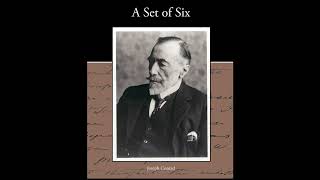
Almayer's Folly
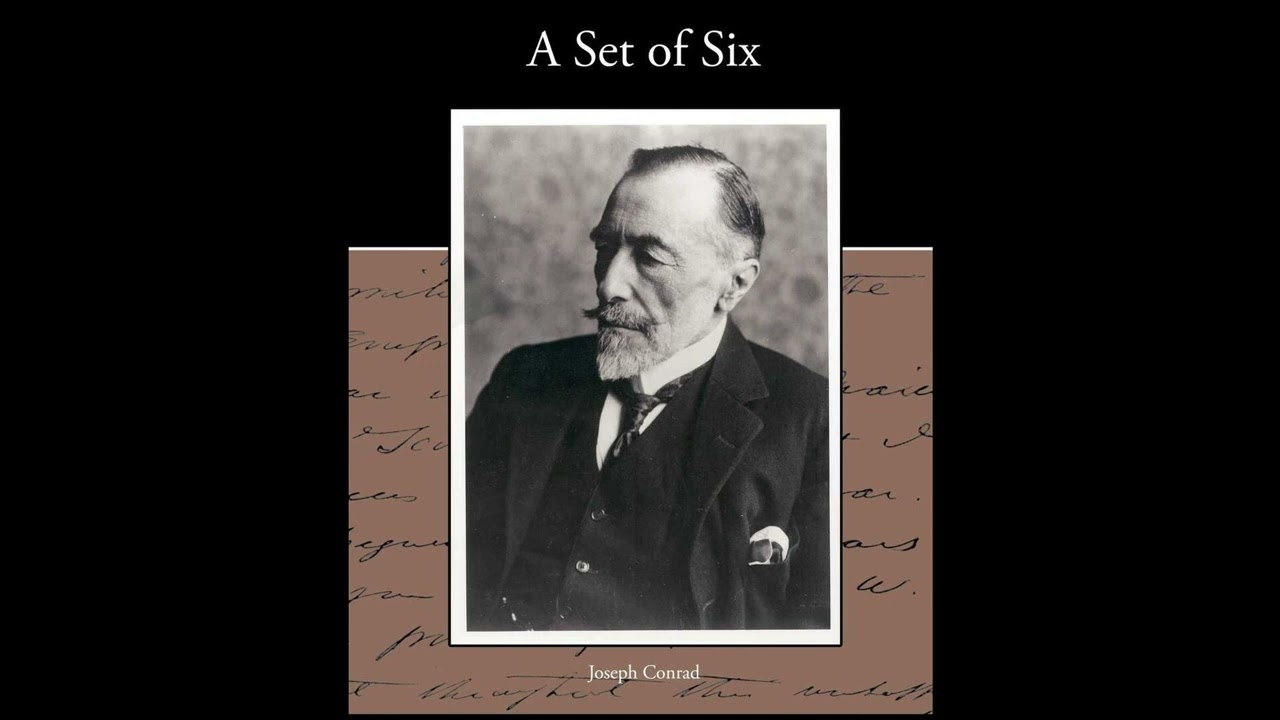
Step into a world where ambition curdles into delusion, where the promise of empire collapses under its own weight, and where a single man's futile dreams are swallowed by the indifferent vastness of the tropical wilderness. Joseph Conrad's Almayer's Folly, his very first novel, introduces listeners to the powerful themes and distinctive voice that would define one of literature's most enduring figures. Published in 1895, this story of a European trader's slow psychological decay amidst the humid rivers of Borneo remains astonishingly resonant today. It confronts the insidious nature of colonial fantasy, the profound ache of unfulfilled desire, and the devastating consequences of clinging to an imagined future while the present crumbles around you. Its stark portrayal of human failing, set against a backdrop of lush, unforgiving nature, offers a profound meditation on the self-deception that can blind even the most resolute of souls. The narrative transports us to a remote trading post on the Pantai river, in the late nineteenth century Malay Archipelago. Here, Kaspar Almayer, a Dutch trader, has constructed a precarious life based on an almost delusional optimism. He lives in a ramshackle house, known by locals as "Almayer's Folly," an ironic monument to his grand, unfulfilled schemes. Married to a Malay woman he secretly despises, he dreams constantly of striking it rich, discovering an fabled gold mine, and escaping his squalid existence to return to European society with his beautiful, mixed-race daughter, Nina. Almayer's life is a constant battle against the encroaching jungle, the shifting loyalties of local chiefs and Arab traders, and most significantly, his own crippling inertia and self-pity. His every venture seems destined for failure, each glimmer of hope quickly extinguished by the harsh realities of his environment and his own profound inability to adapt. The central conflict of the story revolves around Almayer's desperate attempts to control his daughter, Nina, seeing her as his last connection to a European future. Yet, Nina, torn between her European heritage and her Malay upbringing, finds herself increasingly drawn to the vitality and freedom of her mother's world. Her relationship with Dain Maroola, a charismatic Malay prince, directly challenges Almayer's rigid, colonial worldview and threatens to shatter his already fragile aspirations. As Almayer's grand plans for wealth and prestige repeatedly fall apart, he descends deeper into a morass of resentment, bitterness, and psychological isolation. The novel traces his slow, agonizing unraveling as he grapples with forces—both external and internal—that he cannot comprehend or command, leading him towards an inevitable confrontation with his own colossal failures and the ultimate futility of his life's pursuit. The author of this seminal work, Joseph Conrad, was born Józef Teodor Konrad Korzeniowski in 1857 in what is now Ukraine, then part of the Russian Empire. His early life was marked by hardship and political upheaval; orphaned at a young age, he was raised in the shadow of Polish nationalism and imperial repression. At seventeen, he defied his family's landowning traditions and chose a life at sea, serving first on French and then British merchant ships. This career path led him to travel extensively across the globe—to the Pacific, the Indian Ocean, and the Congo—experiences that would later infuse his fiction with unparalleled authenticity and vivid geographical detail. He became a British subject in 1886 and, due to failing health, eventually retired from the sea in the 1890s, at which point he astonishingly turned his formidable talents to writing in English, his third language. Conrad's shift from sailor to novelist was remarkable. Almayer's Folly, published when he was thirty-seven, marked the beginning of a prolific literary career that would produce some of the most profound and influential novels in the English language. His subsequent works, such as Lord Jim, Heart of Darkness, Nostromo, and The Secret Agent, cemented his reputation as a master stylist and a keen observer of human nature. He is often recognized as a pivotal figure in the development of modernism, pushing the boundaries of narrative technique with his complex structures, moral ambiguities, and deep psychological insights. Conrad’s unique perspective as an outsider—a Polish aristocrat, a career seaman, and a non-native English speaker—allowed him to scrutinize the conventions of European society and the dynamics of empire with an acuity few of his contemporaries possessed, securing his enduring place in the literary canon. The novel enacts several potent themes that continue to resonate with listeners today. One central idea is the corrosive nature of colonialism, not only on the colonized but also on the colonizer. Almayer embodies the destructive aspects of European ambition, arriving in a foreign land with a sense of entitlement and a desire for personal gain, ultimately failing to understand or respect the local culture. His disdain for his Malay wife and his inability to connect meaningfully with the indigenous people highlight the profound alienation that underpins the colonial project. We see this acutely in his condescending interactions and his stubborn belief in his own superiority, even as his world crumbles around him, showing how the colonizer's self-imposed isolation leads directly to their downfall. Another prominent theme is the devastating power of self-deception and the illusion of progress. Almayer lives in a perpetual state of fantasy, convinced that his luck will turn, that the gold mine exists, and that his daughter will fulfil his European dreams. This inability to confront reality is his most tragic flaw. For example, his constant fixation on returning to Europe, even as his fortunes dwindle and his house decays, illustrates his desperate clinging to a non-existent future. He projects his own ambitions onto Nina, failing to see her as an independent person with her own desires and cultural allegiances, thereby pushing her further away. This relentless pursuit of a mirage, coupled with a refusal to acknowledge the truth of his circumstances, defines his slow, agonizing descent into despair and total isolation. When Almayer's Folly was written and published in 1895, Europe was in the throes of "New Imperialism." The Scramble for Africa was nearing its conclusion, and European powers were aggressively expanding their colonial empires across Asia and the Pacific. There was a prevailing belief in the superiority of Western civilization and a corresponding duty, often dubbed the "White Man's Burden," to civilize the rest of the world. Yet, beneath this veneer of confidence, anxieties about the true costs and moral implications of empire were beginning to surface among more thoughtful observers. Conrad's novel emerged from this context, offering a counter-narrative to the romanticized visions of colonial adventure, instead presenting a raw, unflinching portrait of its futility and human degradation. It mirrored a growing literary movement towards realism and naturalism, where authors sought to portray life as it truly was, unembellished by sentimentality or heroic idealization, often exploring the darker facets of human psychology and societal structures. Listening to Almayer's Folly as an audiobook offers a singular opportunity to immerse oneself in Conrad's evocative prose and the oppressive atmosphere of his setting. The 6-hour and 43-minute run length is perfectly suited for extended periods of listening, allowing the listener to truly settle into the deliberate pacing of the narrative. A skilled narrator can bring to life the nuanced psychological shifts within Almayer, the simmering tensions between characters, and the lush, often suffocating descriptions of the river and jungle. Pay attention to how the voice captures Almayer's growing desperation, the subtle inflections in dialogue that reveal deeper loyalties or betrayals, and the overall cadence that mirrors the slow, inevitable unfolding of his personal tragedy. The spoken word enhances the sense of the humid, isolated environment, transforming Conrad's powerful imagery into an auditory experience that lingers long after the final chapter.
Enjoyed Almayer's Folly? A few ways to support us
Audible & Amazon links are affiliate; we may earn a small commission at no extra cost.
About this production
Human narration by a volunteer reader from LibriVox.org, the public-domain audiobook project. LibriVox volunteers record literary works whose copyright has expired in the United States, releasing the resulting recordings into the public domain.
Almayer's Folly, first published in 2021 by Joseph Conrad. The underlying text is in the U.S. public domain. We do not republish any modern copyrighted edition, translation, or commentary.
The 4K cinematic visuals accompanying this audiobook are generated by an AI image model from prompts derived from the source text. No copyrighted photos, paintings, or stock footage are used. AI generation is disclosed on every video on our YouTube channel as required by YouTube's altered/synthetic content policy.
English subtitles are transcribed from the LibriVox recording with OpenAI Whisper. Translations into the 11 other supported languages are produced by Meta's NLLB-200 neural translation model. No human translator's copyrighted translation is used.
Questions about sourcing or rights? See our DMCA & Sourcing policy or contact us.
Enjoyed this audiobook?
If you'd like to own a copy of Almayer's Folly or hear a professionally produced edition, the links below help support free audiobook production at no extra cost to you.
As an Amazon Associate we earn from qualifying purchases. Audible / print links are affiliate.