The Picture of Dorian Gray
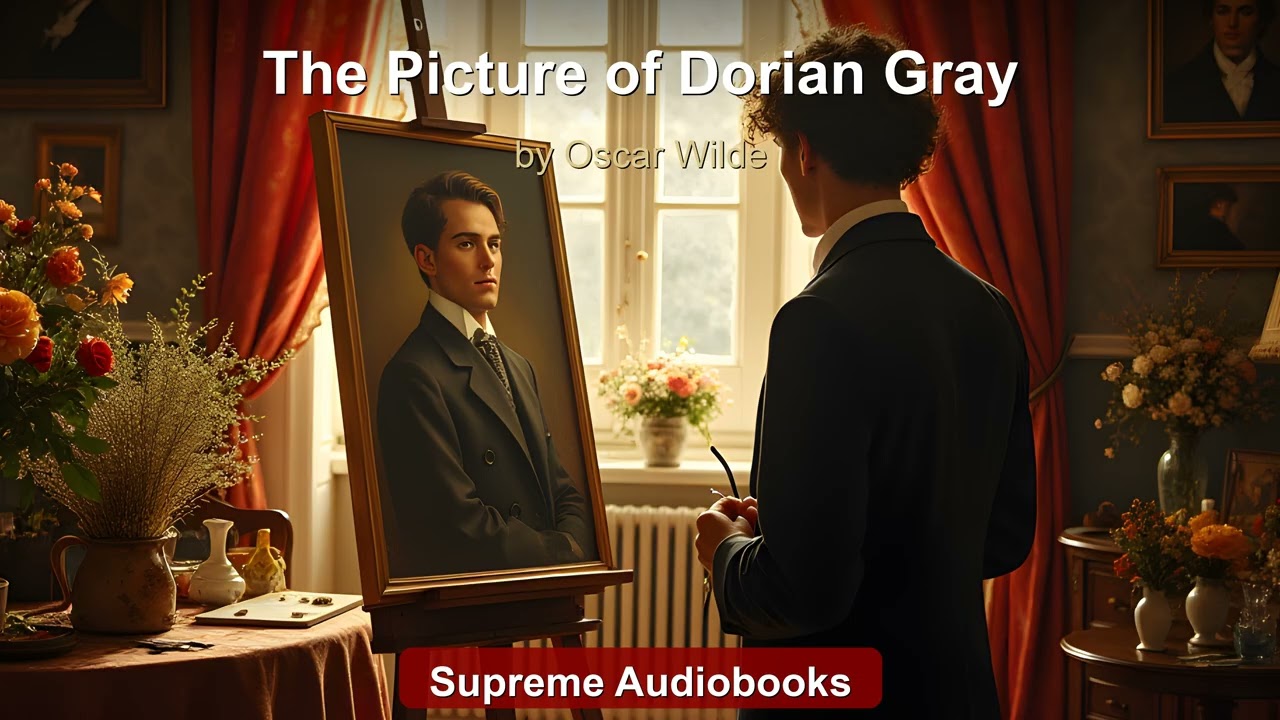
Oscar Wilde's only novel, The Picture of Dorian Gray, published in 1890, remains a chilling and compelling meditation on beauty, vanity, and the corrupting influence of unchecked desire. This story of a young man who barters his soul for eternal youth and outward perfection holds a mirror to our own contemporary anxieties about appearance, moral decay, and the Faustian bargains we sometimes make in pursuit of superficial ideals. It asks a powerful question: if our sins were made invisible, what limits would we place on our actions? The novel continues to resonate deeply, offering both a biting critique of Victorian society and a universal cautionary tale about the price of absolute freedom from consequence. The narrative opens in the sunlit studio of Basil Hallward, a gifted painter deeply impressed by the extraordinary beauty of his new muse, Dorian Gray. Basil has poured all his artistic devotion into a portrait of Dorian, capturing his innocence and physical allure with an almost obsessive detail. It is here that Dorian first encounters Lord Henry Wotton, a charismatic aristocrat whose cynical wit and Hedonistic philosophies begin to exert a profound, almost hypnotic, effect. Lord Henry preaches the pursuit of pleasure and the worship of youth and beauty above all else, warning Dorian that his loveliness will inevitably fade. Distraught by this thought, Dorian utters a fateful wish: that the portrait should age and bear the marks of his sins, while he himself remains forever young and beautiful. As if by some dark magic, Dorian's wish is granted. The portrait, kept hidden in a locked room, begins to subtly change, reflecting every moral transgression, every cruelty, every indulgence that Dorian commits, while his own face retains its youthful perfection. Initially, Dorian is merely intrigued, but as his life descends into a series of increasingly decadent and morally questionable acts—destroying reputations, breaking hearts, and eventually committing unspeakable violence—the portrait transforms into a grotesque record of his inner depravity. The beautiful surface he presents to society stands in stark contrast to the horrifying reality hidden on the canvas, a secret that becomes both his shield and his tormentor. The author behind this iconic work, Oscar Fingal O'Flahertie Wills Wilde, born in Dublin, Ireland, in 1854, led a life as theatrical and complex as his fiction. Educated at Trinity College Dublin and Magdalen College, Oxford, Wilde quickly distinguished himself with his brilliance, wit, and commitment to the aesthetic movement, which championed "art for art's sake." He became a celebrated figure in London society, known for his flamboyant dress, sharp intellect, and dazzling conversational skills, epitomizing the "dandy" of the late Victorian era. Wilde's literary output was remarkably varied. Beyond The Picture of Dorian Gray, he penned acclaimed plays such as The Importance of Being Earnest and Lady Windermere's Fan, which remain staples of the English stage, celebrated for their sparkling dialogue and biting social satire. He also wrote poetic verses, essays, and a collection of poignant fairy tales, including The Happy Prince and Other Tales. His life took a tragic turn when, in 1895, he was imprisoned for gross indecency, a scandal that effectively ended his public career and led to his early death in Paris in 1900. Despite his personal misfortunes, Wilde's position as a foundational figure in late Victorian literature and a master of English prose and drama is unshakeable. The Picture of Dorian Gray is rich with compelling themes. Foremost among them is the conflict between aesthetic beauty and moral corruption. Wilde explicitly shows how Dorian's pursuit of unblemished outward perfection leads to a profound inner ugliness. The changing portrait serves as a literal manifestation of his soul's decay, a stark visual example of the consequences of hedonism. Another prominent theme is the corrosive power of influence, particularly through the character of Lord Henry Wotton. Lord Henry's seductive pronouncements on youth and pleasure subtly manipulate Dorian, reshaping his worldview and encouraging him to abandon conventional morality, demonstrating how persuasive rhetoric can lead even the innocent astray. The novel also examines the nature of art itself and its relationship to life. Basil Hallward pours his soul into Dorian's portrait, believing art should reveal the artist's deepest feelings, yet the painting becomes a perverse mirror of Dorian's life rather than Basil's. Wilde uses the portrait to question whether art should merely reflect beauty or if it can also carry a moral burden, becoming a record of sin and a warning of judgment. Finally, the story confronts the theme of hypocrisy and the hidden lives of the privileged. Dorian maintains a facade of impeccable manners and social charm while secretly indulging in depraved acts, highlighting the societal pressures and double standards that allowed such duplicity to flourish in Victorian high society. When The Picture of Dorian Gray was first published, it ignited a firestorm of controversy. The late nineteenth century, the fin de siècle, was a period of both rigid Victorian moralism and burgeoning rebellion against its strictures. Aestheticism, with its rallying cry of "art for art's sake," directly challenged the prevailing belief that art must serve a didactic or moral purpose. Wilde's novel, with its overt depiction of a life dedicated to pleasure, its implied same-sex desire (though never explicit), and its challenge to conventional morality, struck many as scandalous and immoral. Critics denounced it as decadent and corrupting, accusing Wilde of undermining public morals. Yet, it also found an audience among those who welcomed its artistic freedom and its critique of societal hypocrisy, becoming a touchstone for the burgeoning counter-cultural movements of the era. The novel emerged as a direct response to, and a powerful comment on, the shifting values and hidden tensions within a society poised on the brink of a new century. Listening to The Picture of Dorian Gray as an audiobook offers a unique way to experience Wilde's exquisite prose and penetrating insights. The novel’s length, approximately six hours and twenty-four minutes, makes it an ideal companion for a long drive, an extended walk, or a series of commutes, allowing for a gradual immersion into its world. A skilled narrator can bring to life the distinct voices of Wilde's characters—Lord Henry's languid cynicism, Basil's earnest devotion, and Dorian's gradual descent from youthful naivety to hardened self-interest. The unhurried pace of the narration allows listeners to savor Wilde's famously witty aphorisms and the often chilling beauty of his descriptions, enhancing the atmospheric dread that slowly builds as Dorian's secret deepens. The dialogue, a hallmark of Wilde’s style, truly sings when performed, letting the listener appreciate the subtle nuances of influence and the tragic irony woven throughout this unforgettable story.
Enjoyed The Picture of Dorian Gray? A few ways to support us
Audible & Amazon links are affiliate; we may earn a small commission at no extra cost.
About this production
Human narration by a volunteer reader from LibriVox.org, the public-domain audiobook project. LibriVox volunteers record literary works whose copyright has expired in the United States, releasing the resulting recordings into the public domain.
The Picture of Dorian Gray, first published in 1890 by Oscar Wilde. The underlying text is in the U.S. public domain. We do not republish any modern copyrighted edition, translation, or commentary.
The 4K cinematic visuals accompanying this audiobook are generated by an AI image model from prompts derived from the source text. No copyrighted photos, paintings, or stock footage are used. AI generation is disclosed on every video on our YouTube channel as required by YouTube's altered/synthetic content policy.
English subtitles are transcribed from the LibriVox recording with OpenAI Whisper. Translations into the 11 other supported languages are produced by Meta's NLLB-200 neural translation model. No human translator's copyrighted translation is used.
Questions about sourcing or rights? See our DMCA & Sourcing policy or contact us.
Enjoyed this audiobook?
If you'd like to own a copy of The Picture of Dorian Gray or hear a professionally produced edition, the links below help support free audiobook production at no extra cost to you.
As an Amazon Associate we earn from qualifying purchases. Audible / print links are affiliate.