Heart of Darkness
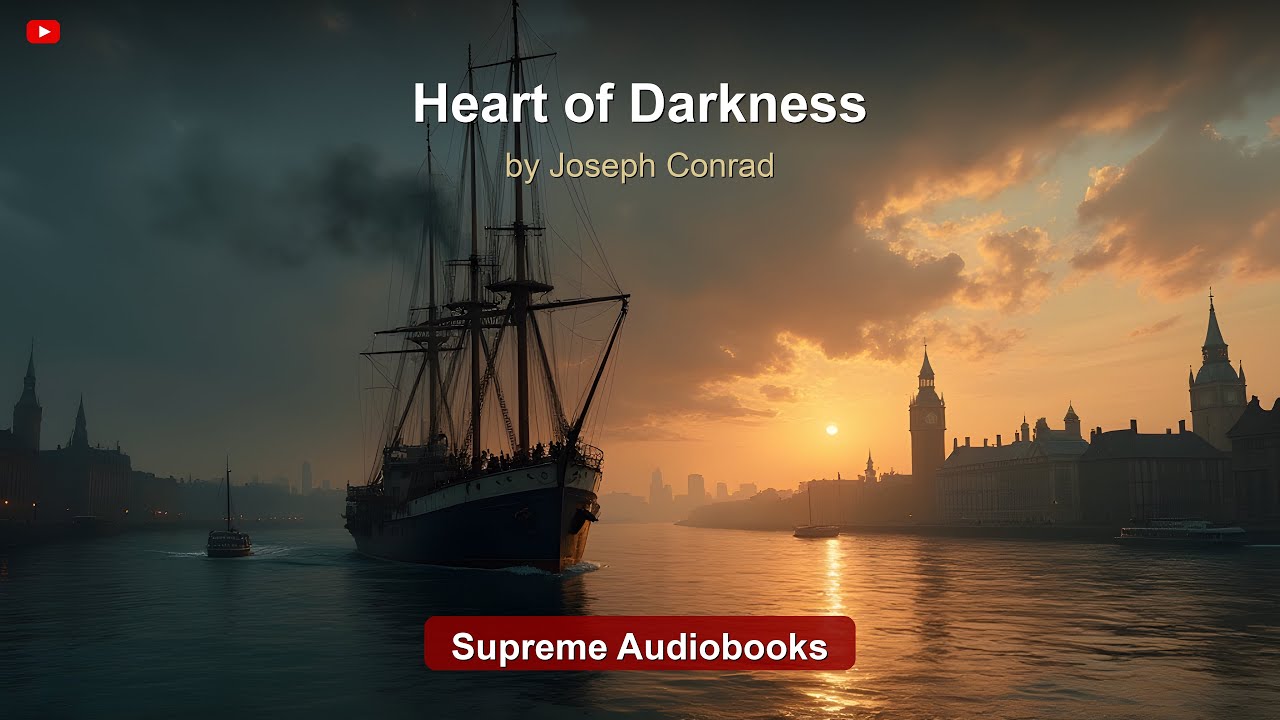
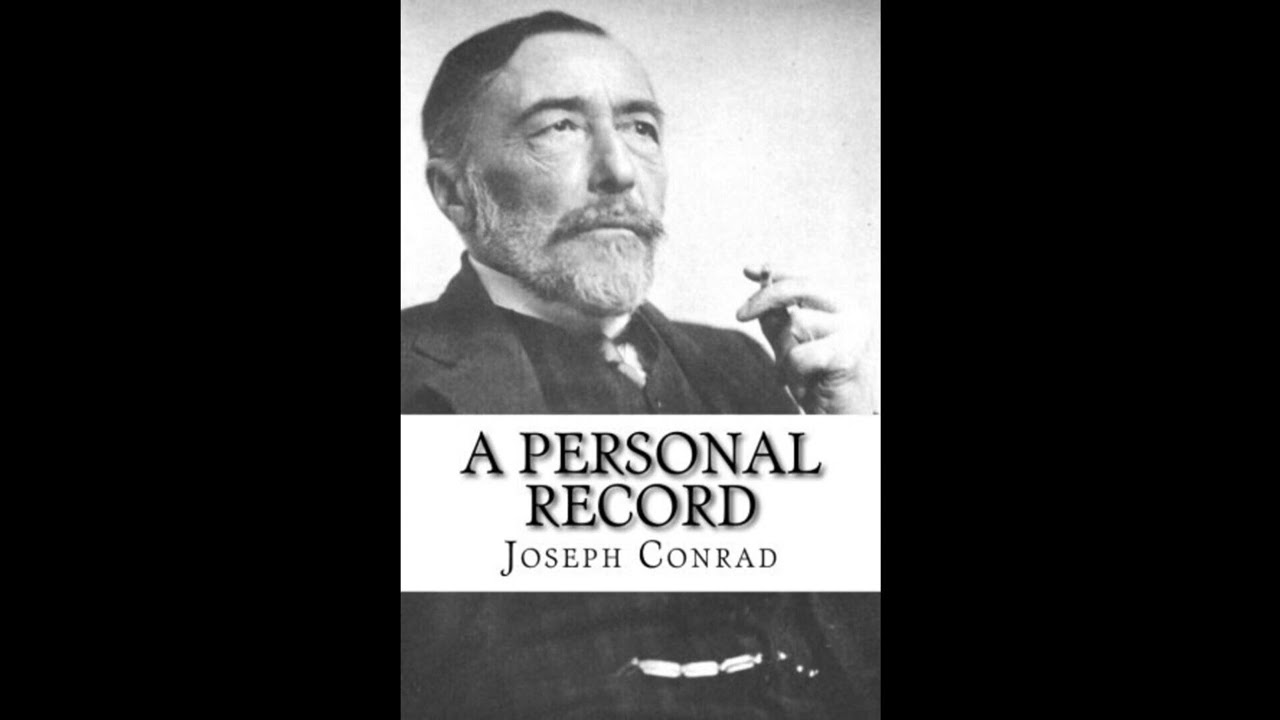
Joseph Conrad’s Heart of Darkness is more than a story of a journey into a remote region; it is an unsettling plunge into the very core of human experience, a stark examination of the forces that shape – and often corrupt – individuals and empires alike. Published at the end of the nineteenth century, this novella continues to command attention today for its unflinching gaze at colonialism, the fragile boundary between civilization and savagery, and the psychological shadows that reside within us all. It challenges its audience to confront uncomfortable truths about power, morality, and the potential for a personal unraveling under extreme conditions, making its message disturbingly relevant in any era marked by ambition and exploitation. The narrative unfolds through the voice of Charles Marlow, a seasoned sailor who recounts his disturbing experiences while working for a Belgian trading company. As he sits aboard a yawl on the River Thames, surrounded by his fellow mariners, Marlow begins to spin a tale of his youth, when he became a steamboat captain with a contract to transport ivory in the vast, untamed reaches of a Central African river. His initial excitement for adventure quickly gives way to a growing sense of unease as he witnesses the casual brutality and inherent hypocrisy of the colonial enterprise around him – the chain gangs, the starving native laborers, the European "pilgrims" obsessed with wealth and status. Marlow's primary mission, however, soon becomes singularly focused: to find and retrieve Kurtz, a highly successful ivory agent who has become legendary, almost mythical, among the company's ranks. Kurtz is rumored to possess extraordinary talents, both as a trader and as an orator, but also to have succumbed to a mysterious illness or perhaps a more profound transformation. As Marlow presses further up the winding, oppressive river, deeper into the continent’s heart, the environment itself seems to press in, blurring the lines of reality and morality. The slow, arduous progress mirrors Marlow's own psychological movement toward the shocking truths that await him at Kurtz’s remote inner station, where the celebrated agent has established a dominion both terrifying and absolute. The author, Joseph Conrad, was born Józef Teodor Konrad Korzeniowski in 1857 in what is now Ukraine, then part of the Russian Empire. His Polish parents were patriots, and their early deaths left him an orphan. At the age of sixteen, Conrad left home to pursue a life at sea, serving first in the French merchant marine and later, for many years, in the British fleet. He became a master mariner, traveling to exotic locales across the globe and experiencing firsthand the far-flung outposts of European imperialism. English was his third language, learned after Polish and French, yet he would go on to become one of the most distinctive and powerful stylists in the language. His most formative personal experience, which directly inspired Heart of Darkness, was a four-month command of a steamboat on the Congo River in 1890, during which he witnessed the horrific realities of colonial administration. Conrad eventually settled in England and began his writing career in his late thirties, producing a body of work that includes acclaimed novels such as Lord Jim, Nostromo, and The Secret Agent. He is recognized as a pivotal figure in early Modernist literature, celebrated for his psychological realism and complex narrative structures, and his insights into moral ambiguity. He passed away in 1924, leaving behind a profound literary legacy. At its core, Heart of Darkness dissects the insidious nature of European colonialism, stripping away its pretenses of a "civilizing mission" to reveal a brutal pursuit of profit and power. The novella presents a stark contrast between the lofty ideals proclaimed by the colonizers and the grotesque reality of their actions. We see this in the callous disregard for human life—the native workers dying from forced labor and neglect—and in the "pilgrims" who carry rifles but produce nothing, solely driven by greed for ivory. This hypocrisy is embodied by the very company Marlow serves, which cloaks its exploitative practices in high-minded rhetoric. The text argues that the "darkness" is not inherent to the land or its people, but rather a capacity unleashed within the European colonizers themselves, far from the scrutiny of their own societies. Another central idea is the thin veneer of civilization and how quickly it can erode under pressure. Joseph Conrad suggests that away from societal constraints and moral oversight, individuals are prone to reverting to primal instincts. Kurtz serves as the ultimate illustration of this theory, a man initially sent to the Congo with idealistic intentions, whose exposure to unchecked power and isolation transforms him into a tyrannical figure. Marlow, observing Kurtz's degeneration, must also confront the unsettling possibility of this same darkness within himself. The relentless, oppressive jungle environment itself acts as a crucible, testing the limits of European sanity and morality, forcing both Kurtz and Marlow to confront their innermost natures. The novella’s emergence in 1899 was deeply rooted in the historical and political climate of the late nineteenth century, a period often referred to as the "Scramble for Africa." European powers were aggressively partitioning the continent, driven by economic interests, nationalistic rivalries, and a misguided belief in racial superiority. The particular setting of the story, the Congo Free State, was notorious as the personal domain of King Leopold II of Belgium, whose regime became infamous for its extreme brutality, including widespread forced labor, mutilation, and genocide, all in the name of rubber and ivory extraction. Conrad’s own harrowing experience as a riverboat captain in this very region in 1890 gave him unique and firsthand insight into these atrocities, which he then transmuted into his fiction. His work served as a powerful critique of the prevailing imperialist ideologies and the dehumanizing effects of unchecked European expansion. Listening to Heart of Darkness as an audiobook offers a particularly immersive and impactful way to experience this powerful narrative. The story's layered structure, told through Marlow's reflective, often weary voice, comes alive with the right narration, allowing the listener to sink into the psychological depth of his observations. A skilled narrator can capture the slow, deliberate pacing of Marlow's journey upriver, building the oppressive atmosphere and the mounting sense of dread through careful modulation of tone and rhythm. Pay close attention to the narrator's interpretation of Marlow's internal monologue, the subtle inflections that convey his growing disillusionment and the unsettling nature of his encounters. The approximately four-hour runtime makes it an ideal length for focused listening across a few sessions, perhaps during commutes or long walks, allowing the narrative's intense atmosphere and profound ideas to fully resonate and leave a lasting impression.
Enjoyed Heart of Darkness? A few ways to support us
Audible & Amazon links are affiliate; we may earn a small commission at no extra cost.
About this production
Human narration by a volunteer reader from LibriVox.org, the public-domain audiobook project. LibriVox volunteers record literary works whose copyright has expired in the United States, releasing the resulting recordings into the public domain.
Heart of Darkness, first published in 1899 by Joseph Conrad. The underlying text is in the U.S. public domain. We do not republish any modern copyrighted edition, translation, or commentary.
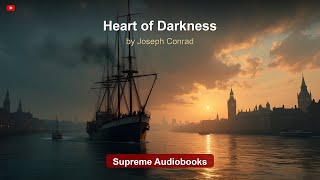
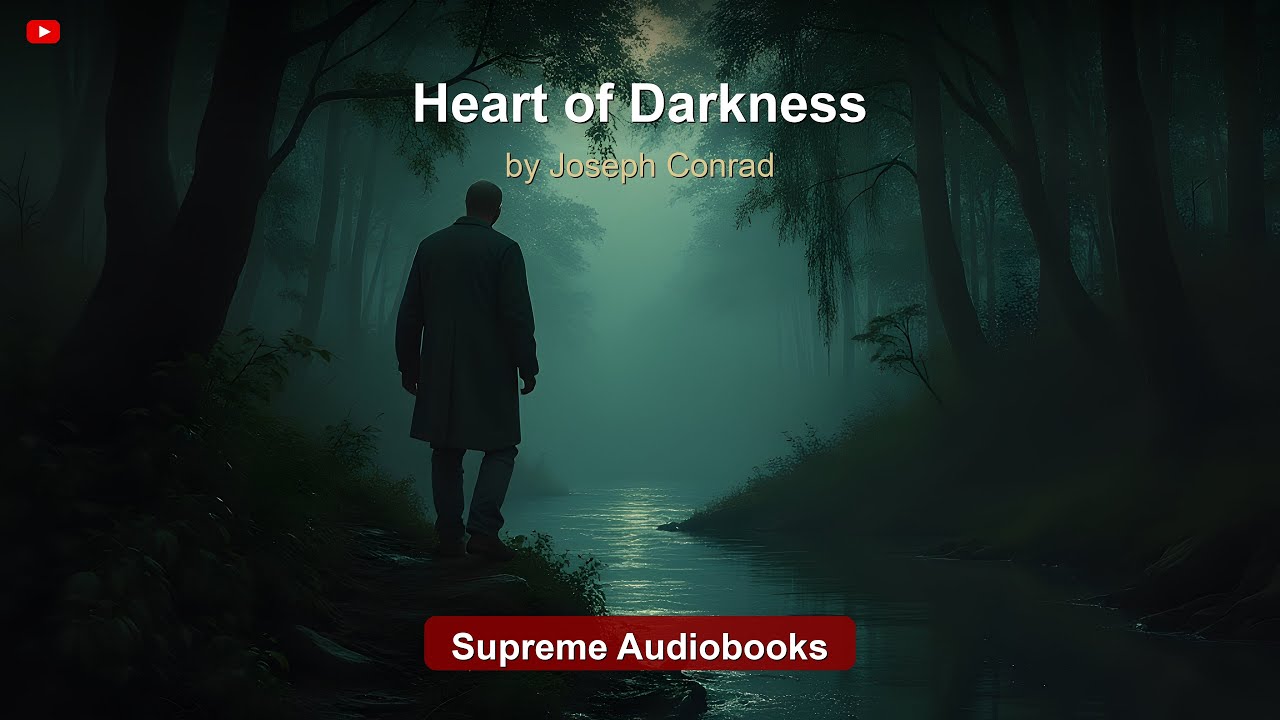
The 4K cinematic visuals accompanying this audiobook are generated by an AI image model from prompts derived from the source text. No copyrighted photos, paintings, or stock footage are used. AI generation is disclosed on every video on our YouTube channel as required by YouTube's altered/synthetic content policy.
English subtitles are transcribed from the LibriVox recording with OpenAI Whisper. Translations into the 11 other supported languages are produced by Meta's NLLB-200 neural translation model. No human translator's copyrighted translation is used.
Questions about sourcing or rights? See our DMCA & Sourcing policy or contact us.
Enjoyed this audiobook?
If you'd like to own a copy of Heart of Darkness or hear a professionally produced edition, the links below help support free audiobook production at no extra cost to you.
As an Amazon Associate we earn from qualifying purchases. Audible / print links are affiliate.