Cosmic Horror
2 livres audio
A chill not of temperature, but of recognition, settles upon listeners who seek the profound unease of cosmic horror. This is the literature of awe and dread, not simply fear of a monster lurking in shadows, but an existential terror born from the universe's sheer, indifferent scale. We confront here the crushing insignificance of humanity, our fleeting presence on a tiny, fragile world adrift in an uncaring void. Listeners gravitate to cosmic horror for a specific kind of unsettling catharsis: the disquieting thrill of confronting truths too vast for human comprehension, knowing that our carefully constructed reality stands on the brink of dissolution, threatened by forces ancient, alien, and utterly beyond our control or understanding. It offers a glimpse into an abyss, not merely of evil, but of an overwhelming, unthinking otherness that can drive minds to madness and shatter the very foundations of human belief.
The lineage of cosmic horror reaches back further than many imagine, its seeds planted in the gothic literature of the 18th and 19th centuries. Writers like Mary Shelley, with her "Frankenstein" from 1818, touched upon the hubris of man reaching beyond his grasp, unleashing forces he cannot control. Edgar Allan Poe, a master of psychological torment, delved into the disintegration of sanity and the lurking horrors beneath everyday life, hinting at unnameable dread in tales such as "The Narrative of Arthur Gordon Pym of Nantucket" (1838) which ends in a terrifying encounter with an unfathomable whiteness. Even Nathaniel Hawthorne’s darker psychological stories, probing the hidden corners of the human soul, helped lay groundwork. These early voices began to question humanity's centrality, suggesting a world with deeper, older, and more disturbing realities just out of sight, preparing the intellectual and emotional landscape for the grander, more terrifying concepts to come.
As the 19th century waned and the 20th began, these nascent ideas coalesced, giving form to a new, distinctly cosmic terror. Authors shifted the focus from mere supernatural ghosts and personal demons to entities and forces that defied human categories. Arthur Machen, in works like "The Great God Pan" (1894), revealed ancient, pagan horrors lurking just behind the veil of modernity, threatening the sanity of those who glimpse them. Algernon Blackwood, with "The Willows" (1907), depicted nature itself as potentially malign and intelligent in a way alien to human understanding. Lord Dunsany crafted fantastical mythologies in works such as "The Gods of Pegāna" (1905), where humanity was a mere plaything of indifferent deities. These writers set the stage for the genre's true architect, H.P. Lovecraft, who would synthesize these elements into a cohesive philosophy of cosmic dread, defining the genre's core tenets and ushering in its golden age.
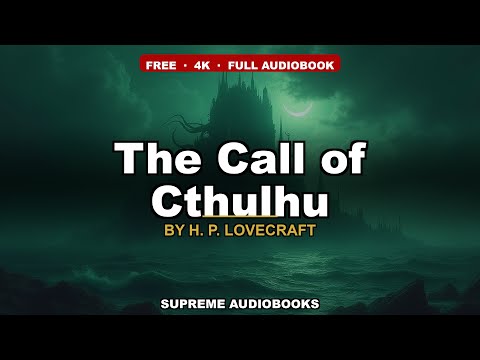
H.P. Lovecraft stands as the undisputed titan of cosmic horror, crafting a sprawling mythology that continues to influence countless writers and artists. His stories reveal a universe inhabited by unspeakable, ancient entities whose very existence dwarfs humanity. "The Call of Cthulhu," first published in 1928, offers a seminal vision of an alien god-entity slumbering in a sunken city, capable of driving mortals mad through dreams and psychic emanations. It introduces the foundational concept of a vast, uncaring cosmos where humanity holds no special place. Other works like "The Colour Out of Space" (1927) present alien forces that defy conventional description, warping life and landscape with their mere presence. Lovecraft's distinct prose and vision painted a universe far grander and more terrifying than previous horror writers had conceived.
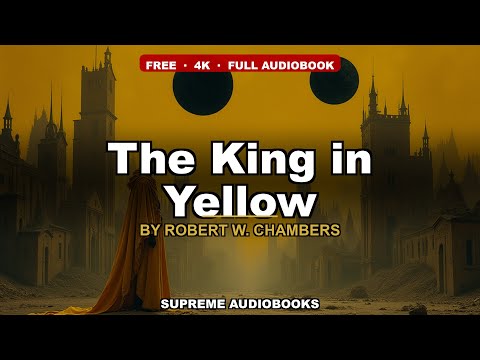
Beyond Lovecraft's direct creations, several public domain authors contributed foundational texts to the genre. Robert W. Chambers published "The King in Yellow" in 1895, a collection of interconnected short stories centered around a forbidden play that induces madness in its readers and hints at a sinister, extra-dimensional entity called Hastur and a city known as Carcosa. Its pervasive sense of existential dread and its influence on the human psyche through art makes it a touchstone of cosmic horror. Clark Ashton Smith, a frequent correspondent and peer of Lovecraft, created his own unique cosmic mythos, populating lost continents and alien worlds with strange gods and grotesque sorceries in stories like those collected in "Out of Space and Time" (1942, containing stories from much earlier). Abraham Merritt’s "The Moon Pool" (1919) takes readers to an antediluvian civilization connected to an alien intelligence that exists on the edge of comprehension, blending adventure with profound, inhuman mystery. These authors, in their diverse approaches, all shared a common thread: an unwavering commitment to portraying a universe far more terrifying and alien than humanity dares to imagine.
The overriding themes in cosmic horror consistently reinforce humanity's fragility and insignificance. Expect narratives where conventional science and religion offer no solace, where forbidden knowledge leads not to enlightenment but to madness, and where ancient, alien intelligences operate on scales and motivations utterly foreign to our own. Non-Euclidean architecture, grotesque physiologies, and cyclical time often feature, challenging our perceptions of reality itself. The central dread stems from the realization that we are not masters of our destiny, but rather fleeting inhabitants of a universe teeming with forces capable of annihilating us with a mere thought, or simply ignoring us entirely, deeming us beneath their notice. This profound sense of cosmic indifference is the genre's chilling heart.
This genre finds a natural home in the audiobook format, where the subtle nuances of performance enhance its insidious power. Expert voice acting can meticulously build atmosphere, imbuing descriptions of unfathomable entities or crumbling sanity with a chilling resonance that print alone cannot always convey. The deliberate pacing of narration allows the listener to fully absorb the creeping dread, the gradual unveiling of an unsettling truth, or the slow descent into madness, without the distraction of turning pages. With eyes free to wander or close, the listener can surrender entirely to the auditory experience, allowing the unfolding narrative to paint terrifying images directly onto the mind’s canvas. An audiobook becomes an intimate, personal encounter with the terrifying unknown, transforming the solitary act of listening into a confrontation with existential horror.
Now, we invite you to confront the vast, chilling truths that lie beyond our understanding. Allow the skilled narrators to guide your perception as you encounter these tales of the unknowable. Begin your terrifying audit by listening to H.P. Lovecraft’s foundational narrative, "The Call of Cthulhu," and discover the ancient dream-god whose very existence shatters sanity. Then, lose yourself in the insidious beauty and madness of Robert W. Chambers’ "The King in Yellow," where a forbidden play unravels the minds of all who witness it. These two works offer powerful entry points into the profound dread of cosmic horror, waiting for you now on our site.