The King in Yellow
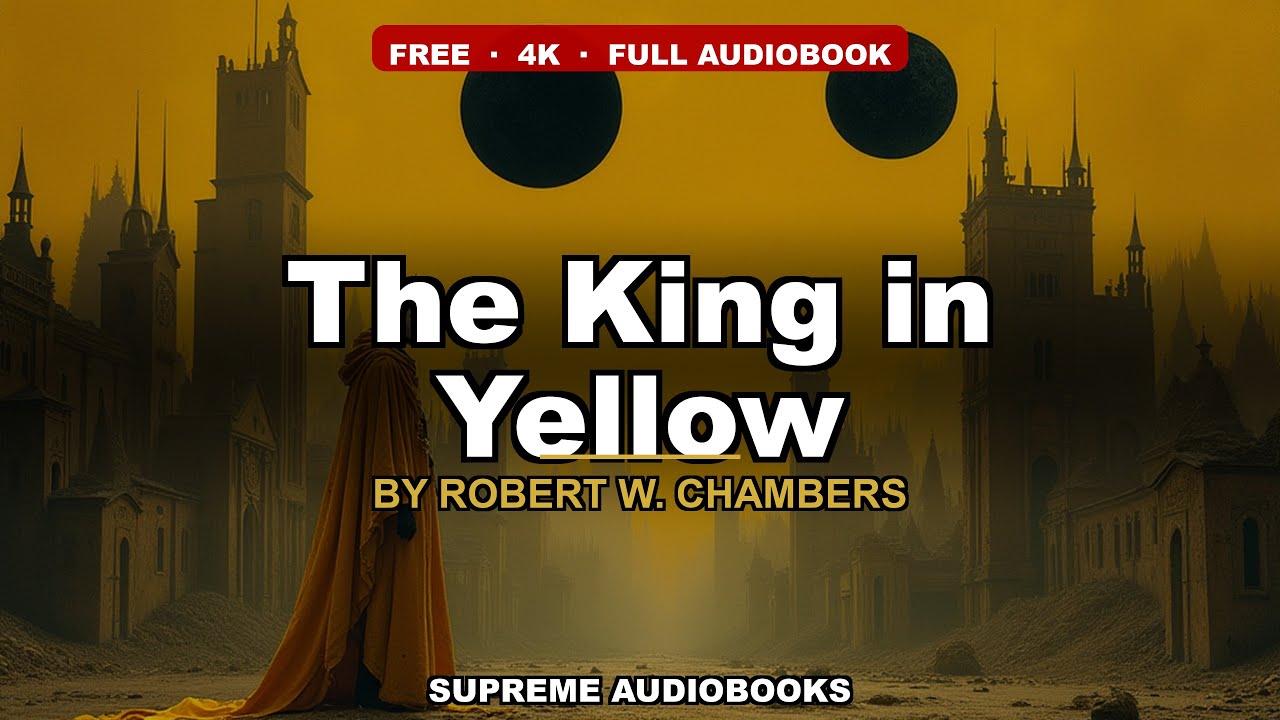
Step into a world where art and reality twist into a terrifying, inescapable nightmare. Robert W. Chambers’ The King in Yellow, published in 1895, isn't just a collection of stories; it's a literary virus, a conceptual dread that has seeped into the very foundations of modern horror fiction. This isn't a book about jump scares or overt monsters, but about the insidious corruption of the mind, the erosion of sanity, and the unsettling revelation of cosmic indifference. It remains a chilling testament to the power of suggestion and the human fascination with forbidden knowledge, as relevant today as it was over a century ago in its stark portrayal of psychological disintegration. The book unfurls its unsettling influence through a series of interconnected tales, primarily set in a fin-de-siècle Paris and New York, locations buzzing with artistic fervor and societal anxieties. At the heart of these narratives is a fictional, banned play, also titled The King in Yellow. Once read, this two-act drama has a devastating effect on its audience and readers, inducing madness, despair, or even supernatural phenomena. Characters like Hildred Castaigne, an alienated heir whose grip on reality loosens after encountering the play, become pawns in a larger, incomprehensible scheme. His delusions, which involve a future where America is ruled by a mysterious, aristocratic regime, are disturbingly convincing, blurring the lines between what he perceives and what is truly happening. Other stories introduce figures such as the artist Mr. Scott, who finds his creativity and love life entangled with the play's eerie presence, or the two bohemian art students, Sylvia and Alec, whose idyllic romance is threatened by the unsettling influence of the Pallid Mask and the dread kingdom of Carcosa. The narrative weaves through these different lives, sometimes focusing on budding relationships, sometimes on professional ambitions, but always with the lurking shadow of the play and its eponymous, unseen monarch. From the quiet terror of a watchful cathedral guard in "In the Court of the Dragon" to the chilling inevitability faced by an artist and his model in "The Yellow Sign," the stories showcase a gradual descent into a reality warped by an unknown, cosmic power that seems to emanate from the forbidden text itself, offering glimpses of a reality far more vast and terrifying than humanity comprehends. Robert W. Chambers (1865-1933) was an American author born in Brooklyn, New York. His early life was marked by artistic pursuits; he studied at the prestigious Julian Academy and the École des Beaux-Arts in Paris, eventually becoming a successful illustrator whose work appeared in prominent magazines like Life and Vogue. It was only later that he shifted his focus to writing, a career choice that would see him become incredibly prolific, though often remembered for one specific, early creation. While The King in Yellow is his enduring legacy in the realm of weird fiction, Chambers spent the majority of his career writing popular romance novels and historical fiction, which garnered him considerable commercial success in his lifetime. Titles like The Common Law and Cardigan were bestsellers, yet they are largely overlooked today. His early experiences in the bohemian art circles of Paris, however, clearly informed the settings and atmosphere of The King in Yellow, providing a distinct flavor of late 19th-century aestheticism and decadent literary influences. Though he moved away from horror, his initial foray cemented his place as a significant, albeit often underrated, figure in the literary canon, directly influencing subsequent generations of horror writers, most notably H.P. Lovecraft. The collection enacts several compelling themes that resonate deeply with readers. One central idea is the corrupting power of forbidden knowledge, embodied by the play itself. Characters who read The King in Yellow invariably suffer, suggesting that some truths are too terrible for the human mind to bear, leading to mental collapse rather than enlightenment. The sheer terror of Hildred Castaigne's paranoia, for instance, springs from his unwavering conviction in the play's prophecies, demonstrating how a mere text can shatter one's perception of reality. Secondly, the book starkly portrays the fragility of sanity when confronted with the incomprehensible. The eerie references to a Hastur, the Pallid Mask, and the lost city of Carcosa are never fully explained, yet they evoke a sense of immense, alien cosmic forces that dwarf human existence, leaving characters utterly unmoored from their understanding of the world. Furthermore, Chambers skillfully uses art as a dangerous, transformative force. The play itself is an artistic creation that devastates, but characters who are artists – painters, writers, musicians – often find themselves particularly susceptible to its influence, their creativity twisted into horrifying expressions or used as a conduit for the play's malevolence. This is subtly evident in the way certain characters feel compelled to create works inspired by the play, becoming instruments of its spreading influence. Lastly, the pervasive sense of existential dread permeates the stories, with an unnamed, unseen entity—the King in Yellow—looming over everything, suggesting a universe that is not just indifferent, but actively hostile or at least supremely indifferent to human suffering. The King in Yellow emerged during the fin-de-siècle, a period marked by profound cultural and psychological shifts. The late 19th century witnessed rapid industrialization, growing scientific advancements that challenged traditional worldviews, and a sense of anxiety about the impending turn of the century. In the literary world, there was a growing fascination with psychological realism, the supernatural, and the decadent movement, particularly strong in Europe, which embraced themes of artificiality, decay, and the exploration of extreme experiences. Chambers’ time studying art in Paris exposed him to these currents, allowing him to infuse his American settings with a distinct European gothic sensibility. The book’s focus on madness, unreliable narrators, and a shadowy, powerful entity tapped into a societal unease about human control and the unknown, making it a particularly resonant work for its time. Listening to The King in Yellow as an audiobook offers a unique and deeply immersive experience. The subtle, psychological suspense that defines Chambers’ collection is particularly well-suited to the spoken word. Over its 7-hour and 43-minute run length, a skilled narrator can masterfully convey the escalating dread, the quiet moments of paranoia, and the chilling blend of the mundane and the surreal. The shifts in character perspective across the loosely connected stories gain clarity and individuality through distinct vocalizations. Listen for the careful pacing, allowing the unsettling atmosphere to build slowly, letting the eerie dialogue and the descriptions of inexplicable phenomena creep into your own mind, echoing the experience of the characters as they grapple with the forbidden truths of Carcosa and the silent terror of the Pallid Mask.
Enjoyed The King in Yellow? A few ways to support us
Audible & Amazon links are affiliate; we may earn a small commission at no extra cost.
About this production
Human narration by a volunteer reader from LibriVox.org, the public-domain audiobook project. LibriVox volunteers record literary works whose copyright has expired in the United States, releasing the resulting recordings into the public domain.
The King in Yellow, first published in 1895 by Robert W. Chambers. The underlying text is in the U.S. public domain. We do not republish any modern copyrighted edition, translation, or commentary.
The 4K cinematic visuals accompanying this audiobook are generated by an AI image model from prompts derived from the source text. No copyrighted photos, paintings, or stock footage are used. AI generation is disclosed on every video on our YouTube channel as required by YouTube's altered/synthetic content policy.
English subtitles are transcribed from the LibriVox recording with OpenAI Whisper. Translations into the 11 other supported languages are produced by Meta's NLLB-200 neural translation model. No human translator's copyrighted translation is used.
Questions about sourcing or rights? See our DMCA & Sourcing policy or contact us.
Enjoyed this audiobook?
If you'd like to own a copy of The King in Yellow or hear a professionally produced edition, the links below help support free audiobook production at no extra cost to you.
As an Amazon Associate we earn from qualifying purchases. Audible / print links are affiliate.