Science
50 audiolibros
Listeners seek to comprehend the world around them, from the smallest cell to the farthest galaxy. Science writing offers a direct path to satisfying this fundamental human curiosity. It speaks to the drive to ask “how” and “why,” unraveling the secrets of existence with clarity and precision. The very act of listening to scientific explanation can feel like receiving a whispered secret about the universe, a moment of profound understanding delivered directly to the mind. It is where logic meets wonder, where observation transforms into illumination.
Humanity’s quest for understanding predates recorded history, but the formal pursuit of what we now call science began millennia ago. Ancient Greek philosophers like Aristotle cataloged species, pondered the elements, and theorized about celestial mechanics, laying foundational stones for systematic observation. Islamic scholars, through meticulous astronomical observations and advances in mathematics and medicine, preserved and expanded this knowledge during Europe's Middle Ages. Their work provided a continuous thread of empirical inquiry, emphasizing observation and practical application, even if the methodologies did not yet align with modern scientific rigor. Early naturalists across cultures filled countless scrolls with descriptions of plants, animals, and geological formations, driven by an innate desire to categorize and comprehend the natural world surrounding them.
The Scientific Revolution in the 16th and 17th centuries marked a profound shift. Figures like Copernicus, Galileo, and Newton introduced revolutionary methods and worldviews, emphasizing experimentation, mathematical analysis, and testable hypotheses. This period moved from a largely philosophical approach to an empirical one, forever altering how humanity sought knowledge. The Enlightenment centuries saw further specialization and the birth of distinct scientific disciplines: physics, chemistry, biology, geology. Concurrently, the popularization of scientific ideas began to take root, with authors translating complex discoveries for a wider audience. This made scientific discourse accessible beyond scholarly circles, fostering a public appetite for understanding the latest advancements and challenging established dogmas with verifiable facts.
Our catalog holds works that exemplify this broad pursuit of knowledge. Consider Erasmus Darwin’s *Popular Lectures on Zoonomia Or The Laws of Animal Life, in Health and Disease* (1801), which speculates on the origins of life and adaptation—ideas that foreshadow later evolutionary theories, presented in an accessible lecture format. Albert Einstein's *Relativity: The Special and General Theory* (1916) offers a direct encounter with one of the most profound intellectual achievements of the 20th century, presented by the architect of the theory himself. Its pages explain the revolutionary concepts of space, time, gravity, and the universe's fabric in a way intended for the educated layperson.
Further insights appear in titles like *Stories About the Instinct of Animals: their characters and habits* (circa late 19th/early 20th century), which offers detailed observations and often charming anecdotes about animal behavior, allowing listeners to connect with the natural world. Ignatius Donnelly's *Ragnarok: The Age of Fire and Gravel* (1883) presents an ambitious, if now largely discredited, theory of global catastrophe and its geological effects, reflecting 19th-century scientific speculation and its often dramatic assertions. For a practical household approach to learning, *On Natural Science: For Practical Use in Every Household, for Readers of All Classes* (circa late 19th century) makes scientific principles relevant to everyday life. George P. Marsh’s *On the Study of Words* (1851) introduces the listener to the scientific investigation of language itself, revealing the historical and etymological underpinnings of our communication. Even highly technical works find their place; *Organic Syntheses V1* (1921), though a specialized collection of chemical methods, represents the meticulous, collaborative spirit of scientific progress in a specific domain.
Science writing consistently returns to core questions and methods. It elucidates the physical laws governing the cosmos, examines the biological processes animating life, and analyzes the geological forces shaping our planet. Expect rigorous observation, detailed explanation of experimental methods, and the systematic presentation of evidence that supports a hypothesis. The narratives often follow a logical progression: identifying a problem, proposing a solution or explanation, and then demonstrating its validity through empirical data. These works aim to demystify phenomena, replace superstition with understanding, and ultimately expand the boundaries of human knowledge by revealing the underlying order of the universe.
Listening proves an exceptional way to absorb scientific concepts. A skilled narrator paces complex arguments, giving the listener time to process dense information without the distraction of visual text. Voice acting adds emphasis to crucial definitions or groundbreaking discoveries, making abstract theories more concrete and memorable. The act of hearing an explanation can mimic the experience of a lecture or a documentary, creating an atmosphere conducive to focused learning. Whether during a commute or while engaging in another activity, the spoken word transforms complex scientific descriptions into an accessible mental landscape, making understanding less of a chore and more of an effortless absorption.
A vast universe of ideas awaits. From the meticulous cataloging of species to the grand theories of cosmic origins, science offers profound insights into what it means to be alive on this planet. Each title presents a chance to witness intellectual history unfold, to grasp concepts that reshaped understanding, and to engage with the sheer ingenuity of human inquiry. Allow your curiosity to lead you through our public-domain collection. We invite you to find your next revelation among the 50 titles ready for you to discover.
A Color Notation A measured color system, based on the three qualities Hue, Value an- Full Audiobook
A Study of Association in Insanity
A Study of Splashes

Aeroplanes
American Big Game in Its Haunts: The Book of the Boone and Crockett Club
An Introduction to Chemical Science
Ancient Plants: Being A Simple Account Of The Past Vegetation Of The Earth And Of Th- Full Audiobook
Applied Psychology for Nurses
Artificial Light: Its Influence upon Civilization
At the Deathbed of Darwinism
Bird neighbors: An introductory acquaintance with one hundred and fifty birds
Catalogue of British Columbia Birds
Curiosities of the Sky
Discourses: Biological & Geological
Disturbances of the heart, discussion of the treatment of the heart in its various
Essays in Natural History and Agriculture
Essays on Early Ornithology and Kindred Subjects
Ethnology of the Ungava District, Hudson Bay Territory Eleventh Annual Report of
Evolution: An Investigation and a Critique
Great Inventions And Discoveries (1911)
Himalayan Journals: Or Notes of a Naturalist in Bengal, the Sikkim and Nepal Himala
Hormones and Heredity; a Discussion of the Evolution of Adaptations and the Evoluti
How to Know the Ferns
Hygienic Physiology: With Special Reference to the Use of Alcoholic Drinks and Narc
In Nesting Time
Is Mars Habitable? A Critical Examination of Professor Percival Lowell's Book "Mars
Little Busybodies; The Life of Crickets, Ants, Bees, Beetles, and Other Busybodies
Lola; Or, The Thought and Speech of Animals
Manhood Perfectly Restored - Prof. Jean Civiale's Soluble Urethral Crayons as a Qui
Marvels Of Modern Science
Moths of the Limberlost: A Book About Limberlost Cabin
Mushroom Culture: Its Extension And Improvement
Nests and Eggs of Birds of The United States Illustrated
Nitro-Explosives: A Practical Treatise
On Natural Science: For Practical Use in Every Household, for Readers of All Classe
On the Evolution of Language First Annual Report of the Bureau of Ethnology to the
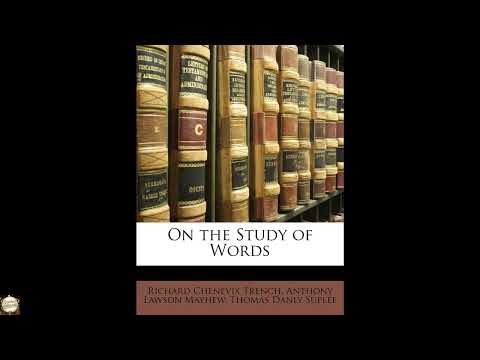
On the Study of Words

Organic Syntheses V1: An Annual Publication Of Satisfactory Methods For The Prepara
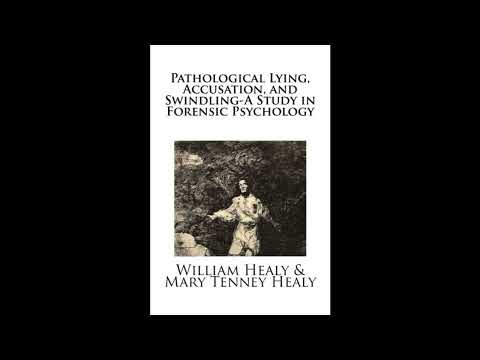
Pathological Lying, Accusation, and Swindling-A Study in Forensic Psychology
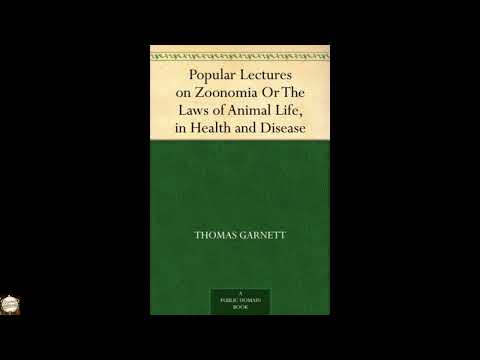
Popular Lectures on Zoonomia Or The Laws of Animal Life, in Health and Disease
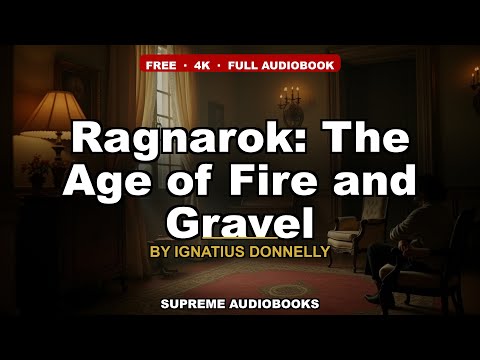
Ragnarok: The Age of Fire and Gravel
Relativity : the Special and General Theory
Sounding the Ocean of Air
Stories About the Instinct of Animals: their characters and habits
The Life of the Fly; With Which are Interspersed Some Chapters of Autobiography
The Present Condition of Organic Nature; Lecture I. (of VI.), "Lectures to Working M- Full Audiobook
The Psychology of Beauty
The Vitamine Manual
The life of the bee