Emma (Part 2 of 2)
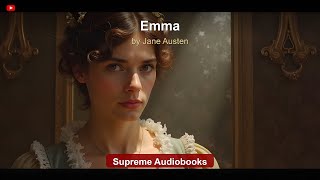
Emma, Jane Austen's sparkling comedy of errors, remains as fresh and insightful today as it was when first published in 1815. It is a story that, beneath its charming surface, gently satirizes human vanity, social ambition, and the often-hilarious pitfalls of misjudgment. This second half of the beloved narrative invites listeners deeper into the drawing-rooms and dilemmas of Highbury, where the consequences of well-meaning but misguided interference come to life, ultimately leading its heroine towards profound self-discovery. It is a brilliant character study—a mirror reflecting our own foibles and the subtle workings of affection, connection, and societal expectation. Part Two of Emma picks up the intricate dance of misunderstandings and burgeoning affections in the close-knit village of Highbury, Surrey. Our protagonist, Emma Woodhouse, is a young woman of comfortable fortune, clever, handsome, and accustomed to having her own way. Convinced she possesses a talent for matchmaking, she has busied herself arranging the lives of others, particularly her dear friend Harriet Smith, a sweet but impressionable young woman of uncertain parentage. Emma’s greatest blind spot, however, lies in her inability to perceive her own heart, and her stubborn refusal to believe that she, too, is susceptible to love’s unpredictable currents. As the story progresses, Emma finds herself increasingly entangled in the very webs she has woven. The arrival of the charming, enigmatic Frank Churchill—a dashing figure whose connections and good looks make him the subject of much speculation—adds a fresh layer of complexity to Highbury's social scene. Simultaneously, the quiet, accomplished Jane Fairfax, whose refined manners and musical talents make her both admired and envied by Emma, harbors a secret. Emma, ever confident, misreads nearly every significant relationship, convinced of her own romantic invincibility even as the wise and discerning Mr. Knightley—her closest confidant and critic—offers unheeded warnings. The events of this segment bring Emma to the precipice of understanding, forcing her to confront her prejudices, her misinterpretations, and the true nature of her own deepest attachments, leading to revelations that reshape her world. Jane Austen, born in 1775 in Steventon, Hampshire, was the seventh of eight children. Her early life within a close, intellectually stimulating family nurtured her sharp wit and observational skills. Largely self-educated, she began writing at a young age. Later moves to Bath and Chawton provided perspectives on English gentry life, which she meticulously portrayed in her fiction. Austen's work developed during the Regency era, a time of significant social and cultural flux. Despite modest recognition in her lifetime, her novels—published anonymously—garnered a devoted readership. Her first, Sense and Sensibility, appeared in 1811, followed by Pride and Prejudice (1813), Mansfield Park (1814), and Emma (1815). Two more, Northanger Abbey and Persuasion, were published posthumously in 1818, a year after her death at 41. Through precise prose and incisive social commentary, Austen carved an enduring place in English literature. She perfected the novel of manners, using social satire and psychological realism to portray the constraints upon women and the themes of marriage, social standing, and morality. At its heart, Emma is a profound study of self-deception and the arduous path to self-knowledge. Emma Woodhouse consistently misreads situations and motivations. Her conviction that Harriet Smith should marry Mr. Elton, then Frank Churchill, reveals a blindness to others' feelings and her own. She misjudges Jane Fairfax’s reserved demeanor. This second part pushes Emma towards confronting these biases, particularly concerning her own heart and Mr. Knightley's affection, forcing a difficult reassessment of her worldview. Another central concern is the delicate interplay of social class and reputation. Highbury operates under a strict hierarchy, where parentage, wealth, and connections dictate one's standing. Harriet Smith's uncertain origins make her vulnerable to Emma's matchmaking. Jane Fairfax’s need for a governess position highlights limited avenues for women without independent means. Austen illustrates how individuals navigate these social currents and how marriage can reinforce or challenge boundaries. The novel also examines appearances versus reality, particularly through Frank Churchill, whose charm masks a secret, and Emma's inability to see true romantic attachments until revealed. When Emma was published in 1815, Britain was in the midst of the Regency period, a time of significant social change. Though Austen focuses on domestic life rather than the Napoleonic Wars, the novel emerged from a society where women’s roles were largely confined to the home, and marriage was often the primary means of economic security and social advancement. This context helps explain the intense focus on matchmaking, inheritance, and social propriety permeating the narrative. The early 19th century also saw the novel gaining popularity, moving from sensationalist Gothic romances towards realistic social observations. Austen's genius lay in elevating the "everyday" concerns of her characters into stories of profound human truth, using wit and irony to critique social norms without overtly sermonizing. Emma reflects this shift, offering a microcosm of English gentry life with unparalleled precision. Listening to Emma (Part 2 of 2) as an audiobook provides an intimate connection to Austen's brilliant dialogue and subtle characterizations. A skilled narrator brings Highbury’s inhabitants to life, giving distinct voices to Emma’s confident assertions, Mr. Knightley’s measured counsel, and the social chatter driving the plot. The narration's pacing allows listeners to appreciate Austen’s carefully constructed scenes and the gradual unfolding of truths, especially as Emma's self-deceptions unravel. Over its 6 hours and 26 minutes, this auditory experience offers full immersion in the period atmosphere, witty exchanges, and dramatic ironies, capturing the spirit of a literary classic.
Enjoyed Emma (Part 2 of 2)? A few ways to support us
Audible & Amazon links are affiliate; we may earn a small commission at no extra cost.
About this production
Human narration by a volunteer reader from LibriVox.org, the public-domain audiobook project. LibriVox volunteers record literary works whose copyright has expired in the United States, releasing the resulting recordings into the public domain.
Emma (Part 2 of 2), first published in 1815 by Jane Austen. The underlying text is in the U.S. public domain. We do not republish any modern copyrighted edition, translation, or commentary.
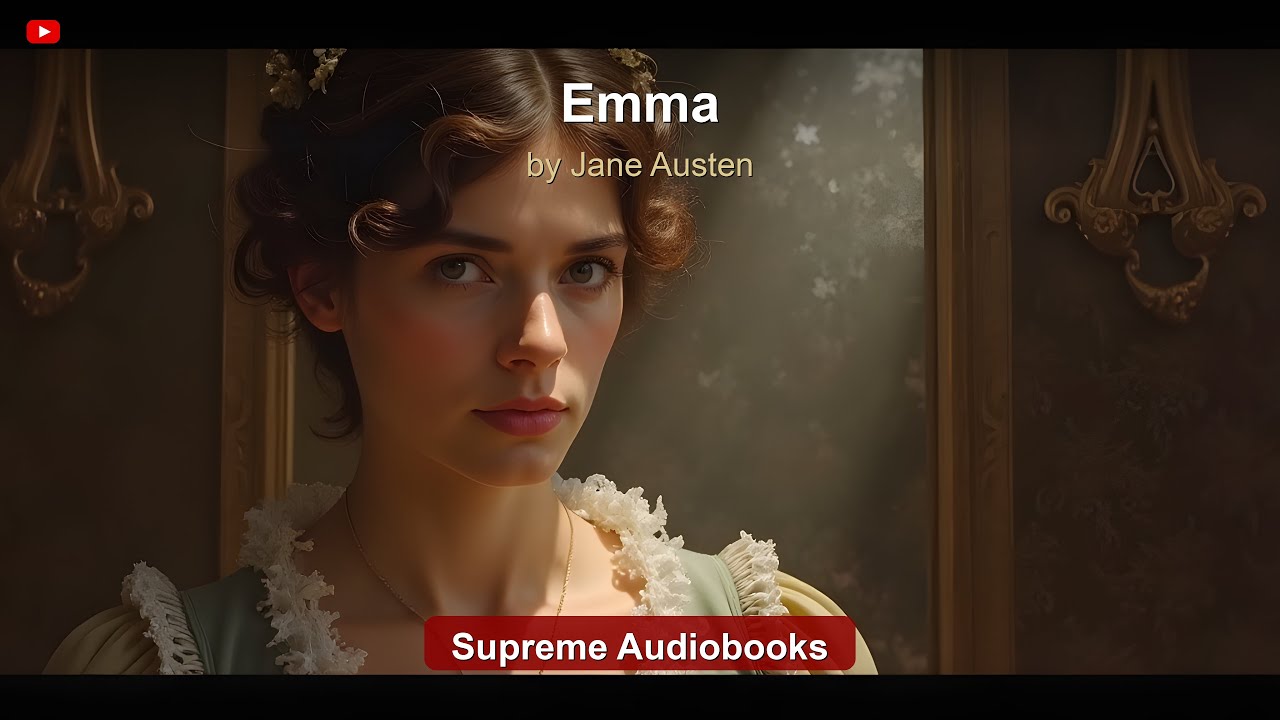
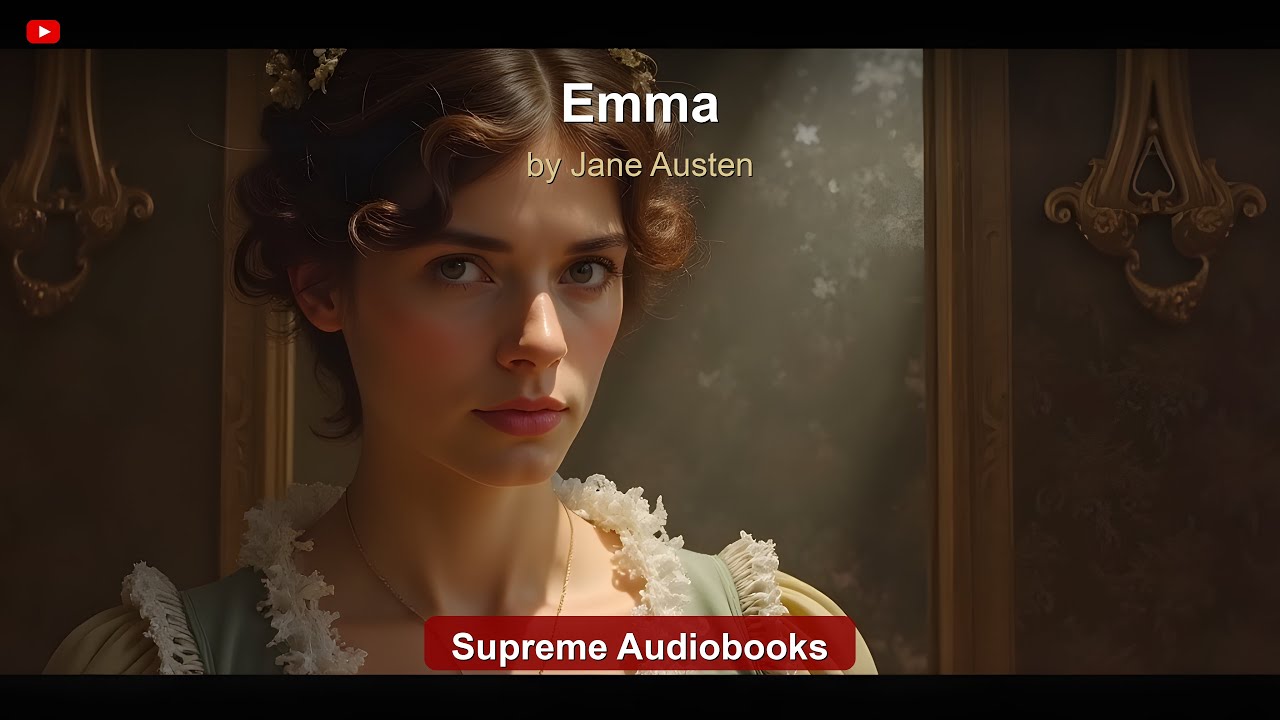
The 4K cinematic visuals accompanying this audiobook are generated by an AI image model from prompts derived from the source text. No copyrighted photos, paintings, or stock footage are used. AI generation is disclosed on every video on our YouTube channel as required by YouTube's altered/synthetic content policy.
English subtitles are transcribed from the LibriVox recording with OpenAI Whisper. Translations into the 11 other supported languages are produced by Meta's NLLB-200 neural translation model. No human translator's copyrighted translation is used.
Questions about sourcing or rights? See our DMCA & Sourcing policy or contact us.
Enjoyed this audiobook?
If you'd like to own a copy of Emma (Part 2 of 2) or hear a professionally produced edition, the links below help support free audiobook production at no extra cost to you.
As an Amazon Associate we earn from qualifying purchases. Audible / print links are affiliate.