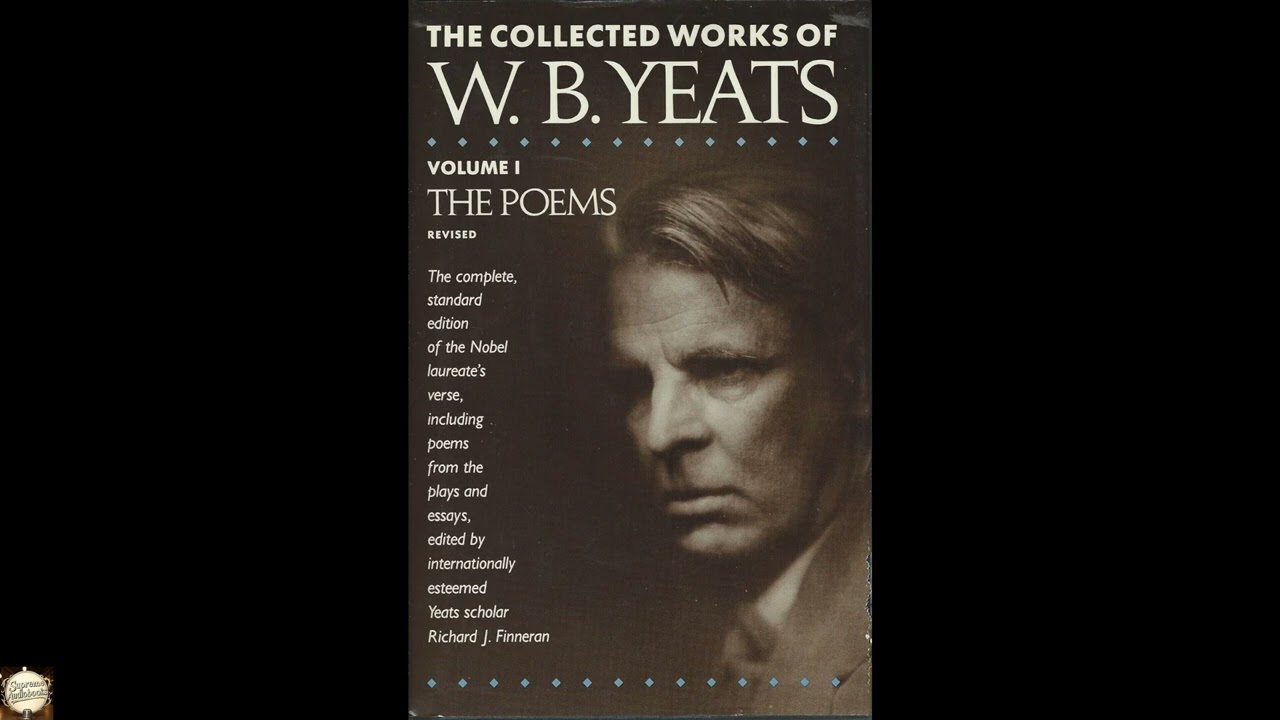
The Poems Revised (The Collected Works of W. B. Yeats)
Yeats. The name itself conjures the misty lakes of Sligo, the tumultuous streets of Dublin, and the fervent dedication of a mind to art and nation. Here, gathered in The Poems Revised, is the monumental vision of William Butler Yeats, one of the twentieth century's most towering poetic figures. This comprehensive collection offers an unparalleled opportunity to immerse oneself in a body of work that shaped Irish literature and the broader landscape of modern poetry. Yeats’s voice continues to resonate, speaking to enduring human experiences of love, loss, political struggle, and the tireless search for spiritual meaning. The collection unfolds as a profound, evolving narrative, tracing the development of a singular poetic voice across half a century of personal and national upheaval. Listeners are first transported to the dream-haunted landscapes of the Celtic Twilight, where figures like Oisin wander through ancient forests and faeries lure children away. These early poems, rooted in Irish folklore, establish a longing for a spiritual, mythic Ireland, contrasting it with perceived modern materialism. This initial phase sets the stage for a recurring tension: an idealized past versus the harsh realities of the present. As the poems progress, the tone shifts, reflecting Yeats's increasing engagement with political events and his passionate, often unrequited, affections. Mythological figures yield to historical personages and the starker concerns of nation-building. We witness his complex love for Maud Gonne. Middle poems confront disillusionment and the passage of youth, as seen in "When You Are Old." Later works embrace a more direct language to confront the brutal realities of Irish independence, grappling with the "terrible beauty" born from violence. His final years deepen philosophical concerns, wrestling with old age and the aspiration for artistic permanence. William Butler Yeats, born in Sandymount, Dublin, in 1865, lived a life inextricably linked to Ireland's cultural and political destiny. His early years, divided between Dublin and County Sligo, deeply imprinted upon his imagination, becoming a wellspring of imagery. Educated primarily in London and Dublin, Yeats was drawn to the esoteric, participating in occult societies that informed his symbolism and mystical worldview. A central figure in the Irish Literary Revival, he tirelessly worked to forge a new national literature from Ireland's rich heritage. Yeats co-founded the Abbey Theatre in Dublin and served as its director and a prolific playwright. His passionate, if unrequited, devotion to the revolutionary Maud Gonne became a driving force behind much of his love poetry and political awakening. He served as a Senator for the Irish Free State from 1922 to 1928, actively shaping the nascent nation's cultural institutions. His profound contributions were recognized in 1923 with the Nobel Prize. Yeats passed away in 1939, his remains later repatriated to Drumcliff, Sligo, returning to the soil that nourished his poetic spirit. Within these poems, several recurring themes stand out. One prominent thread is Irish Identity and Nationalism. Yeats, initially advocating for cultural revival, became a deeply engaged observer of Ireland's violent struggle for independence. "September 1913" laments the decline of heroic virtues; "Easter, 1916" offers a complex elegy for the Easter Rising leaders, recognizing the "terrible beauty" of their sacrifice. Another central theme is Love and Loss, particularly his lifelong, unrequited passion for Maud Gonne, fueling his most tender verses. "The Wild Swans at Coole" speaks to personal aging contrasted with unchanging nature. Yeats also invoked Myth and the Supernatural, weaving ancient Irish legends and esoteric symbolism—from faeries in "The Stolen Child" to apocalyptic visions in "Leda and the Swan." Finally, the role of Art and the Artist preoccupied him, grappling with permanence. In "Sailing to Byzantium," he seeks transformation into an eternal golden artifact, a symbol of art's power to transcend mortality. The period in which Yeats wrote was one of profound upheaval, both in Ireland and globally. The late nineteenth century saw a growing sense of Irish cultural nationalism, a reaction against British rule, and a desire to assert a distinct Irish identity through literature. This Irish Literary Revival provided fertile ground for Yeats's early work, as he, alongside figures like Lady Gregory, reinvented Ireland's ancient myths. As the twentieth century dawned, these cultural aspirations intertwined with political movements. The struggle for Home Rule, the Easter Rising in 1916, and the Irish Civil War all profoundly shaped his poetic output, transitioning his work from ethereal dreams to a starker engagement with contemporary violence. The rise of modernism and French Symbolist poets also influenced his evolving style. To experience The Poems Revised as an audiobook offers a unique and intimate encounter with Yeats's unparalleled command of rhythm and sound. Over several hours of listening, the musicality of his lines reveals nuances often missed on the silent page. A skilled narrator's voice brings the dramatic force of "The Second Coming" to chilling life, or infuses the tender longing of "Innisfree" with palpable peace. The narration's pacing highlights the intricate dance of his meter, allowing subtle shifts in tone—from declarative political power to hushed intimacy—to register deeply, echoing the bardic tradition from which Yeats himself drew inspiration.
Enjoyed The Poems Revised (The Collected Works of W. B. Yeats)? A few ways to support us
Audible & Amazon links are affiliate; we may earn a small commission at no extra cost.
About this production
Human narration by a volunteer reader from LibriVox.org, the public-domain audiobook project. LibriVox volunteers record literary works whose copyright has expired in the United States, releasing the resulting recordings into the public domain.
The Poems Revised (The Collected Works of W. B. Yeats) by William Butler Yeats. The underlying text is in the U.S. public domain. We do not republish any modern copyrighted edition, translation, or commentary.
The 4K cinematic visuals accompanying this audiobook are generated by an AI image model from prompts derived from the source text. No copyrighted photos, paintings, or stock footage are used. AI generation is disclosed on every video on our YouTube channel as required by YouTube's altered/synthetic content policy.
English subtitles are transcribed from the LibriVox recording with OpenAI Whisper. Translations into the 11 other supported languages are produced by Meta's NLLB-200 neural translation model. No human translator's copyrighted translation is used.
Questions about sourcing or rights? See our DMCA & Sourcing policy or contact us.
Enjoyed this audiobook?
If you'd like to own a copy of The Poems Revised (The Collected Works of W. B. Yeats) or hear a professionally produced edition, the links below help support free audiobook production at no extra cost to you.
As an Amazon Associate we earn from qualifying purchases. Audible / print links are affiliate.