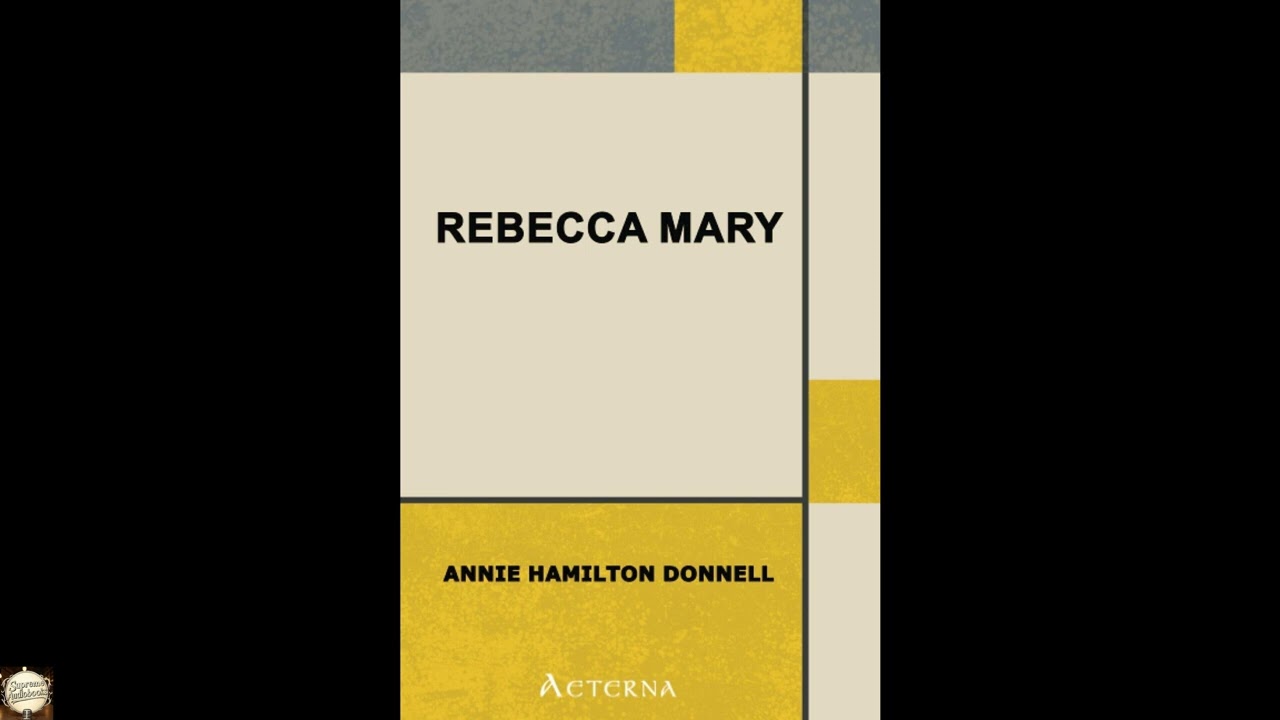
Rebecca Mary
Step into the gentle, sun-dappled world of Annie Hamilton Donnell’s Rebecca Mary, a quiet classic that speaks volumes about the human heart, its capacity for resilience, and the slow, tender blossoming of affection. Published over a century ago, this enduring story remains relevant today, offering listeners a moving meditation on what it means to truly see another person, particularly a child, and the profound changes that genuine warmth can bring to even the most hardened of souls. It is a story not of grand adventures, but of the immense, everyday heroism found in small acts of kindness and the quiet strength of an innocent spirit. The story introduces us to Rebecca Mary, a young girl living in a seemingly joyless household, under the stern and unyielding guardianship of her Aunt Harriet. The setting is likely a small New England town at the turn of the twentieth century, a place where duty often takes precedence over emotional expression and where outward appearances of propriety might mask a deep-seated loneliness. Rebecca Mary is an observant and inwardly spirited child, a quiet presence in a home run with a rigid adherence to order and a distinct lack of demonstrative affection. Aunt Harriet, a woman of principle and exacting standards, sees her role as providing for Rebecca Mary’s physical needs and moral upbringing, but she struggles with the less tangible demands of a child’s emotional life. The central conflict arises from this fundamental disparity: Rebecca Mary’s natural desire for love and connection, and Aunt Harriet’s stern, almost forbidding demeanor, shaped by her own upbringing and perhaps by past sorrows. The narrative unfolds through a series of subtle encounters and quiet observations, as Rebecca Mary’s innocence and earnest attempts at connection gradually begin to chip away at her aunt’s carefully constructed emotional walls. Small moments, like a child’s thoughtful gesture or an unexpected question, become significant catalysts, revealing the dormant tenderness beneath Aunt Harriet’s austere exterior. Listeners witness the slow, delicate arc of a relationship transforming, as two vastly different individuals learn to bridge the emotional distance between them, discovering a deeper understanding and a form of love they both desperately need, though one may not know how to ask for it. The story avoids dramatic twists, instead focusing on the quiet, incremental shifts that define real human connection. The author, Annie Hamilton Donnell, born in 1862 in Kent’s Hill, Maine, established herself as a notable writer of short fiction during the late nineteenth and early twentieth centuries. Her stories frequently appeared in prominent American magazines of the era, including Harper's Magazine, Scribner's Magazine, and The Century Magazine, reaching a wide readership eager for tales of domestic life and human interest. Donnell, who lived until 1942, was celebrated for her sensitive portrayals of childhood and her ability to capture the nuances of rural New England character. She often wrote with a keen psychological insight, even within the constraints of popular sentimental fiction. While not as widely remembered as some of her contemporaries, Donnell occupied a distinct place within the regionalist movement, aligning her work with authors who meticulously rendered the customs, dialects, and landscapes of specific American locales. Her writing, often characterized by its gentle humor and understated pathos, allowed her to comment on societal values and the inner lives of individuals, particularly women and children, whose stories might otherwise go untold. Rebecca Mary, published in 1905, is perhaps her most celebrated novel, consolidating many of the themes and narrative strengths evident in her shorter works, securing her reputation as a voice attentive to the quiet dramas of everyday existence. At its core, Rebecca Mary enacts several profound themes. First, it beautifully illustrates the transformative power of love and simple human affection. Rebecca Mary, through her very presence and quiet longing, acts as a catalyst for change in Aunt Harriet. For example, a scene where Rebecca Mary meticulously tends a wilting houseplant, seeing life and beauty where Aunt Harriet only sees a chore, subtly begins to soften the aunt’s perspective, opening her eyes to the nurturing spirit she possesses. Second, the book illuminates the remarkable resilience of childhood. Despite living in an environment often devoid of outward warmth, Rebecca Mary consistently finds small pockets of joy and maintains an internal landscape rich with imagination and hope, perhaps by naming a particular star or finding solace in the rhythmic sounds of the household. A third significant theme is the tension between duty and genuine affection. Aunt Harriet initially operates solely on a principle of duty, believing she fulfills her obligation by providing for Rebecca Mary. However, she gradually confronts the inadequacy of this approach as she witnesses the child’s unspoken needs. This internal struggle is keenly felt, such as when Aunt Harriet attempts to offer comfort through a perfectly prepared meal, only to realize Rebecca Mary truly craves a gentle word or a shared moment. Finally, the narrative serves as a quiet testament to the heroism found in everyday life—the unglamorous, consistent effort to be good, to understand, and to connect. Both characters display this heroism: Rebecca Mary in her persistent, hopeful spirit, and Aunt Harriet in her difficult, yet ultimately successful, wrestling with her own emotional limitations. When Rebecca Mary first appeared in 1905, American society was undergoing significant shifts, often referred to as the Progressive Era. This period saw increased attention paid to child welfare, education reform, and family dynamics, even as rapid industrialization reshaped urban and rural landscapes. The popularity of stories featuring children, especially those overcoming adversity or bringing light into dark places, reflected a cultural idealization of childhood innocence and a longing for simpler virtues amidst a changing world. Donnell’s work emerged within a strong literary tradition of regionalism and domestic realism, where authors sought to portray life accurately, often with a sentimental overlay, and capture the unique flavor of distinct communities. Her focus on a child’s experience and the nuances of familial relationships resonated deeply with readers who appreciated stories that offered both comfort and a gentle reflection on human nature. Listening to Rebecca Mary as an audiobook transforms a quiet reading experience into an intimately shared one. The several hours of its length provide a perfect companion for quiet evenings, reflective walks, or moments when you seek a soothing presence. A skilled narrator brings a crucial dimension to the prose, allowing listeners to hear the subtle inflections in Aunt Harriet’s gruff voice as it slowly thaws, or the quiet strength embedded in Rebecca Mary’s seemingly simple dialogue. Pay close attention to the pacing, which will likely mirror the story’s deliberate unfolding, letting moments of reflection and understated emotion breathe. The narration should evoke the specific atmosphere of a turn-of-the-century New England home, making the experience of this gentle, heartwarming story even more immediate and affecting.
Enjoyed Rebecca Mary? A few ways to support us
Audible & Amazon links are affiliate; we may earn a small commission at no extra cost.
About this production
Human narration by a volunteer reader from LibriVox.org, the public-domain audiobook project. LibriVox volunteers record literary works whose copyright has expired in the United States, releasing the resulting recordings into the public domain.
Rebecca Mary by Annie Hamilton Donnell. The underlying text is in the U.S. public domain. We do not republish any modern copyrighted edition, translation, or commentary.
The 4K cinematic visuals accompanying this audiobook are generated by an AI image model from prompts derived from the source text. No copyrighted photos, paintings, or stock footage are used. AI generation is disclosed on every video on our YouTube channel as required by YouTube's altered/synthetic content policy.
English subtitles are transcribed from the LibriVox recording with OpenAI Whisper. Translations into the 11 other supported languages are produced by Meta's NLLB-200 neural translation model. No human translator's copyrighted translation is used.
Questions about sourcing or rights? See our DMCA & Sourcing policy or contact us.
Enjoyed this audiobook?
If you'd like to own a copy of Rebecca Mary or hear a professionally produced edition, the links below help support free audiobook production at no extra cost to you.
As an Amazon Associate we earn from qualifying purchases. Audible / print links are affiliate.