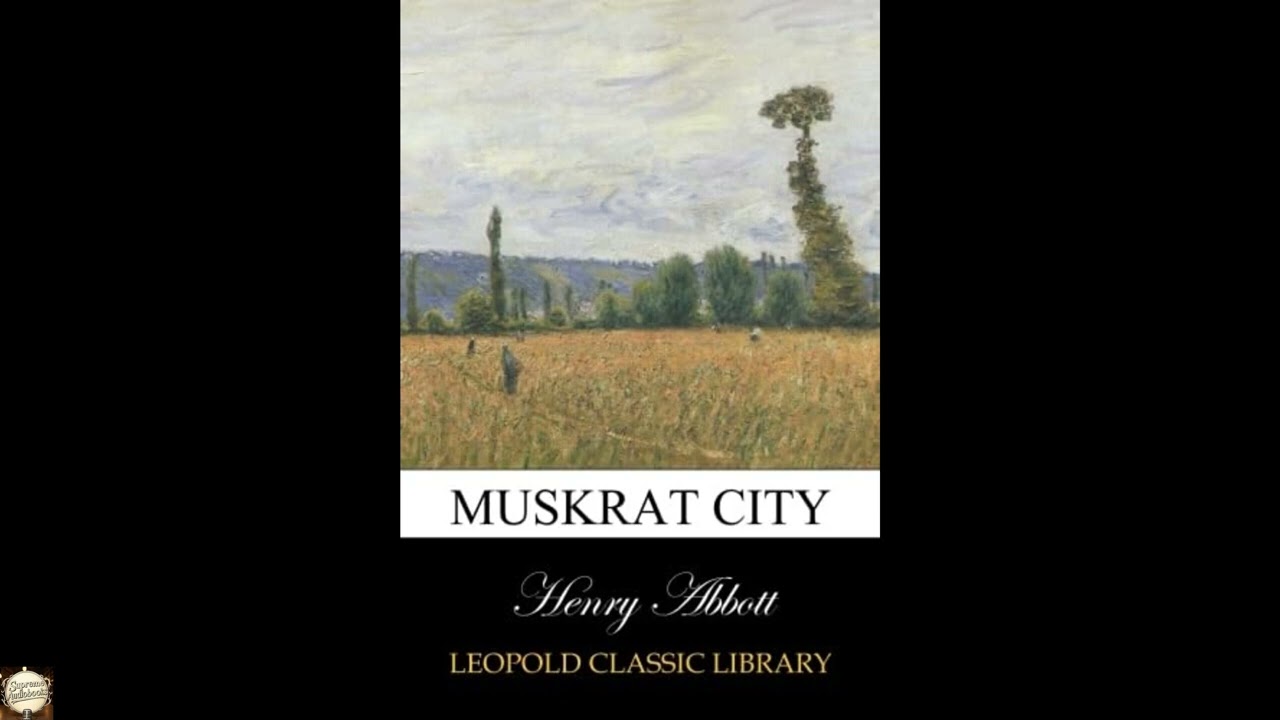
Muskrat City
Henry Abbott’s "Muskrat City" introduces us to a world both unique and universally relatable, a small settlement clinging to the very edges of a vast marshland. This is more than a quaint regional story; it's a profound examination of human ingenuity, vulnerability, and the enduring pull of a distinct way of life when confronted by the relentless tides of progress. Listeners today will find themselves drawn into its quiet drama, recognizing in its characters the echoes of their own struggles for meaning and survival amidst landscapes, both natural and societal, that constantly transform. The story transports us to the unassuming delta community of Haven's Reach, affectionately known by its inhabitants as "Muskrat City" for its unusual, half-submerged architecture and the prevalence of the resilient rodent in its surrounding wetlands. Here, life moves to the slow, deliberate pulse of the tides and the seasonal migrations of its wildlife. Our central figure is Elara Vance, a young woman who, after years away seeking education in the bustling industrial towns upriver, returns to find her home both unchanged and on the precipice of profound alteration. The quiet rhythm of Haven's Reach is threatened by a proposed dredging project, promising economic boom but also irreversible damage to the delicate ecosystem and the community's ancestral fishing grounds. Elara, armed with her outsider perspective and modern ideals, initially sees the project as a chance to uplift her people, bringing prosperity to a place often overlooked. Yet, the elders, led by the stoic and deeply respected Old Man Tiber, caution against tampering with the natural order, recalling generations of wisdom passed down through stories and observation of the marsh's delicate balance. As the community divides—some eager for the promise of progress, others clinging fiercely to their traditional ways—Elara finds herself caught between her vision for the future and the profound respect she feels for her heritage. She must navigate a tense social landscape, confront difficult ethical questions, and ultimately decide where her loyalties lie, knowing that any choice will irrevocably alter the fate of Muskrat City and its people. Henry Abbott, born in 1878 in rural Ohio, was a keen observer of the American landscape during a period of immense transformation. Raised across the Midwest and Southern states due to his father's varied agricultural and industrial pursuits, Abbott gained a deep understanding of diverse regional cultures and the struggles of ordinary people adapting to an increasingly industrialized nation. Before dedicating himself fully to writing, Abbott worked as a newspaper correspondent, honing his skills in descriptive prose and character portrayal by documenting the lives of farmers, factory workers, and those living in isolated communities. "Muskrat City," published in 1912, cemented Abbott's reputation as a powerful voice in American Realism. While often overshadowed by contemporaries like Sinclair Lewis or Theodore Dreiser, Abbott distinguished himself with a particular focus on the delicate relationship between human communities and their natural environments. His other notable works, "The Timber Line" (1907) and "River's Edge" (1917), similarly examine the cost of progress and the resilience of tradition in the face of modernity. Critics lauded his meticulous detail and authentic dialogue, which captured the rhythms of speech and thought unique to his characters' settings. Abbott’s contributions are increasingly recognized for their prescient commentary on environmental concerns and their nuanced depiction of the fading American frontier. At its core, "Muskrat City" wrestles with profound themes that remain acutely relevant. One central concern is the delicate, often contentious, relationship between humanity and the natural world. Abbott portrays the marsh not merely as a backdrop but as a living entity, a source of life and identity for Haven's Reach. The proposed dredging project serves as a stark metaphor for human attempts to dominate or 'improve' nature, illustrating the potential for irreversible damage when short-term gains are prioritized over ecological balance. Through scenes depicting the community's fishing practices and the elders' intimate knowledge of the marsh's cycles, Abbott underscores a profound respect for the environment that contrasts sharply with the encroaching industrial mindset. Another significant theme is the perennial conflict between tradition and progress. Elara Vance embodies the progressive ideal, bringing new knowledge and the promise of economic advancement. Against her stands the wisdom of generations, represented by characters like Old Man Tiber, who argue for the preservation of established ways of life. The internal struggle within the community, as residents weigh the tangible benefits of modernity against the intangible value of their heritage, mirrors a broader societal debate. Abbott also keenly examines the idea of community itself—how a shared environment and a distinct way of life forge a collective identity, and what happens when that identity is fractured by external pressures or internal disagreements. Published in 1912, "Muskrat City" arrived at a pivotal moment in American history. The nation, in the throes of the Progressive Era, saw widespread activism addressing industrialization's problems, urbanization, and corruption. While much of the focus was on urban centers and factory conditions, there was also a growing, though still nascent, awareness of conservation and the impact of rapid development on natural resources. Authors of the era grappled with the implications of an expanding industrial economy, the closing of the frontier, and the erosion of traditional community structures. Abbott's novel stands as a quiet but powerful counterpoint to the often-celebrated narrative of relentless American progress. It emerged from a literary climate that increasingly valued realism, seeking to depict life as it truly was for ordinary people. While some writers focused on the Gilded Age's excesses or the grit of urban poverty, Abbott turned his gaze to the often-ignored corners of the landscape—the wetlands, the small riverine communities—where older ways of life were coming into direct conflict with the forces of modern industry. Listening to "Muskrat City" as an audiobook offers a singular opportunity to become fully immersed in its carefully constructed world. The narrative unfolds over several hours, providing ample time for the listener to settle into the deliberate rhythms of Haven's Reach. A skilled narrator will be crucial in rendering the unique cadence of Abbott's prose and the distinct voices of his characters—from the youthful ambition of Elara Vance to the weathered wisdom of Old Man Tiber. You will notice the pacing, which often mirrors the slow, methodical pulse of the marsh itself, gradually building tension and allowing the weight of each decision to resonate. The subtle inflections in dialogue, the narrator's interpretation of descriptive passages evoking the rustling reeds and the lapping water, all contribute to a powerful sense of atmosphere that pulls you directly into the heart of Muskrat City's struggle. This is a story meant to be savored, each word contributing to a greater understanding of a community fighting to define its own future.
Enjoyed Muskrat City? A few ways to support us
Audible & Amazon links are affiliate; we may earn a small commission at no extra cost.
About this production
Human narration by a volunteer reader from LibriVox.org, the public-domain audiobook project. LibriVox volunteers record literary works whose copyright has expired in the United States, releasing the resulting recordings into the public domain.
Muskrat City by Henry Abbott. The underlying text is in the U.S. public domain. We do not republish any modern copyrighted edition, translation, or commentary.
The 4K cinematic visuals accompanying this audiobook are generated by an AI image model from prompts derived from the source text. No copyrighted photos, paintings, or stock footage are used. AI generation is disclosed on every video on our YouTube channel as required by YouTube's altered/synthetic content policy.
English subtitles are transcribed from the LibriVox recording with OpenAI Whisper. Translations into the 11 other supported languages are produced by Meta's NLLB-200 neural translation model. No human translator's copyrighted translation is used.
Questions about sourcing or rights? See our DMCA & Sourcing policy or contact us.
Enjoyed this audiobook?
If you'd like to own a copy of Muskrat City or hear a professionally produced edition, the links below help support free audiobook production at no extra cost to you.
As an Amazon Associate we earn from qualifying purchases. Audible / print links are affiliate.