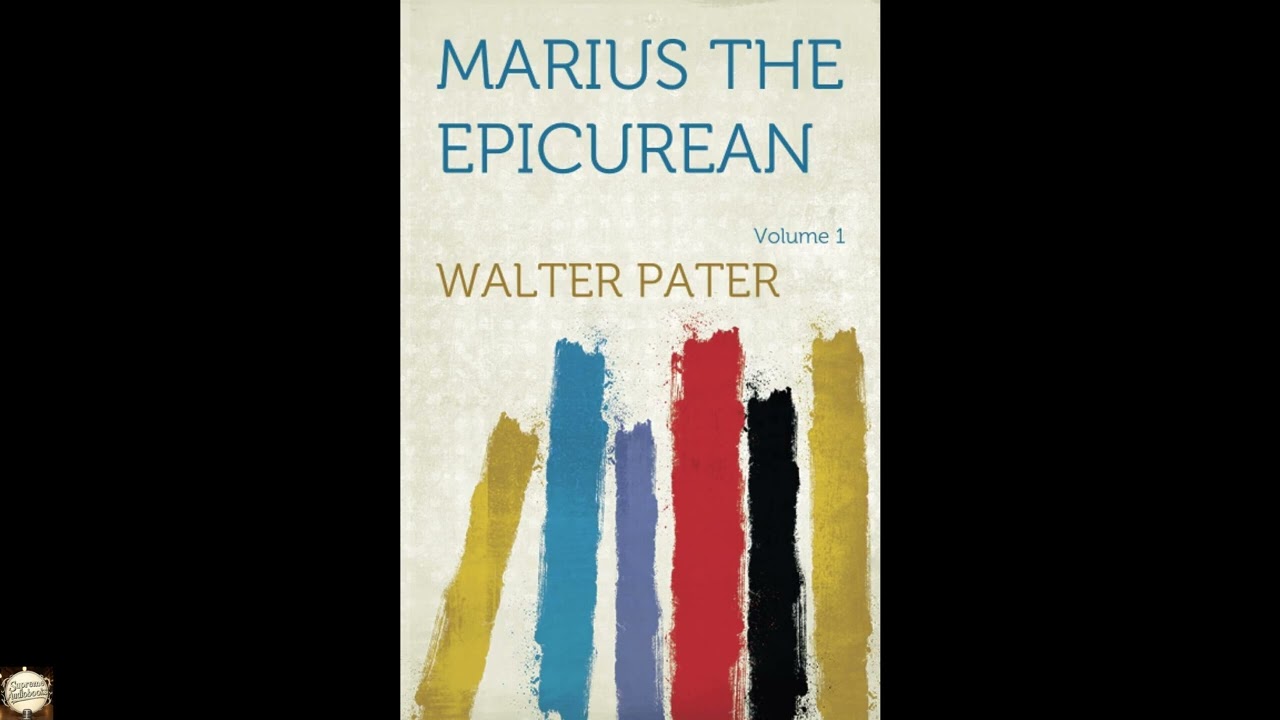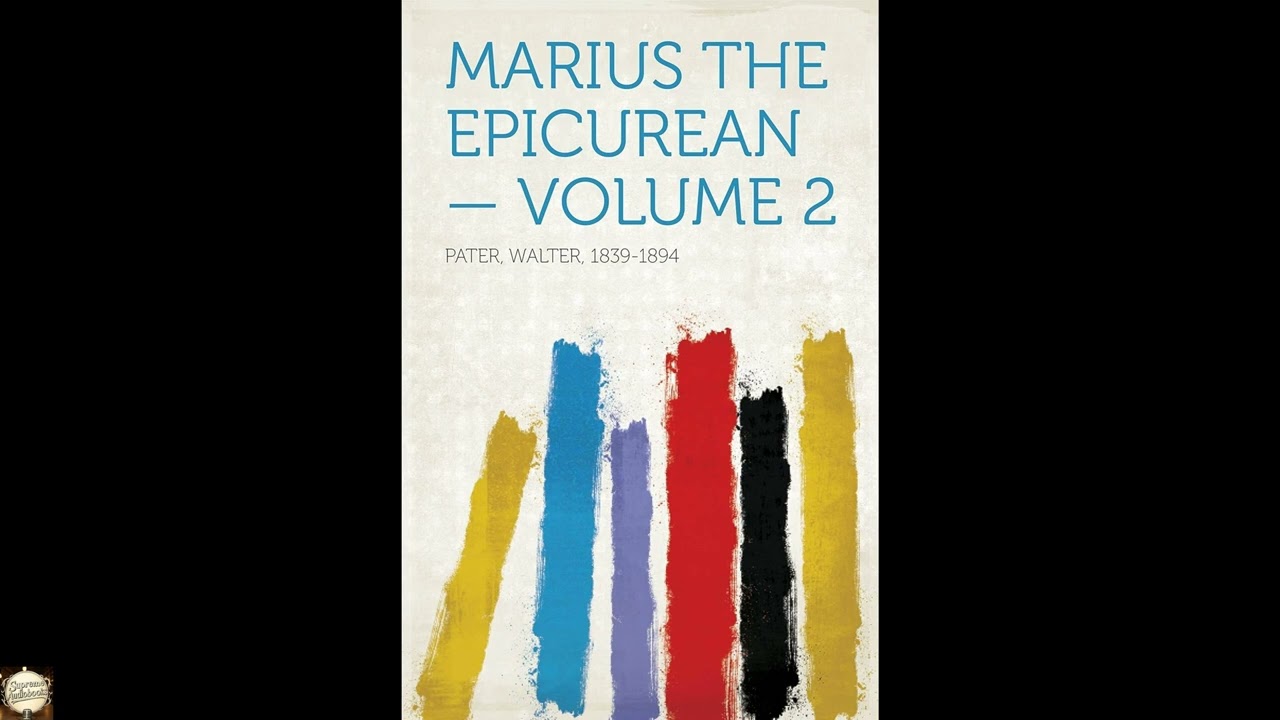
Marius the Epicurean — Volume 2
Step into the refined, contemplative world of second-century Rome with Walter Pater’s Marius the Epicurean — Volume 2. This isn't merely a historical novel; it’s an extended meditation on the search for a meaningful life, a philosophical pilgrimage through an age of intellectual ferment and spiritual transition. For anyone who has ever wrestled with questions of belief, beauty, and the nature of happiness, Marius’s deeply personal quest for a guiding philosophy speaks across the centuries, offering profound insights into the human condition and the enduring pursuit of self-knowledge and an aesthetic apprehension of the world. Our story resumes with Marius, a young Roman of keen sensibility and introspective mind, having left behind his ancestral home and the pastoral quiet of Italy for the bustling, intellectually charged environment of Rome. He has already begun his earnest quest to discover a satisfying philosophy of life, having previously encountered and critically assessed the austere tenets of Stoicism, the more refined Epicureanism, and the intellectual skepticism prevalent among his educated peers. He is a seeker of truth and beauty, deeply sensitive to the nuances of experience, yet often finds himself standing apart, an observer rather than a full participant in the grand spectacles and moral decay around him. As this second volume unfolds, Marius moves through the imperial court, observing the reign of Marcus Aurelius, a philosopher-emperor whose Stoic principles struggle against the practicalities of governance and the hedonism of the Roman elite. Marius experiences the sting of loss and the comfort of unexpected friendships. His journey leads him into contact with the nascent Christian community in Rome, a group whose simple devotion and communal spirit offer a stark contrast to the sophisticated but often empty intellectualism he has known. He finds himself drawn to the quiet conviction of figures like Cornelius, an early Christian soldier, and the gentle faith of Cecilia, though Marius remains hesitant to fully embrace their dogmatic beliefs, still balancing the appeal of spiritual clarity with his ingrained aesthetic sensibilities. His struggle centers on reconciling the pursuit of beauty and individual experience with the demands of an ethical life and the claims of a transcendent faith. The author, Walter Pater, was a singular figure in English letters during the latter half of the nineteenth century. Born in London in the 1830s, he spent much of his adult life in the academic groves of Oxford University, where he taught and wrote extensively on art, literature, and philosophy. Pater became a key proponent of the Aesthetic movement, an artistic and literary trend that emphasized beauty and sensation over moral or utilitarian concerns. His critical essays, most famously collected in Studies in the History of the Renaissance, articulated a distinctive philosophy of life centered on the intense perception of fleeting moments. Pater's influence extended far beyond the lecture halls of Oxford. He became a significant intellectual forefather to the Decadent movement, impacting writers such as Oscar Wilde and Arthur Symons, who found in Pater’s elegant prose and philosophical stance a compelling vision for artistic expression and personal experience. Though sometimes controversial for his perceived challenge to Victorian moral strictures, Pater’s meticulous style and the intellectual courage of his ideas secured his place as a seminal literary critic and essayist. His other imaginative works, like Imaginary Portraits, further demonstrate his unique ability to blend philosophical inquiry with narrative art. Marius the Epicurean enacts several core themes, perhaps most notably the pursuit of an intensely lived experience and the refined appreciation of beauty—a concept Pater himself famously termed "the love of art for art's sake." We see this enacted vividly in Marius's detailed observations of Roman life, from the nuanced play of light on a statue to the intricate rituals of a pagan festival. His aesthetic sensibility is not superficial; it is his primary mode of understanding the world, a way of extracting meaning from the transient. Another prominent theme is the arduous, often solitary, search for spiritual and intellectual truth. Marius moves from the pagan traditions of his youth, through various classical philosophies, to the very threshold of Christianity, never quite settling, always questioning, exemplifying the struggle of an individual conscience in a world offering competing claims to ultimate meaning. The book also addresses the tension between the individual's inner world and the demands of communal existence. While Marius is deeply introspective, his interactions with friends, particularly the steadfast Cornelius, reveal the solace and sometimes the challenge of human connection. His reluctant gravitation towards the early Christian community, despite his intellectual reservations, speaks to a yearning for belonging and a shared sense of purpose. Ultimately, the work underscores the transient nature of life and the importance of living each moment with heightened awareness, a philosophy that resonates with Marius's observations of Rome's grandeur and inevitable decline, mirroring the ebb and flow of all human endeavor. Pater wrote Marius the Epicurean during a fascinating period in English history—the late Victorian era. This was a time marked by significant social change, rapid scientific advancements like Darwin's theories challenging traditional religious faith, and a burgeoning industrial society that often seemed at odds with beauty and spiritual contemplation. Against this backdrop, Pater and the Aesthetic movement offered a counter-current, advocating for the importance of art, sensation, and individual experience as a refuge and a source of meaning. The novel, set in the decaying Roman Empire, allowed Pater to allegorically address contemporary Victorian concerns about faith, morality, and the search for authentic existence without directly confronting the more conservative elements of his own society. The historical distance gave him a canvas to paint a picture of spiritual and philosophical searching that felt both universal and deeply personal. Listening to Marius the Epicurean — Volume 2 as an audiobook offers a singular opportunity to immerse oneself in Pater’s distinctive prose. His writing is celebrated for its lyrical quality, its intricate rhythms, and its contemplative depth, all of which come alive through skilled narration. The "several hours" run time allows for extended periods of focused attention, making it ideal for thoughtful listening during quiet moments, long walks, or commutes. A good narrator will honor the measured pace of the story, allowing Marius's internal monologues and philosophical ruminations to unfold with grace, ensuring that the listener can savor the finely crafted sentences and the evocative descriptions of ancient Rome. This aural experience helps draw the listener into Marius's world, making his intellectual and emotional evolution feel immediate and deeply personal, transforming what might otherwise be dense philosophical passages into a compelling and atmospheric unfolding of ideas.
Enjoyed Marius the Epicurean — Volume 2? A few ways to support us
Audible & Amazon links are affiliate; we may earn a small commission at no extra cost.
About this production
Human narration by a volunteer reader from LibriVox.org, the public-domain audiobook project. LibriVox volunteers record literary works whose copyright has expired in the United States, releasing the resulting recordings into the public domain.
Marius the Epicurean — Volume 2 by Walter Pater. The underlying text is in the U.S. public domain. We do not republish any modern copyrighted edition, translation, or commentary.
The 4K cinematic visuals accompanying this audiobook are generated by an AI image model from prompts derived from the source text. No copyrighted photos, paintings, or stock footage are used. AI generation is disclosed on every video on our YouTube channel as required by YouTube's altered/synthetic content policy.
English subtitles are transcribed from the LibriVox recording with OpenAI Whisper. Translations into the 11 other supported languages are produced by Meta's NLLB-200 neural translation model. No human translator's copyrighted translation is used.
Questions about sourcing or rights? See our DMCA & Sourcing policy or contact us.
Enjoyed this audiobook?
If you'd like to own a copy of Marius the Epicurean — Volume 2 or hear a professionally produced edition, the links below help support free audiobook production at no extra cost to you.
As an Amazon Associate we earn from qualifying purchases. Audible / print links are affiliate.