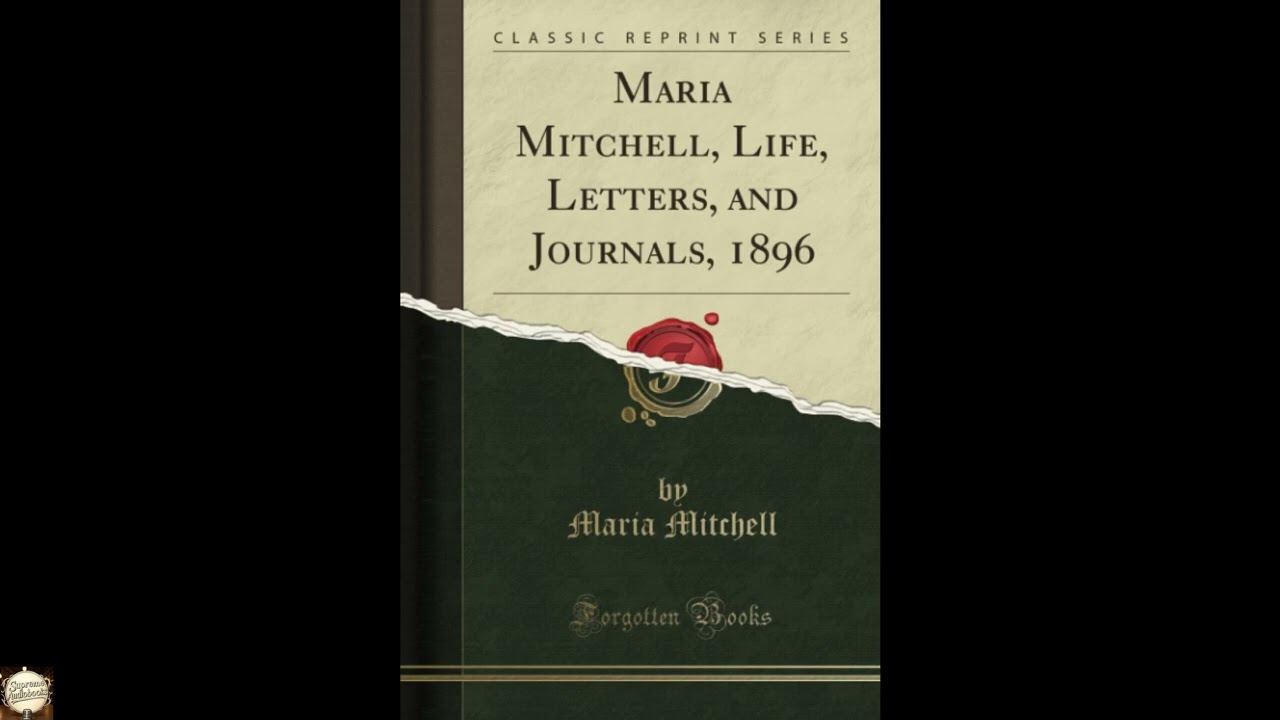
Maria Mitchell, Life, Letters, and Journals, 1896
What does it mean to look at the stars and see beyond the prevailing limits of your world? For Maria Mitchell, it meant a lifetime of discovery, charting new courses in the cosmos and defying societal confines. Published in 1896, Maria Mitchell, Life, Letters, and Journals offers an unfiltered window into the mind of America's first female professional astronomer. This is more than a historical document; it is an intimate conversation with a woman who pursued knowledge against formidable odds. Her words resonate powerfully, offering inspiration to anyone called to a life of extraordinary purpose. The story within these pages begins on Nantucket, Massachusetts, where Maria Mitchell—born 1818—cultivated an uncommon passion for the night sky under her father, William Mitchell, a keen amateur astronomer. Raised Quaker, she valued intellectual pursuit and rejected superficial distinctions. Early entries paint a picture of a precocious, self-taught young woman, absorbing knowledge from the Nantucket Atheneum and painstakingly charting celestial bodies, her gaze fixed on infinity despite her small island world. A pivotal moment arrived in 1847 with her independent discovery of a comet, an achievement garnering international recognition and a gold medal from the King of Denmark. The collection chronicles her transition from local observer to national figure, detailing her engagement with the broader scientific community. We witness her intellectual growth as she accepts a groundbreaking 1865 appointment as Professor of Astronomy at the newly established Vassar College. Her pioneering efforts shaped a rigorous scientific curriculum for young women at Vassar. Letters from this period reveal the challenges and triumphs of teaching, mentoring, and inspiring new scholars, all while maintaining her own observational research. She grapples with observatory operations, academic politics, and the scrutiny of her unique position. The narrative culminates in a sustained portrait of a woman dedicated to scientific truth and educational empowerment, continually pushing boundaries for women in the nineteenth century. Maria Mitchell, the central voice and subject of this collection, was born August 1, 1818, in Nantucket, Massachusetts. Her Quaker upbringing instilled a commitment to equality. Her father, a schoolteacher and amateur astronomer, nurtured her early scientific talents, teaching her navigation and instrument use. Mitchell's formal education was limited, but her insatiable curiosity and disciplined self-study transformed her. She accessed scientific texts as a Nantucket Atheneum librarian, fueling her self-education. Her discovery of a comet in 1847, 'Miss Mitchell's Comet,' brought global recognition, making her the first woman elected to the American Academy of Arts and Sciences in 1848. Her groundbreaking appointment as Professor of Astronomy and Director of the Vassar College Observatory in 1865 cemented her place as a pioneer in higher education for women. At Vassar, she championed experiential learning, encouraging independent thought, and taking students on eclipse expeditions. Mitchell believed in intellectual rigor and gender equality, challenging norms that relegated women to domestic spheres. She advocated for women's suffrage and served as president of the American Association for the Advancement of Women. Her legacy extends beyond science; she stands as a towering figure in American education and the women's rights movement, demonstrating that intellect and ambition knew no gender. She passed away in 1889, leaving a profound impact. The written remnants of Maria Mitchell’s life, collected here, manifest several enduring themes. Foremost is the unyielding pursuit of knowledge and the profound joy of intellectual discovery. Whether meticulously recording stellar positions or debating scientific theories, Mitchell’s prose radiates an unwavering dedication to understanding the natural world. Her journal entries on Jupiter's moons or the solar surface reveal a mind singularly devoted to uncovering scientific truth through direct observation. Another prominent theme is breaking societal barriers and advocating for women's equality. Mitchell’s existence was a testament to this, and her writings actively reflect her thoughts. Her letters from Vassar discuss her female students' capabilities and her commitment to proving women capable of scientific thought and professional careers. She encouraged students to think critically, pushing back against passive learning. Her reflections underscore a quiet, yet firm, feminist stance. A third theme is the power of personal reflection and inner conviction. Her journals pivot from scientific observation to philosophical contemplation, revealing her Quaker-influenced moral compass and her views on education, ethics, and life. These intimate entries offer a rare glimpse into the internal world of a public figure, showcasing her doubts, triumphs, and self-examination. The publication of Maria Mitchell, Life, Letters, and Journals in 1896 arrived at a moment of significant transformation in American society. The late nineteenth century saw rapid industrialization, urbanization, and the professionalization of fields like science. Post-Civil War, the nation grappled with new social orders. Crucially, it was also a time of burgeoning women's rights movements and expanding educational opportunities for women, with colleges like Vassar offering access previously reserved for men. Mitchell’s collected writings served as both a memorial and a potent declaration. Her death in 1889 meant this volume could solidify her legacy, presenting her as a pivotal figure whose life exemplified the intellectual potential of women and their capacity for scientific rigor. The book emerged when the idea of a woman as a professional astronomer and college professor was still revolutionary, offering tangible proof of what one woman achieved and a powerful narrative for those advocating greater educational and professional parity for women. To experience Maria Mitchell, Life, Letters, and Journals as an audiobook is to receive a personal invitation into the thoughts and experiences of an extraordinary individual. The spoken word adds another dimension, allowing the listener to absorb the nuanced rhythms of Mitchell’s prose, her quiet reflections, and her intellectual passion. A thoughtful narration brings the immediacy of her letters and journals to life, transforming a historical document into a direct encounter with her spirit. Over several hours, one appreciates the gradual unfolding of her insights and the consistent voice that guided her through a life dedicated to the stars and to the advancement of her sex. The pacing allows for contemplation, echoing the meticulous observation that defined Mitchell's scientific work.
Enjoyed Maria Mitchell, Life, Letters, and Journals, 1896? A few ways to support us
Audible & Amazon links are affiliate; we may earn a small commission at no extra cost.
About this production
Human narration by a volunteer reader from LibriVox.org, the public-domain audiobook project. LibriVox volunteers record literary works whose copyright has expired in the United States, releasing the resulting recordings into the public domain.
Maria Mitchell, Life, Letters, and Journals, 1896 by Maria Mitchell. The underlying text is in the U.S. public domain. We do not republish any modern copyrighted edition, translation, or commentary.
The 4K cinematic visuals accompanying this audiobook are generated by an AI image model from prompts derived from the source text. No copyrighted photos, paintings, or stock footage are used. AI generation is disclosed on every video on our YouTube channel as required by YouTube's altered/synthetic content policy.
English subtitles are transcribed from the LibriVox recording with OpenAI Whisper. Translations into the 11 other supported languages are produced by Meta's NLLB-200 neural translation model. No human translator's copyrighted translation is used.
Questions about sourcing or rights? See our DMCA & Sourcing policy or contact us.
Enjoyed this audiobook?
If you'd like to own a copy of Maria Mitchell, Life, Letters, and Journals, 1896 or hear a professionally produced edition, the links below help support free audiobook production at no extra cost to you.
As an Amazon Associate we earn from qualifying purchases. Audible / print links are affiliate.