Manalive
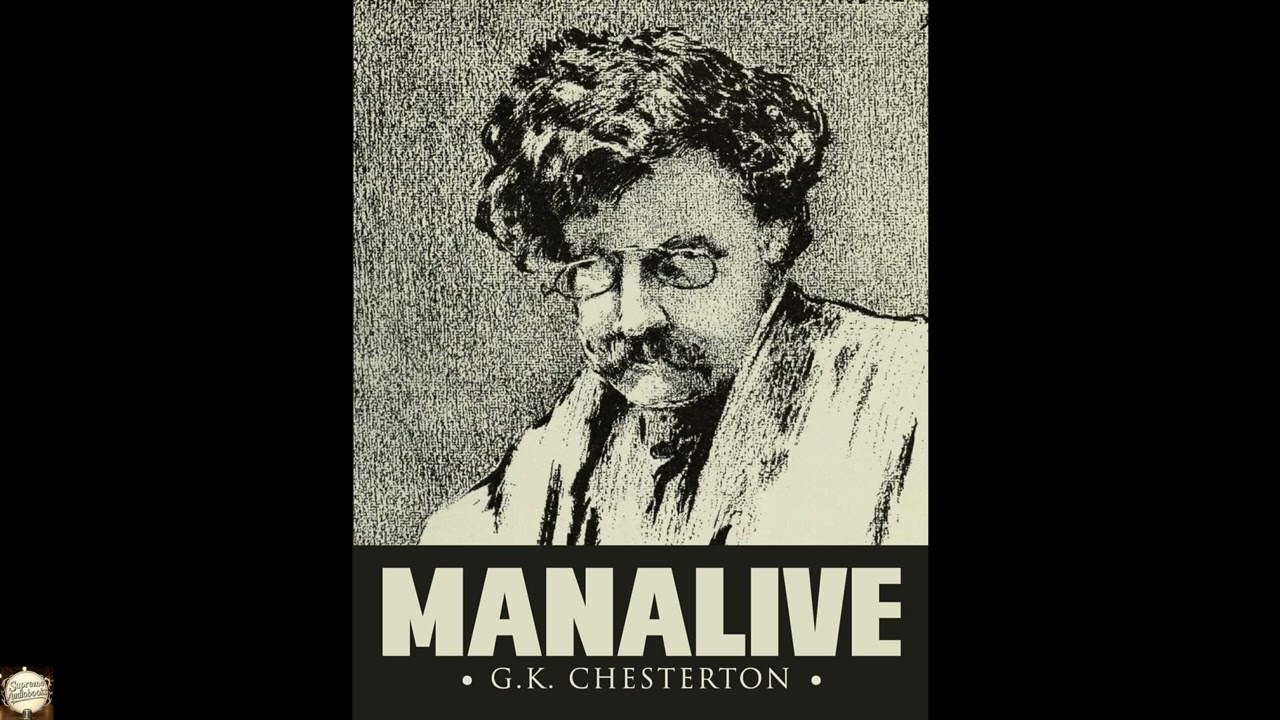
What if the cure for modern weariness isn't more complexity, but a radical return to simple, joyous appreciation? G.K. Chesterton's "Manalive" poses this question with audacious glee, introducing listeners to a character so exuberantly alive he threatens to upend the very foundations of polite society. Published in 1912, this novel remains profoundly relevant today, offering a bracing tonic against cynicism and the quiet despair of routine. It champions the forgotten art of seeing the world anew, urging us to find adventure, romance, and spiritual vitality not by escaping life, but by truly inhabiting it, right where we are. The story begins in a respectable London boarding house known as 'The Beacon,' a haven for the conventional, the predictable, and the quietly disillusioned. Here, Miss Western, a woman of stern sensibilities, and Mr. Pye, a timid academic, represent the status quo. Their meticulously ordered lives are irrevocably disturbed by the arrival of Innocent Smith, a man who bursts onto the scene like a force of nature. Smith is a whirlwind of eccentric, joyful actions: he climbs trees, shoots arrows through windows, and proposes marriage to unsuspecting women—including, most scandalously, his own wife. His seemingly bizarre behavior quickly escalates from mere eccentricity to what appears, to the other residents, to be outright criminality. As the accusations mount—polygamy, burglary, attempted murder—Smith finds himself facing a formal inquiry, a sort of mock trial conducted by the scandalized residents. This tribunal becomes the central stage where Smith's unconventional philosophy clashes head-on with the rigid moral code of his accusers. Through a series of brilliant, paradoxical arguments and revelations, Smith begins to unveil the method behind his madness. His actions, though disruptive, are revealed to be deeply rooted in a profound, almost childlike quest to re-enchant the ordinary, to perpetually rediscover the wonder and gratitude in existence, and to treat every day as if it were a new beginning, bursting with possibility and romance. The narrative meticulously builds the case against Smith, only to dismantle it with wit and profound insight, leaving the listener to question not Smith's sanity, but perhaps their own. G.K. Chesterton, born in London in 1874, was an intellectual giant whose influence spanned literature, philosophy, and theology. A prolific writer, essayist, and critic, he was a master of paradox and wit, using these tools to illuminate profound truths often obscured by modern thought. His early life saw him dabble in art before finding his true calling in journalism and writing. He became a prominent figure in the British literary scene of the early 20th century, known for his distinctive stout figure, booming laugh, and fierce intellect. A close associate of Hilaire Belloc, their collaboration and shared worldview led George Bernard Shaw to famously dub them the "Chesterbelloc." Chesterton was a staunch defender of common sense, tradition, and Christian values, famously converting to Catholicism later in his life, a spiritual evolution that deeply informed much of his work. Beyond "Manalive," his literary legacy includes the popular Father Brown detective stories, the theological treatise "Orthodoxy," and the social critique "The Napoleon of Notting Hill." He distinguished himself from many of his modernist contemporaries by his robust optimism and his unwavering belief in the inherent goodness and wonder of creation, often using fiction and essays to argue against what he saw as the prevailing cynicism and relativism of his age. He passed away in 1936, leaving behind an oeuvre that continues to provoke thought and inspire joy. "Manalive" enacts several core themes with Chesterton's characteristic verve. One central idea is the rediscovery of wonder in the everyday. Innocent Smith literally breaks down walls and social barriers to force others to see the mundane – a window, a wife, a garden – with fresh, appreciative eyes. His "burglary" of his own house, for instance, isn't about theft but about returning to his home with the adventurous spirit of a stranger, thereby appreciating its comforts anew. This connects directly to another theme: the virtue of gratitude. Smith's seemingly outrageous acts are, at their heart, profound expressions of thanks for the simple fact of existence and for the blessings already present in one's life. He proposes to his own wife again and again not out of infidelity, but out of a desire to rekindle the romance and conscious commitment that often fades into habit in marriage, making her "new" to him with each fresh vow. A third significant theme is the paradoxical nature of sanity and convention. Chesterton delights in turning societal norms on their head, demonstrating how what is deemed "sane" can often be dull and uninspired, while what appears "mad" might be the truest form of living. Innocent Smith’s trial is a magnificent stage for this, as the conventional, 'sane' characters struggle to comprehend a man whose actions are born of a desire for zest, not malice. His defense cleverly reveals that his "crimes" are often extensions of virtues, like a child's imagination or a husband's devotion, taken to their joyful, illogical extreme. This humorous yet profound examination of social expectations challenges listeners to question their own assumptions about what constitutes a good and meaningful life. The publication of "Manalive" in 1912 placed it firmly in the Edwardian era, a period of immense social and intellectual ferment in Britain, just on the cusp of the First World War. It was a time when traditional Victorian values were giving way to new ideas, scientific rationalism was gaining ground, and modernism was beginning to assert itself in the arts. Chesterton, however, often stood in stark contrast to these emerging trends. While many intellectuals were questioning established institutions and embracing cynicism, Chesterton—with this novel and others—offered a robust defense of optimism, common sense, and the enduring truths found in tradition and faith. "Manalive" can be seen as a direct literary response to the perceived gloom and existential angst of his contemporaries. Chesterton believed that the intellectual currents of his time were draining the joy and meaning from life, replacing wonder with weary sophistication. The novel, therefore, emerged as an antidote, a playful yet profound argument for recovering a childlike sense of appreciation and adventure in a world that seemed determined to lose it. It champions the eccentric individual who dares to live fully against the backdrop of a society increasingly constrained by artificial respectability and intellectual ennui, providing a powerful counter-narrative to the prevailing cultural anxieties. Listening to "Manalive" as an audiobook offers a unique opportunity to fully appreciate Chesterton’s distinctive prose and the sheer energy of his protagonist. The run length, several hours, allows for a comprehensive immersion into Smith's world and philosophy without feeling rushed. A skilled narrator can bring out the precise wit and verbal fireworks of the dialogue, especially during the trial scenes where Chesterton's love for rhetorical flourish shines. Pay close attention to the pacing, which often shifts dramatically from the staid descriptions of 'The Beacon' residents to the whirlwind antics of Innocent Smith. The narrator's voice can emphasize the dramatic irony and the subtle humor, making Chesterton's paradoxical arguments not just intellectually engaging, but genuinely entertaining. The aural experience amplifies the atmosphere, drawing you into the eccentric charm and profound message of a man who simply refuses to be anything less than utterly, gloriously alive.
Enjoyed Manalive? A few ways to support us
Audible & Amazon links are affiliate; we may earn a small commission at no extra cost.
About this production
Human narration by a volunteer reader from LibriVox.org, the public-domain audiobook project. LibriVox volunteers record literary works whose copyright has expired in the United States, releasing the resulting recordings into the public domain.
Manalive by G.K. Chesterton. The underlying text is in the U.S. public domain. We do not republish any modern copyrighted edition, translation, or commentary.
The 4K cinematic visuals accompanying this audiobook are generated by an AI image model from prompts derived from the source text. No copyrighted photos, paintings, or stock footage are used. AI generation is disclosed on every video on our YouTube channel as required by YouTube's altered/synthetic content policy.
English subtitles are transcribed from the LibriVox recording with OpenAI Whisper. Translations into the 11 other supported languages are produced by Meta's NLLB-200 neural translation model. No human translator's copyrighted translation is used.
Questions about sourcing or rights? See our DMCA & Sourcing policy or contact us.
Enjoyed this audiobook?
If you'd like to own a copy of Manalive or hear a professionally produced edition, the links below help support free audiobook production at no extra cost to you.
As an Amazon Associate we earn from qualifying purchases. Audible / print links are affiliate.