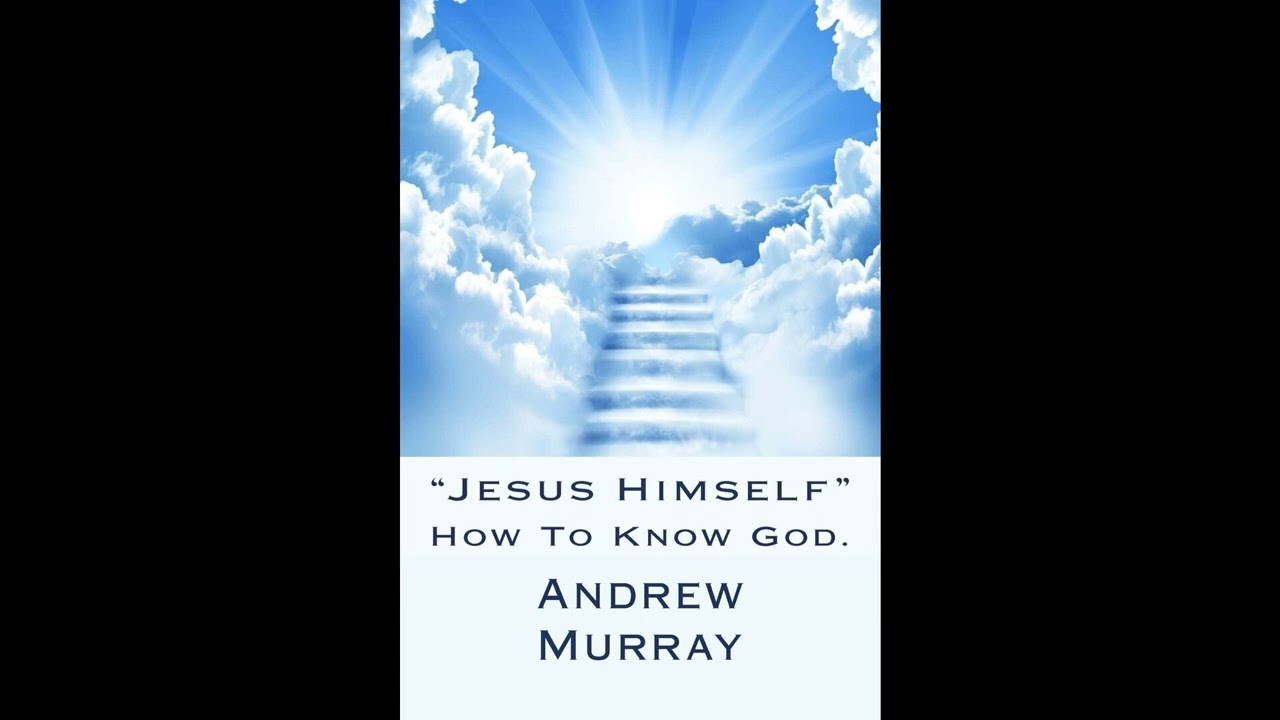
Jesus Himself
In a world clamoring for attention and offering countless paths to meaning, the call to quiet contemplation and a direct spiritual connection often feels lost. Yet, the enduring words of Andrew Murray in Jesus Himself cut through the noise, offering an invitation as relevant today as it was over a century ago. This profound devotional classic draws listeners into a deeper, more personal understanding of faith, moving beyond abstract theology to a vibrant, lived experience with the divine. Murray’s gentle yet powerful voice guides the heart toward an intimate relationship with Christ, providing solace, challenge, and immense spiritual refreshment for anyone seeking a more profound sense of purpose and presence in their daily existence. The book Jesus Himself does not present a conventional story with characters and external events, but rather unfolds as an extended meditation, a guided introspection into the nature of Christian discipleship. The setting is the inner landscape of the believer’s spirit, illuminated by the unchanging truths of scripture. The central figure is not a fictional creation, but Jesus Christ as He is revealed in the Gospels and in the life of faith. Murray posits a fundamental challenge: that many believers, despite their earnestness, tend to relate to doctrines about Jesus rather than to His living person. The central conflict, then, becomes the internal struggle to move past intellectual assent or outward religious practice towards a continuous, conscious communion with the Savior. The arc of this spiritual work encourages a complete reorientation of the heart and mind. Murray systematically peels back layers of misunderstanding and self-reliance, revealing how a deep-seated humility and a childlike dependence on Christ are the true gateways to spiritual power and peace. He does not provide a rigid set of rules, but rather fosters an environment of spiritual receptivity, urging the listener to relinquish their own efforts and allow Christ to be the source and sustainer of their life. The progression is one of increasing surrender, leading to a profound transformation where faith ceases to be a strenuous endeavor and becomes instead a joyful dwelling within the divine presence, transforming the listener’s perspective on prayer, service, and daily living. Andrew Murray, born in 1828 in the Cape Colony of South Africa, dedicated his long life to ministry and writing, leaving an indelible mark on Protestant spirituality. The son of Scottish missionary parents, he received his education in Scotland and later at the University of Utrecht in the Netherlands, preparing him for a distinguished career as a minister in the Dutch Reformed Church back in his homeland. Murray was not merely a theologian but a spiritual leader who spearheaded significant revival movements and was a passionate advocate for foreign missions. His influence spread far beyond South Africa through his prolific writing, with over 200 books and pamphlets to his name. His literary output consistently emphasized the themes of humility, prayer, and a deeper life in Christ, making his works cornerstones of evangelical devotional literature. Other notable books such as Abide in Christ, Humility, and With Christ in the School of Prayer have guided millions of readers and continue to be widely read today. Murray’s legacy places him firmly within the tradition of Christian mystics and practical theologians, who sought to bridge the gap between abstract doctrine and lived experience. His writings are characterized by their clear, accessible language, profound spiritual insight, and an unwavering focus on the centrality of Christ in every aspect of life, solidifying his place as one of the most beloved and impactful devotional writers of his era and beyond. At its core, Jesus Himself powerfully enacts the theme of abiding in Christ. Murray consistently draws on the metaphor of the vine and the branches from John 15, not as a mere theological concept, but as the blueprint for an active, moment-by-moment connection. He illustrates how just as a branch draws all its life, sap, and fruitfulness directly from the vine, so too must the believer find all their spiritual sustenance, strength, and purpose in Christ. This is not a passive waiting, but an active trust, a constant looking to Jesus rather than to one’s own efforts or feelings. For example, he explains how our struggles with temptation or spiritual weakness often stem from an attempt to bear fruit independently, rather than resting in Christ’s indwelling power. A second crucial theme woven through the text is humility, presented not as self-abasement, but as the foundational posture for receiving divine grace. Murray argues that true humility is recognizing our utter dependence on God and acknowledging Christ as our all in all. He shows how pride, often manifesting as self-reliance or confidence in one’s own spiritual attainments, creates a barrier to God’s work in us. Concrete scenes of spiritual striving versus simple surrender illustrate how a broken and contrite spirit—a truly humble heart—is the very place where Christ delights to manifest His presence and power. The book continually points out that it is when we are empty of self that Christ can truly fill us. This book emerged during a period of considerable change and spiritual ferment in the late nineteenth and early twentieth centuries. The industrial revolution was reshaping societies, traditional social structures were evolving, and new scientific theories were challenging established religious viewpoints. In the theological world, biblical criticism was gaining traction, prompting many to re-evaluate their understanding of scripture. Amidst this intellectual and societal upheaval, there was a widespread spiritual hunger for a deeper, more personal experience of faith that transcended rigid denominational boundaries or intellectual debates. Murray’s writings, including Jesus Himself, resonated deeply with this longing for authenticity and direct communion with God. They provided practical, accessible guidance for individuals seeking spiritual stability and growth in a rapidly modernizing world. His work was also closely aligned with the burgeoning Keswick Convention movement, which emphasized a "deeper life" and practical holiness, encouraging believers to move beyond mere conversion to a continuous experience of Christ’s indwelling power. Jesus Himself offered a compelling spiritual path that addressed the heart’s yearning for a living relationship with the divine, rather than just an adherence to doctrine. Listening to Jesus Himself as an audiobook offers a unique advantage for absorbing its contemplative wisdom. Its several hours of content provide ample opportunity for sustained reflection, allowing listeners to truly sink into Murray’s insights at their own pace. The experience of hearing the text read aloud can be profoundly meditative, transforming daily activities like commuting, exercising, or performing household chores into periods of spiritual focus. A skilled narrator, with a clear, steady voice and respectful pacing, can enhance the book’s inherent atmosphere of reverence and encouragement. The absence of literal dialogue means the listener’s attention is solely on the unfolding spiritual instruction, creating an intimate space for personal introspection and allowing Murray’s encouraging words to resonate deeply within the quiet of one's own thoughts.
Enjoyed Jesus Himself? A few ways to support us
Audible & Amazon links are affiliate; we may earn a small commission at no extra cost.
About this production
Human narration by a volunteer reader from LibriVox.org, the public-domain audiobook project. LibriVox volunteers record literary works whose copyright has expired in the United States, releasing the resulting recordings into the public domain.
Jesus Himself by Andrew Murray. The underlying text is in the U.S. public domain. We do not republish any modern copyrighted edition, translation, or commentary.
The 4K cinematic visuals accompanying this audiobook are generated by an AI image model from prompts derived from the source text. No copyrighted photos, paintings, or stock footage are used. AI generation is disclosed on every video on our YouTube channel as required by YouTube's altered/synthetic content policy.
English subtitles are transcribed from the LibriVox recording with OpenAI Whisper. Translations into the 11 other supported languages are produced by Meta's NLLB-200 neural translation model. No human translator's copyrighted translation is used.
Questions about sourcing or rights? See our DMCA & Sourcing policy or contact us.
Enjoyed this audiobook?
If you'd like to own a copy of Jesus Himself or hear a professionally produced edition, the links below help support free audiobook production at no extra cost to you.
As an Amazon Associate we earn from qualifying purchases. Audible / print links are affiliate.