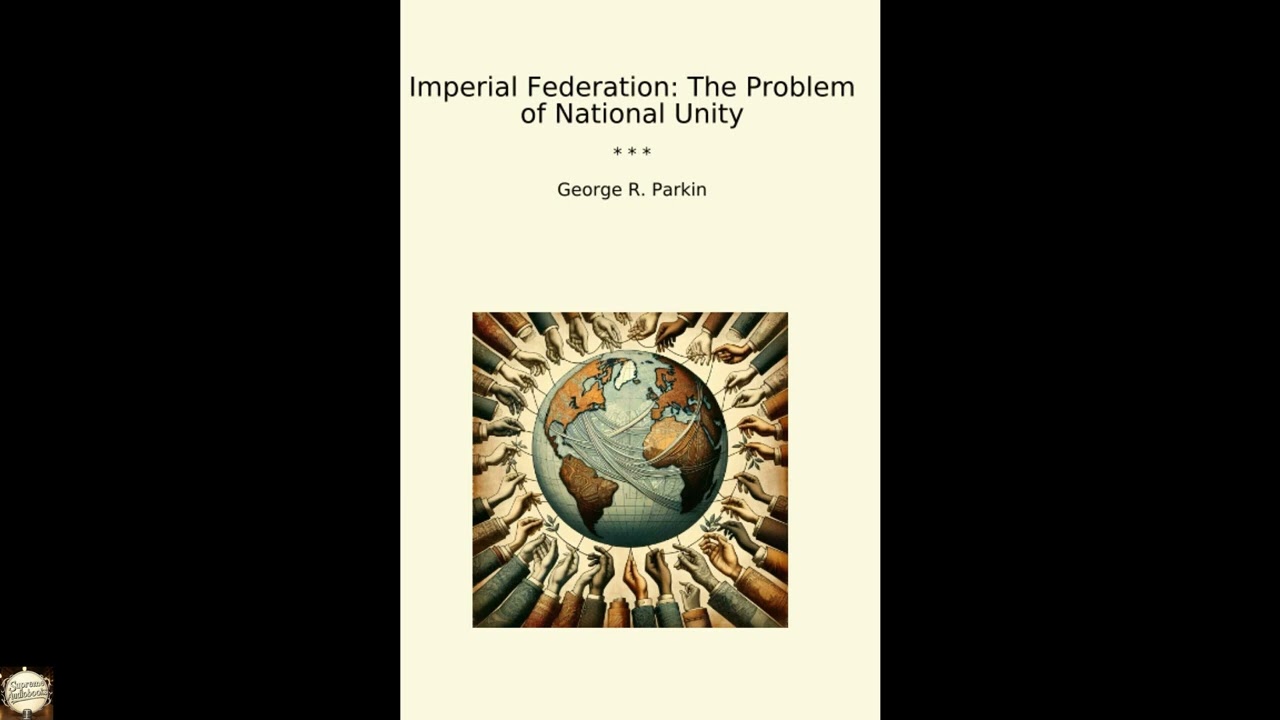
Imperial Federation: The Problem of National Unity (Classic Books)
"Imperial Federation: The Problem of National Unity" addresses concerns strikingly relevant today. George R. Par's compelling argument—a passionate call for a united vision across a sprawling global empire—forces us to consider how vastly different societies might cohere. This foundational text examines the perennial human struggle to balance local identity with broader collective purpose, a challenge democracies and multinational organizations still grapple with. Listeners will find a rigorous examination of governance, identity, and the very definition of a nation, prompting reflection on contemporary debates about globalization, national sovereignty, and collective action. Par delineates the British Empire's precarious state at the century's turn, an entity of immense power yet inherent fragility. He establishes "national unity" as an existential crisis, not a mere administrative hurdle. The existing structure, he argues, operates on ad-hoc arrangements rather than a robust, constitutionally defined framework. His initial chapters dissect these weaknesses, examining disparate legal systems, economic policies, and defense strategies that function as independent units. He then analyzes various reform proposals circulating in his era, from economic preference schemes to radical plans for a fully integrated imperial parliament with representatives from Canada, Australia, India, and beyond. Par presents these options with a balanced hand, acknowledging benefits but also highlighting inherent limitations. He unpacks arguments for colonial autonomy versus centralized strategic control, illustrating the complex dance between self-determination and collective security. Through rigorous analysis, Par builds his case for Imperial Federation. This proposed structure, detailed with foresight, would involve common foreign policy, coordinated defense, and a shared economic framework, all underpinned by a representative body. This body would give voice to the Empire's diverse constituencies without dissolving local identities. He envisions a grand confederation, where shared heritage and mutual interest are reinforced by formal, constitutional ties, ensuring the long-term stability of "the greater nation." The ideas in "Imperial Federation" are George R. Par's product, a prominent public intellectual and political theorist whose influence shaped significant debates. Born mid-19th century in a bustling port city, Par's early life exposed him to global commerce and diverse peoples. Educated at a prestigious university in history and political economy, he spent years in colonial administration in India and Canada, gaining firsthand understanding of the Empire's varied territories. Upon returning to Britain, Par dedicated himself to scholarship and public advocacy. He became a prolific essayist for leading periodicals, known for lucid prose and incisive critiques. While "Imperial Federation" is his most comprehensive statement, he also authored "The Economic Bonds of Empire" and "Dominion and Difference," comparative studies of self-governance. His writings consistently advocated for a rational, cohesive approach to imperial governance, placing him at the intellectual forefront of reform. Par was not aligned with any single political party, attracting praise and criticism for his pragmatic, idealistic vision. He debated figures advocating colonial independence and those favoring centralized imperial rule. His work cemented his reputation as a serious thinker on constitutional matters and global power, leaving a significant legacy in conceptualizing international relations. He passed away in the early 20th century, having witnessed initial transformations he analyzed. One core theme in Par's work is the tension between diversity and unity. He uses examples from the Empire—French-Canadian identity, India's linguistic groups, Australian settlers—to illustrate how genuine unity cannot be imposed. Instead, it must emerge from recognizing and accommodating difference, weaving disparate strands into a stronger whole. This is evident in his federal structure proposals, where local parliaments retain significant powers while an overarching imperial body handles common defense and foreign policy, respecting local autonomy. Another prominent theme is shared identity versus local allegiance. Par grapples with whether a "British" identity could encompass a Canadian farmer or an Indian civil servant. He posits that shared purpose and mutual economic benefit could forge a broader imperial identity without eradicating existing national or regional allegiances. He points to shared legal traditions, parliamentary practices, and collective defense as unifying forces. His arguments anticipate later discussions about supranational identities and blocs like the European Union. "Imperial Federation" emerged during a pivotal era for the British Empire, characterized by unparalleled global reach and growing internal anxieties. The late 19th and early 20th centuries saw Britain’s imperial holdings at their zenith. Yet, this expansion was accompanied by significant challenges: rising competing powers like Germany and the United States, increasing demands for self-governance from the dominions, and the complexities of administering a geographically dispersed empire. Widespread public debate about the Empire's future gripped Britain and its colonies. "Imperial Federation" was a movement gaining traction among politicians and intellectuals, who believed a closer union necessary to maintain global standing and stability. Economic doctrines like "Imperial Preference" were also discussed. Par's work stands as one of the most rigorous contributions to this discourse, providing a blueprint for a future that, while not fully realized, profoundly influenced subsequent discussions about commonwealth and international cooperation. Listening to "Imperial Federation: The Problem of National Unity" as an audiobook offers a unique opportunity to engage with complex ideas. The narrator's steady, authoritative voice guides the listener through Par's meticulously constructed arguments, allowing absorption of political and economic theories without visual distractions. Measured pacing permits reflection on concepts, especially as Par dissects historical examples. This format brings immediacy to intellectual debates, allowing the listener to hear the urgency and foresight in Par's vision. It transforms a foundational text into an accessible, thought-provoking experience, ideal for understanding the historical roots of modern international relations while on a walk, commute, or relaxing.
Enjoyed Imperial Federation: The Problem of National Unity (Classic Books)? A few ways to support us
Audible & Amazon links are affiliate; we may earn a small commission at no extra cost.
About this production
Human narration by a volunteer reader from LibriVox.org, the public-domain audiobook project. LibriVox volunteers record literary works whose copyright has expired in the United States, releasing the resulting recordings into the public domain.
Imperial Federation: The Problem of National Unity (Classic Books) by George R. Par. The underlying text is in the U.S. public domain. We do not republish any modern copyrighted edition, translation, or commentary.
The 4K cinematic visuals accompanying this audiobook are generated by an AI image model from prompts derived from the source text. No copyrighted photos, paintings, or stock footage are used. AI generation is disclosed on every video on our YouTube channel as required by YouTube's altered/synthetic content policy.
English subtitles are transcribed from the LibriVox recording with OpenAI Whisper. Translations into the 11 other supported languages are produced by Meta's NLLB-200 neural translation model. No human translator's copyrighted translation is used.
Questions about sourcing or rights? See our DMCA & Sourcing policy or contact us.
Enjoyed this audiobook?
If you'd like to own a copy of Imperial Federation: The Problem of National Unity (Classic Books) or hear a professionally produced edition, the links below help support free audiobook production at no extra cost to you.
As an Amazon Associate we earn from qualifying purchases. Audible / print links are affiliate.