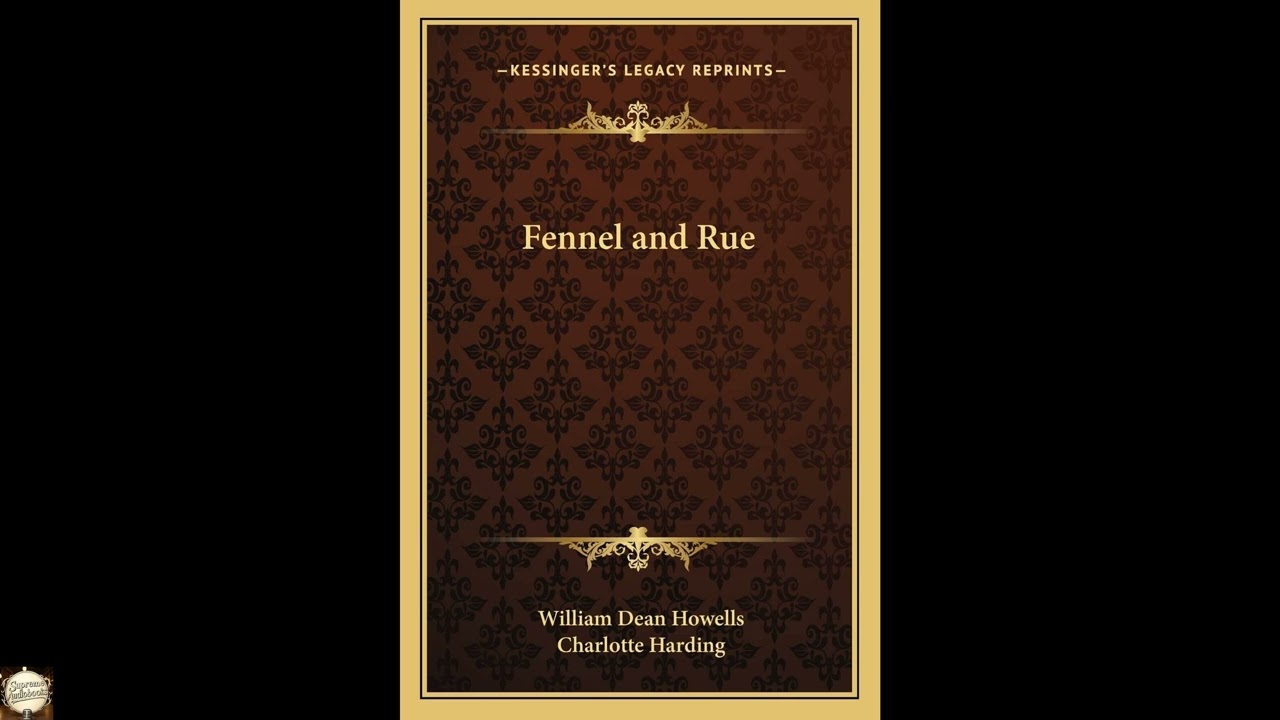
Fennel and Rue
Fennel and Rue is a title evoking both sweetness and sorrow, a fitting introduction to William Dean Howells's nuanced examination of American social life. This work from the "Dean of American Letters" offers a finely etched portrait of human foibles, romantic misunderstandings, and the delicate dance of social expectations. For listeners today, Howells provides a window into the perpetual human dilemma of finding authentic connection amidst the pressures of outward appearance and unspoken societal rules, reminding us that the anxieties of the heart remain strikingly familiar. It is a compelling listen for anyone interested in human relationships and social convention. The story unfolds in a sun-dappled European resort, a favored backdrop for Howells to observe Americans shedding the constraints of home. Our central figures are Eleanor and Bernard, a young couple whose nascent affection is both nurtured and tested by the genteel society around them. Eleanor, with her quiet sensitivity, finds herself at odds with the conventional expectations of her well-meaning but subtly manipulative aunt, Mrs. Armitage. Bernard, a man of refined tastes and a somewhat detached demeanor, struggles with his own uncertainties, his feelings for Eleanor sometimes overshadowed by his intellectual remove. Their budding romance becomes the stage for a quiet drama of unspoken resentments and social missteps. The primary conflict arises not from dramatic external events, but from the slow accumulation of minor misunderstandings, differing temperaments, and the pervasive influence of social opinion. Mrs. Armitage, concerned for Eleanor's future, plants seeds of doubt and offers well-intentioned but damaging advice, reflecting the era's rigid views on propriety. Bernard’s occasional coolness, interpreted by Eleanor as indifference, further complicates matters. As the couple navigates balls and quiet conversations, their relationship hovers perpetually on the brink of either blossoming into true commitment or dissolving into polite regret, a realistic portrayal of human intimacy. William Dean Howells (1837-1920) was a towering figure in American letters, earning the title "Dean of American Letters" for his prolific output and staunch advocacy for literary realism. Born in Martin's Ferry, Ohio, Howells experienced a peripatetic childhood, providing him with broad exposure to American life. Largely self-educated, his early career in journalism laid the groundwork for his keen observational skills. A pivotal early experience was his appointment as U.S. consul to Venice during the Civil War, where he honed his literary craft. Upon returning to America, Howells became editor-in-chief of the prestigious Atlantic Monthly, influencing American literary tastes. He famously championed a new generation of writers, including Henry James, Mark Twain, and Stephen Crane, advocating for their realistic portrayals of American life over earlier romanticism. His own novels, such as The Rise of Silas Lapham (1885) and A Modern Instance (1882), depicted the social dynamics and moral dilemmas of the burgeoning American middle class. Howells's commitment to portraying life "as it is" established him as the leading voice of realism in late 19th-century American fiction. At its core, Fennel and Rue enacts several enduring themes defining Howells's work. One prominent thread is the critique of social convention and its impact on individual happiness. Through Mrs. Armitage's interferences, we witness how rigid expectations of polite society can actively hinder genuine affection. Eleanor, for instance, might feel constrained during a formal dinner, maintaining composure while her heart aches with misgivings about Bernard's perceived aloofness, illustrating the gap between public performance and private emotion. Another powerful theme is the fragility and misunderstandings inherent in human communication and romantic love. Howells portrays how easily intentions are misinterpreted and how pride prevents clear expression. Bernard's intellectualizing tendency often leads him to express himself in ways Eleanor, craving emotional directness, finds cold or ambiguous. A quiet moment where Bernard attempts to clarify his feelings, only to stumble over words, exemplifies how earnest desires can be thwarted by a lack of emotional fluency. The novel also touches upon American innocence encountering European sophistication. Fennel and Rue emerged during America's Gilded Age, from the 1870s to the turn of the 20th century, characterized by rapid industrial growth and significant social upheaval. Following the Civil War, the nation experienced a boom in manufacturing and finance, leading to the rise of a powerful industrial and urban middle class. This era saw a fascination with European culture and travel among affluent Americans, often leading to a sense of cultural inferiority or, conversely, a reinforced pride in American pragmatism. Howells, observing these societal shifts, responded with literature that aimed to capture contemporary American life. Literarily, realism was ascendant, a direct counterpoint to the romantic ideals dominating earlier American literature. Howells, a leading proponent, believed fiction should accurately reflect everyday life, focusing on believable characters, plausible plots, and realistic dialogue. Fennel and Rue, with its focus on internal emotional states and the subtle dynamics of social interaction, embodies this shift. It offers a precise social history of its time, capturing the anxieties of a society grappling with new wealth, changing gender roles, and the perpetual search for identity. Listening to Fennel and Rue as an audiobook provides an unparalleled opportunity to fully immerse oneself in Howells's meticulously crafted world. The story, unfolding over several hours, is perfectly suited for extended listening, allowing the listener to settle into the rhythms of late 19th-century social life and character development. A skilled narrator truly brings to life Howells's precise prose, wry observations, and modulated dialogue that reveals so much about his characters' inner lives. Pacing, often deliberate, encourages contemplation, letting the listener savor the nuances of a knowing glance or an unfinished sentence, enhancing the subtle humor and underlying poignancy that define this classic American narrative.
Enjoyed Fennel and Rue? A few ways to support us
Audible & Amazon links are affiliate; we may earn a small commission at no extra cost.
About this production
Human narration by a volunteer reader from LibriVox.org, the public-domain audiobook project. LibriVox volunteers record literary works whose copyright has expired in the United States, releasing the resulting recordings into the public domain.
Fennel and Rue by William Dean Howells. The underlying text is in the U.S. public domain. We do not republish any modern copyrighted edition, translation, or commentary.
The 4K cinematic visuals accompanying this audiobook are generated by an AI image model from prompts derived from the source text. No copyrighted photos, paintings, or stock footage are used. AI generation is disclosed on every video on our YouTube channel as required by YouTube's altered/synthetic content policy.
English subtitles are transcribed from the LibriVox recording with OpenAI Whisper. Translations into the 11 other supported languages are produced by Meta's NLLB-200 neural translation model. No human translator's copyrighted translation is used.
Questions about sourcing or rights? See our DMCA & Sourcing policy or contact us.
Enjoyed this audiobook?
If you'd like to own a copy of Fennel and Rue or hear a professionally produced edition, the links below help support free audiobook production at no extra cost to you.
As an Amazon Associate we earn from qualifying purchases. Audible / print links are affiliate.