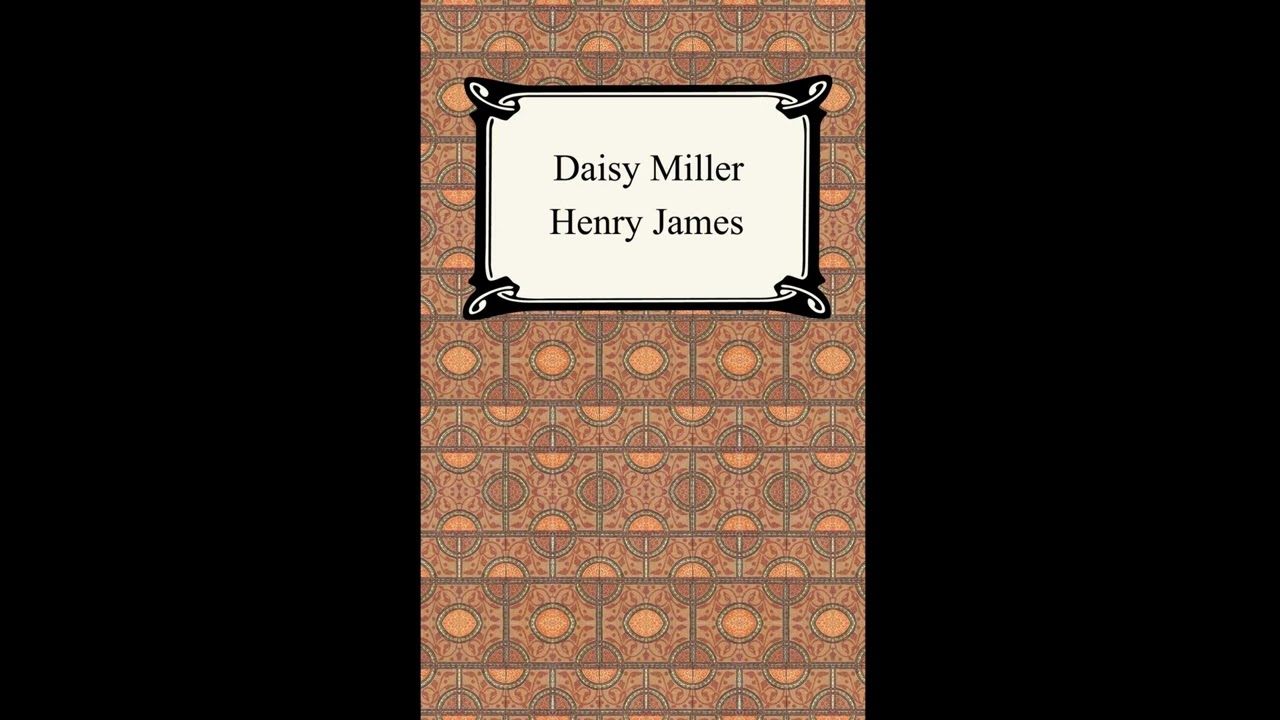
Daisy Miller
Few works of literature distill the essence of a cultural collision with such elegant precision as Henry James’s Daisy Miller. This novella, a diamond-sharp examination of American innocence confronting European social codes, remains as compelling today as it was upon its publication. It asks enduring questions about reputation, personal freedom, and the often-harsh judgments society levies upon those who dare to defy its unspoken rules. For anyone who has ever felt out of place, misunderstood, or been judged for simply being themselves, the story of Daisy Miller resonates deeply, inviting listeners to consider the true meaning of propriety and authenticity across the divides of culture and expectation. Our story begins in the picturesque Swiss resort town of Vevey, where the sophisticated, observant American expatriate Frederick Winterbourne encounters Daisy Miller, a young, vivacious woman traveling with her mother and younger brother. Daisy is undeniably charming, if a little unconventional, by European standards. She quickly strikes up a friendship with Winterbourne, whose initial fascination is tinged with a growing unease as he observes her casual flirtations and seemingly boundless independence. Her readiness to engage with a young Italian courier, Eugenio, and later a local Italian gentleman, Giovanelli, raises eyebrows among the established expatriate community, particularly the formidable Mrs. Walker, a leading figure in American society abroad. The narrative shifts to Rome, where Daisy’s disregard for social conventions escalates. Despite warnings and gentle admonitions from Mrs. Walker and Winterbourne himself, Daisy continues to openly associate with Giovanelli, a man whose social standing is deemed entirely unsuitable. Her actions lead to her gradual but firm ostracism from the expatriate social circle, who view her behavior as not merely inappropriate but scandalous. Winterbourne, caught between his attraction to Daisy's spirit and his ingrained respect for European decorum, finds himself perpetually analyzing her every move, trying to determine if her conduct stems from genuine innocence or a more deliberate, perhaps even brazen, disregard for her reputation. The central drama unfolds as Daisy increasingly isolates herself by refusing to conform, clinging stubbornly to her right to act as she pleases, even as the social pressure intensifies, leading toward an inevitable, and deeply poignant, outcome. Henry James, the celebrated author of this incisive tale, was born in New York City in 1843, into a family that fostered intellectual curiosity and a transatlantic outlook. His father, Henry James Sr., was a prominent philosopher, and his elder brother, William James, became a pioneering psychologist. Young Henry’s early life was marked by extensive travel between America and Europe, experiences that profoundly shaped his perspective and fueled his lifelong fascination with the cultural differences between the Old World and the New. By the age of 30, James had settled predominantly in England, eventually becoming a British subject shortly before his death in London in 1916. His literary output was prolific, spanning more than two dozen novels and over a hundred novellas and short stories. Beyond Daisy Miller, he is remembered for monumental works such as The Portrait of a Lady, a profound character study of an American heiress in Europe, and the psychologically dense ghost story The Turn of the Screw. James became a leading figure in literary realism, known for his elaborate, often labyrinthine prose, his meticulous psychological portraits of characters, and his profound analysis of social dynamics. He possessed an unparalleled ability to render the inner lives of his characters, their unspoken thoughts, and their subtle perceptions, securing his place as one of the most significant figures in both American and English literary traditions. At its heart, Daisy Miller grapples with the clash between American spontaneity and European decorum. Daisy embodies a distinctly American freedom, a belief in individual liberty and a disinclination to be bound by restrictive social codes. Her insistence on taking carriage rides with Giovanelli through the streets of Rome, despite the clear social disapproval, exemplifies this theme. She sees no harm, only innocent companionship, while the expatriate community interprets her actions as a blatant challenge to their moral standards. This opposition highlights a second crucial theme: the power of social convention and the fragility of reputation, particularly for women in the late nineteenth century. Mrs. Walker’s almost frantic attempts to make Daisy conform, and the swift, devastating social consequences of Daisy’s refusal, demonstrate how tightly society policed female behavior and how quickly a reputation could be shattered, often without concrete evidence of wrongdoing. Furthermore, the narrative adeptly portrays the complexities of cultural misunderstanding and the difficulty of bridging different worldviews. Winterbourne, the central consciousness through which much of the story is filtered, constantly struggles to interpret Daisy’s behavior. Is she simply a "nice girl" from Schenectady, genuinely unaware of the implications of her actions in European society? Or is there a more knowing, perhaps even provocative, element to her conduct? His inability to definitively categorize her reflects the broader challenge of judging individuals whose cultural frames of reference differ vastly from one's own, a question as pertinent today as it was when James penned the novella. Daisy Miller emerged at a pivotal moment in American history, published in 1878, a little over a decade after the American Civil War. The economic boom that followed the war created a new class of wealthy Americans, many of whom sought to acquire culture and social polish through extensive travel to Europe. This period saw a dramatic increase in Americans abroad, leading to frequent encounters—and often clashes—between American exuberance and European sophistication. Victorian society, both in Europe and among American expatriates, held very rigid expectations for female behavior, particularly regarding public appearances and interactions with men. James, as an expatriate himself, was uniquely positioned to observe and chronicle these transatlantic interactions, often focusing on the innocence and naïveté of Americans encountering the more cynical, stratified social structures of the Old World. His work reflects a fascination with this particular cultural friction, capturing the precise moment when America’s new money and burgeoning self-confidence began to rub against Europe’s ancient traditions and subtle societal rules. Listening to Daisy Miller as an audiobook offers a unique opportunity to immerse oneself in the nuanced world Henry James so meticulously crafted. The gentle, almost surgical precision of James’s prose, with its long, observational sentences and subtle psychological insights, truly comes alive when read aloud. A skilled narrator can illuminate the unspoken judgments and internal debates that characterize Winterbourne’s perspective, allowing the listener to absorb the intricate social atmosphere of Vevey and Rome. The approximately several-hour runtime makes it a perfect companion for a quiet afternoon, a series of commutes, or as a backdrop for gentle tasks. Listen for the careful pacing, the distinct voices given to characters like the vivacious Daisy, the cautious Mrs. Walker, and the perpetually questioning Winterbourne, and the way the narration builds the palpable tension of a society intent on upholding its standards against a young woman determined to live freely.
Enjoyed Daisy Miller? A few ways to support us
Audible & Amazon links are affiliate; we may earn a small commission at no extra cost.
About this production
Human narration by a volunteer reader from LibriVox.org, the public-domain audiobook project. LibriVox volunteers record literary works whose copyright has expired in the United States, releasing the resulting recordings into the public domain.
Daisy Miller by Henry James. The underlying text is in the U.S. public domain. We do not republish any modern copyrighted edition, translation, or commentary.
The 4K cinematic visuals accompanying this audiobook are generated by an AI image model from prompts derived from the source text. No copyrighted photos, paintings, or stock footage are used. AI generation is disclosed on every video on our YouTube channel as required by YouTube's altered/synthetic content policy.
English subtitles are transcribed from the LibriVox recording with OpenAI Whisper. Translations into the 11 other supported languages are produced by Meta's NLLB-200 neural translation model. No human translator's copyrighted translation is used.
Questions about sourcing or rights? See our DMCA & Sourcing policy or contact us.
Enjoyed this audiobook?
If you'd like to own a copy of Daisy Miller or hear a professionally produced edition, the links below help support free audiobook production at no extra cost to you.
As an Amazon Associate we earn from qualifying purchases. Audible / print links are affiliate.