Book of Illustrations. Ancient Tragedy
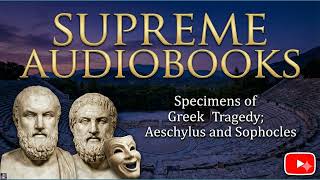
Ancient tragedy stands as the very cradle of drama, a crucible of Western thought, and the foundational wellspring for stories of human suffering, fate, and free will. Richard G. Moulton's Book of Illustrations. Ancient Tragedy offers a unique lens onto this canon, stripping away academic dust to reveal the raw power and enduring relevance of plays that continue to echo through our consciousness. This volume invites listeners to engage with the structural genius and emotional resonance of Greek and Roman drama, demonstrating how these ancient narratives speak directly to contemporary anxieties and moral dilemmas. Moulton approaches ancient tragedy not as a historian, but as a literary guide illuminating a dramatic tradition. He structures his exposition around defining components, beginning with the very essence of tragic conflict—the clash of individual will against inexorable fate, divine decree, or societal law. His method involves presenting fundamental dramatic situations and character archetypes across the plays of Aeschylus, Sophocles, and Euripides, showing how each playwright reinterprets these core elements. Listeners will find his analytical framework a revealing map, charting the progression from earlier, more ritualistic forms of tragedy to later, psychologically complex narratives. He illustrates these principles by examining specific dramatic structures and pivotal scenes, rather than retelling entire narratives. He meticulously dissects how tragic irony functions, how a chorus shapes audience perception, or the role of prophecy in driving the action. Moulton highlights recurring motifs of hubris, justice, vengeance, and the limits of human understanding, showing how characters from King Oedipus to Antigone embody monumental struggles. Their actions, though seemingly fated, resonate with profound individual agency. His argument moves from general principles to specific, illuminating examples, building a comprehensive understanding of what makes ancient tragedy so compelling and enduring. Richard Green Moulton, born in England in 1849, was a pivotal figure in the late nineteenth and early twentieth centuries, championing a revolutionary approach to literary study. Educated at Cambridge University, where he earned a B.A. in 1874 and an M.A. in 1877, Moulton dedicated his life to making classic literature, including the Bible, accessible and understood through its intrinsic literary merit, rather than solely historical or theological lenses. He began his career lecturing for the University Extension movement, an initiative bringing university-level education to a wider public, demonstrating his early commitment to accessibility. In 1892, Moulton became a professor of Literary Theory and Interpretation at the newly founded University of Chicago, cementing his reputation as a pioneering academic. There, he refined his "inductive method" of literary study, emphasizing close reading and structural analysis. His prolific output included The Literary Study of the Bible (1895), which treated biblical texts as literature, and World Literature and Its Place in General Culture (1911), underscoring his expansive view of literary heritage. Moulton sought to establish a framework for understanding literature that transcended specific eras, positioning him as a significant voice in the nascent field of comparative literature. He believed in the power of stories to shape human understanding across time and place. Moulton's Book of Illustrations. Ancient Tragedy foregrounds several crucial themes, beginning with the universality of human experience. He illustrates how core dilemmas in Greek drama—conflicts between familial loyalty and civic duty, the weight of destiny, the search for meaning in suffering—transcend their ancient setting. Antigone's defiant stance, for example, speaks to contemporary debates on individual conscience versus authoritarian power. Another key theme is the didactic function of drama. Moulton argues ancient tragedy served as a powerful vehicle for moral instruction, provoking catharsis not just as emotional release, but as a clarification of moral principles. A third theme is the evolution of storytelling and dramatic form. Moulton traces how structural elements of ancient tragedy—the chorus, dramatic irony, the three-actor rule—laid groundwork for subsequent Western drama. He demonstrates how Sophocles's irony in Oedipus Rex, where the protagonist unknowingly pursues his own ruin, establishes a paradigm for tragic tension. Finally, the book underscores the power of literary interpretation. Moulton’s work testifies that approaching ancient texts with a keen literary eye allows their profound insights and dramatic power to be fully appreciated and revived, revealing how old stories perpetually renew their meaning. Moulton's work emerged during a fascinating period in the late nineteenth and early twentieth centuries when academic disciplines were undergoing significant shifts. The Victorian era's emphasis on classical education was transitioning, with a growing desire to make ancient texts relevant and accessible to a broader public. This was a time when the scientific method influenced all fields, and Moulton's "inductive method" for literary analysis reflects similar rigorous, evidence-based thinking in the humanities. He sought to systematize literary study, moving it beyond subjective impressionism. Culturally, the period also saw renewed interest in comparative literature and a shared world literary heritage. As global communication improved, scholars like Moulton aimed to connect diverse literary traditions and show their underlying unity. His illumination of ancient tragedy was part of a larger movement to integrate classical thought into contemporary intellectual life, making the wisdom and dramatic genius of ancient Greece and Rome speak directly to modern concerns. His writings bridged the gap between specialized classicists and general readers eager to understand foundational texts. Listening to Book of Illustrations. Ancient Tragedy as an audiobook transforms Moulton's analytical brilliance into an immersive experience. The "several hours" run time allows for thoughtful absorption of his arguments, with the narrator's voice guiding listeners through complex literary concepts and dramatic structures. Imagine hearing Moulton's precise interpretations articulated with clarity and pacing, enabling you to grasp the nuances of tragic irony or the subtle functions of the Greek chorus. A skilled narrator can bring forth the dramatic weight of illustrative passages, making the ancient world feel immediate. This spoken rendition offers a deeper engagement with Moulton's sophisticated method, an opportunity to truly hear the foundations of Western drama and appreciate their enduring power, whether walking, commuting, or seeking intellectual enrichment.
Enjoyed Book of Illustrations. Ancient Tragedy? A few ways to support us
Audible & Amazon links are affiliate; we may earn a small commission at no extra cost.
About this production
Human narration by a volunteer reader from LibriVox.org, the public-domain audiobook project. LibriVox volunteers record literary works whose copyright has expired in the United States, releasing the resulting recordings into the public domain.
Book of Illustrations. Ancient Tragedy by Richard G. Moulton. The underlying text is in the U.S. public domain. We do not republish any modern copyrighted edition, translation, or commentary.
The 4K cinematic visuals accompanying this audiobook are generated by an AI image model from prompts derived from the source text. No copyrighted photos, paintings, or stock footage are used. AI generation is disclosed on every video on our YouTube channel as required by YouTube's altered/synthetic content policy.
English subtitles are transcribed from the LibriVox recording with OpenAI Whisper. Translations into the 11 other supported languages are produced by Meta's NLLB-200 neural translation model. No human translator's copyrighted translation is used.
Questions about sourcing or rights? See our DMCA & Sourcing policy or contact us.
Enjoyed this audiobook?
If you'd like to own a copy of Book of Illustrations. Ancient Tragedy or hear a professionally produced edition, the links below help support free audiobook production at no extra cost to you.
As an Amazon Associate we earn from qualifying purchases. Audible / print links are affiliate.