Autres Temps
Edith Wharton’s penetrating short story, “Autres Temps,” stands as a stark and timeless examination of social hypocrisy, the shifting sands of convention, and the enduring double standard applied to women across generations. Published in 1916, this incisive narrative peels back the veneer of polite society, revealing the often-cruel realities beneath its supposedly progressive surface. It asks us to consider how much society truly evolves, or if it merely redecorates its prejudices, making it a compelling listen for anyone interested in the dynamics of social acceptance, the weight of the past, and the price of personal integrity in a judgmental world. The story opens in the rarefied air of New York society, a milieu Wharton knew intimately and portrayed with unmatched precision. We meet Mrs. Lidcote, a woman who, years earlier, suffered the devastating consequences of divorce. In a society that deemed such a separation scandalous and unforgivable, she was effectively exiled from her cherished social circles, retreating to Europe with her daughter, Leila. Now, decades later, Mrs. Lidcote receives astonishing news: her own daughter, Leila, has also divorced, yet is not only tolerated but warmly embraced back into the very society that once condemned her mother. Bolstered by this apparent shift in morals, and longing for her former life, Mrs. Lidcote returns to New York, hopeful that the passage of time has softened hearts and liberalized views, allowing her, too, to finally reclaim her place. This hopeful return quickly curdles into a painful awakening. Mrs. Lidcote finds that while Leila’s situation seems to have been met with an unprecedented leniency, the underlying rules of engagement, especially for women, remain stubbornly rigid. Society, represented by figures like the well-meaning but ultimately conventional Mrs. Anson, extends a cautious, conditional welcome to Leila, but only so long as Leila’s past — and particularly her mother’s — remains carefully managed and discreetly buried. Mrs. Lidcote soon realizes that her very presence in New York, the ghost of her own "disgraceful" past, threatens her daughter’s fragile acceptance. The story follows Mrs. Lidcote as she navigates this confusing and painful landscape, grappling with the disorienting realization that while the outward expressions of societal tolerance might change, the deep-seated prejudices often persist, simply finding new, more subtle ways to exert their power. Edith Wharton, born Edith Newbold Jones in 1862, was an American novelist and short story writer renowned for her keen insights into the manners and morals of the late nineteenth and early twentieth-century American upper class. Raised in New York’s privileged “old money” circles, she experienced firsthand the strictures and often stifling expectations of that world, which became the fertile ground for many of her greatest works. Though largely self-educated, she possessed an exceptional intellect and a formidable command of language. Her life saw her move beyond the confines of American society, settling primarily in France after 1907, where she remained until her death in 1937. Wharton’s literary output was prodigious and impactful. She is celebrated for her powerful psychological realism and her sharp, often satirical, critique of social hypocrisy. Her most famous novels, The House of Mirth (1905), Ethan Frome (1911), and The Age of Innocence (1920), which earned her the Pulitzer Prize, solidify her position as a titan of American letters. She was a close friend and literary confidante of Henry James, and their correspondence offers fascinating glimpses into the literary currents of their time. Wharton’s unique position—both within and critical of the American aristocracy—allowed her to dissect its customs, its unspoken rules, and its devastating effects on individuals, especially women, with unparalleled authority and empathy. “Autres Temps” powerfully enacts several enduring themes. Foremost among these is the theme of social hypocrisy and the double standard. Mrs. Lidcote observes that while her daughter’s divorce is accepted—even celebrated as a sign of progress—her own past divorce continues to brand her. Society, it seems, can forgive a new generation for actions it condemned in the previous one, but it rarely extends that same grace backward. This is vividly shown when society women make a clear distinction: Leila is "modern" and "sensible" for divorcing, but Mrs. Lidcote remains "unfortunate," her past an indelible stain that cannot be erased by newfangled social trends. The story also foregrounds the persistent weight of the past. For Mrs. Lidcote, time does not heal all wounds, nor does it erase all memory in the public consciousness. Her identity remains tethered to her earlier social transgression, a constant reminder that for women, societal judgment could be a life sentence. Another central theme is the illusion of progress and the generational divide. Mrs. Lidcote’s initial hope that society has fundamentally changed proves to be a mirage. The acceptance of Leila is not born of a true moral evolution but rather a convenient re-labeling of behaviors, a shallow rebranding that allows society to appear progressive without actually abandoning its core prejudices. Mrs. Lidcote’s painful realization that her own sacrifice and ostracism were not precursors to a new, fairer world for all women, but rather a unique condition for some, highlights the bitter disillusionment that often accompanies the clash between idealized social change and stubborn reality. When Wharton wrote and published “Autres Temps” in 1916, America stood on the cusp of significant social upheaval. The Gilded Age, with its rigid social hierarchies and Victorian moral codes, was giving way, albeit slowly, to the Jazz Age’s more relaxed attitudes. Women’s suffrage was gaining momentum, and traditional roles were being questioned. Divorce, though still stigmatized, was becoming more common. This transitional period created a fertile ground for Wharton’s astute social commentary. Her works emerged from a time when the "old guard" was desperately trying to maintain its authority against the forces of modernity, and Wharton, with her sharp critical eye, was perfectly positioned to expose the anxieties, the pretensions, and the sometimes-cruel realities of a society struggling to redefine itself. "Autres Temps" therefore reflects not just individual lives, but the broader cultural anxieties about moral decay, social mobility, and the true cost of "progress." Listening to “Autres Temps” as an audiobook provides an intimate and affecting experience, allowing Wharton’s precise prose and keen psychological insights to truly resonate. A skilled narrator brings to life the subtle inflections of early twentieth-century dialogue, the unspoken judgments hidden in polite conversation, and Mrs. Lidcote’s internal struggles with heartbreaking clarity. The story’s pacing, with its gradual unveiling of social realities and Mrs. Lidcote’s deepening disillusionment, lends itself well to the immersive nature of audio, allowing the listener to absorb the nuances of each social encounter and the quiet devastations they inflict. It is a few hours of focused attention that will leave listeners with a profound understanding of a society, and a woman, grappling with the relentless weight of convention.
Enjoyed Autres Temps? A few ways to support us
Audible & Amazon links are affiliate; we may earn a small commission at no extra cost.
About this production
Human narration by a volunteer reader from LibriVox.org, the public-domain audiobook project. LibriVox volunteers record literary works whose copyright has expired in the United States, releasing the resulting recordings into the public domain.
Autres Temps by Edith Wharton. The underlying text is in the U.S. public domain. We do not republish any modern copyrighted edition, translation, or commentary.
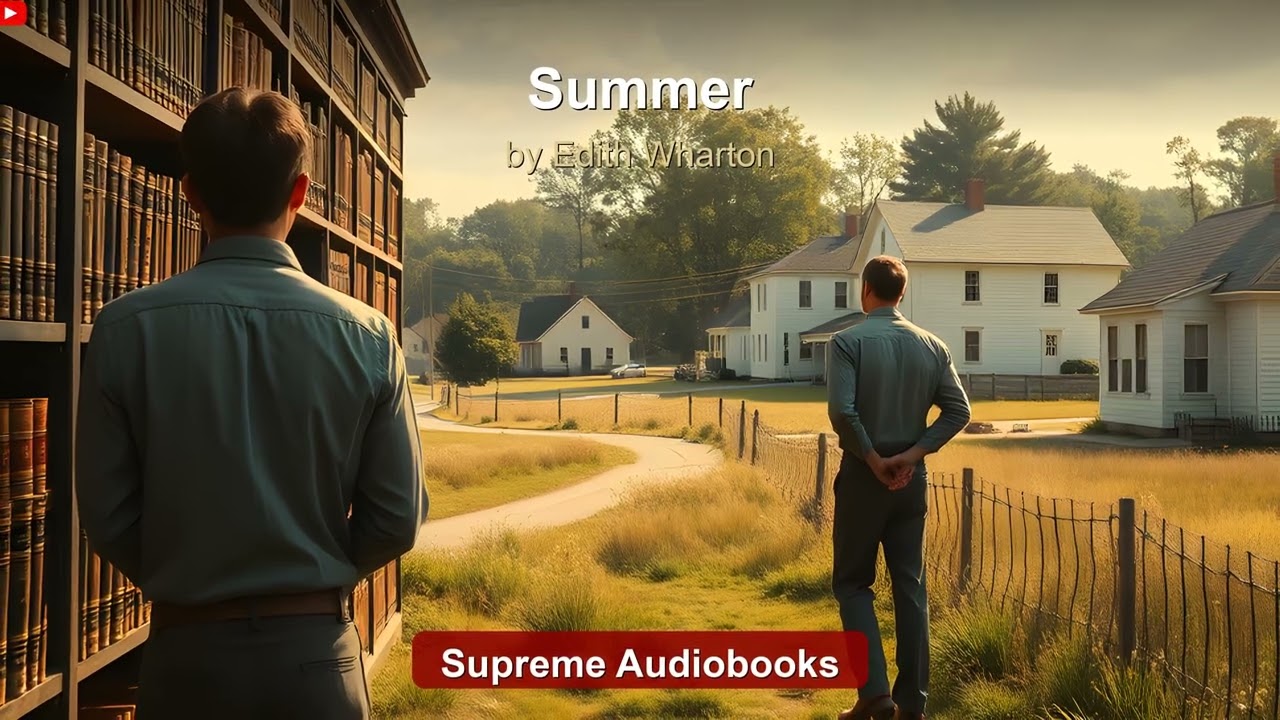
The 4K cinematic visuals accompanying this audiobook are generated by an AI image model from prompts derived from the source text. No copyrighted photos, paintings, or stock footage are used. AI generation is disclosed on every video on our YouTube channel as required by YouTube's altered/synthetic content policy.
English subtitles are transcribed from the LibriVox recording with OpenAI Whisper. Translations into the 11 other supported languages are produced by Meta's NLLB-200 neural translation model. No human translator's copyrighted translation is used.
Questions about sourcing or rights? See our DMCA & Sourcing policy or contact us.
Enjoyed this audiobook?
If you'd like to own a copy of Autres Temps or hear a professionally produced edition, the links below help support free audiobook production at no extra cost to you.
As an Amazon Associate we earn from qualifying purchases. Audible / print links are affiliate.