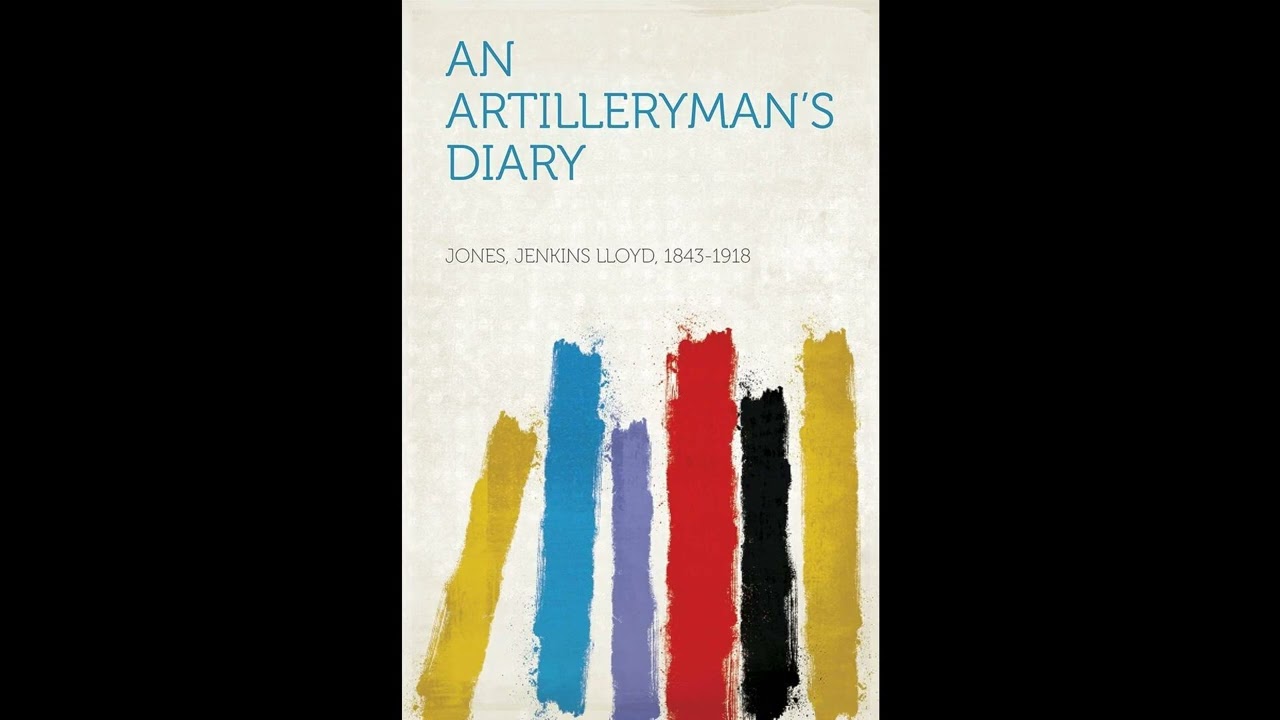
An Artilleryman's Diary
Step into the thunderous roar and quiet desperation of a Civil War battlefield as seen through the eyes of a citizen-soldier. An Artilleryman's Diary by Jenkins Lloyd Jones offers not a sweeping general's history, but the visceral, day-to-day reality of cannon fire, marching dust, and the profound bonds forged under the shadow of death. This extraordinary account strips away the glory and myth, presenting instead an immediate, unvarnished window into a pivotal moment in American history. It speaks to the enduring human spirit in the face of unimaginable conflict, making it as relevant today as it was when first penned, a testament to the individual's experience within the grand, terrible machinery of war. Jenkins Lloyd Jones’s diary opens with his enlistment, a young man from the prairies of Wisconsin answering the Union’s call. He quickly finds himself thrust into the Western Theater of the American Civil War, a conflict often overshadowed by the more famous battles in the East, yet no less brutal or decisive. From the quiet anxieties of camp life to the deafening cacophony of artillery engagements, Jones meticulously records his observations. He details the arduous marches through unforgiving terrain, the constant threat of skirmishes, and the long, weary hours spent maintaining heavy guns. His narrative introduces us to his fellow artillerymen—the gruff sergeants, the green recruits, the seasoned veterans—all bound by their shared fate and their reliance on one another to survive. The arc of the story follows Jones and his unit through numerous engagements, painting a vivid picture of the relentless grind of campaigning. We witness the strategic movements that led to major clashes, the frantic preparations before battle, and the grim aftermath. Jones doesn’t shy away from depicting the horrors he encounters: the devastating impact of shellfire, the wounded crying out, the sheer exhaustion that blurs the line between day and night. Yet, amidst the destruction, he also chronicles moments of quiet reflection, the beauty of a sunset seen from a besieged position, and the poignant camaraderie that blossoms among men facing death together. The narrative builds steadily, reflecting the increasing weight of the war on his spirit, without ever revealing the ultimate conclusion of his service or the war itself, leaving the listener to experience the unfolding events alongside him. Jenkins Lloyd Jones, the author of this seminal work, was a figure whose experiences during the Civil War profoundly shaped his later life and contributions. As a young man, he served with distinction as a soldier, providing him with the raw, immediate material that would later form the basis of his powerful diary. Following his wartime service, Jones dedicated himself to a life of civic engagement and intellectual pursuit, becoming a prominent voice in the late nineteenth and early twentieth centuries. His contributions extended beyond his military memoirs; he was known for his work as a minister and social reformer, advocating for various causes and contributing to public discourse through his writings and lectures. His life exemplified the journey of many post-Civil War veterans who, having witnessed profound societal upheaval, channeled their experiences into efforts to shape a better future for the nation. His reputation as an author largely rests on An Artilleryman’s Diary, which stands as a significant piece within the canon of American war literature. It’s recognized for its authenticity and its departure from more romanticized accounts of the conflict. Rather than focusing on grand heroes or strategic maneuvers, Jones’s memoir centers on the individual's struggle and the stark realities of soldiering. This perspective placed him firmly within a movement of post-war writers who sought to convey the unvarnished truth of their experiences, contributing to a more nuanced understanding of the war’s human cost and impact on American society. Several powerful themes resonate throughout An Artilleryman's Diary. One undeniable thread is the dehumanizing impact of war. Jones vividly conveys how the constant exposure to violence and death can harden the soul, reducing individuals to cogs in a larger, destructive machine. He describes the grim necessity of firing on unseen enemies, the detached arithmetic of casualties, and the emotional toll of witnessing unimaginable suffering, illustrating how repeated exposure to brutality can dull the senses, even as it scars the psyche. The diary also powerfully conveys the profound strength of camaraderie. Amidst the chaos, the bond between the artillerymen becomes a lifeline. Jones recounts shared jokes in the face of danger, mutual support during grueling tasks, and the silent understanding that passes between men who rely on each other for survival, emphasizing how these deep connections provide solace and meaning in an otherwise senseless environment. Another central theme is the loss of innocence. The diary charts a clear trajectory from the initial idealism of enlistment to the weary disillusionment brought on by sustained combat. Jones’s early entries reflect a more naive view of conflict, which steadily gives way to a hardened realism as he confronts the stark truth of battle—its indiscriminate cruelty and the fragility of life. This transformation is not a singular, dramatic event, but a gradual erosion, reflecting the profound psychological toll exacted by prolonged exposure to warfare. Furthermore, the search for meaning amid chaos emerges as a recurring internal struggle. Jones, like many soldiers, grapples with the grand justifications for the war versus the immediate, brutal realities he faces daily. His reflections on purpose, sacrifice, and the ultimate aims of the conflict underscore the universal human need to find sense in suffering, even when the answers remain elusive. An Artilleryman's Diary emerged during a period of intense national reflection following the Civil War. The years after the conflict saw a surge in memoirs, histories, and novels attempting to grapple with the war’s immense impact on American society. This era marked a shift in literary sensibilities, moving away from idealized romanticism towards a burgeoning realism. Veterans like Jenkins Lloyd Jones, having lived through the brutal truth of the conflict, were uniquely positioned to offer authentic, firsthand accounts that challenged earlier, more heroic narratives. Their writings provided the public with a ground-level perspective, contributing to a more honest and complex understanding of the war’s human cost and its lasting legacy, thereby shaping the collective memory of the nation. The publication of such diaries was crucial in piecing together the fragmented experiences of countless individuals who served, offering insights into the broader cultural and psychological landscape of a nation irrevocably altered by its most devastating internal struggle. Listening to An Artilleryman's Diary as an audiobook offers a uniquely intimate experience. The act of hearing Jenkins Lloyd Jones’s words read aloud brings an immediacy to his observations, transforming the private reflections of a soldier into a shared act of remembrance. A skilled narrator can convey the fatigue in his voice after a long march, the sudden tension before an artillery barrage, or the quiet resignation during moments of profound loss. The "several hours" run length allows for deep immersion into Jones's world, perfect for sustained listening that truly builds atmosphere. Listen for the subtle shifts in pacing, reflecting the lull before battle versus the frantic energy of an engagement. The voice performance can highlight the raw, unadorned language of the original diary, emphasizing the authenticity of a true firsthand account, allowing listeners to feel as if they are right there, witnessing history unfold through the sensory details and emotional truth of one man’s experience.
Enjoyed An Artilleryman's Diary? A few ways to support us
Audible & Amazon links are affiliate; we may earn a small commission at no extra cost.
About this production
Human narration by a volunteer reader from LibriVox.org, the public-domain audiobook project. LibriVox volunteers record literary works whose copyright has expired in the United States, releasing the resulting recordings into the public domain.
An Artilleryman's Diary by Jenkins Lloyd Jones. The underlying text is in the U.S. public domain. We do not republish any modern copyrighted edition, translation, or commentary.
The 4K cinematic visuals accompanying this audiobook are generated by an AI image model from prompts derived from the source text. No copyrighted photos, paintings, or stock footage are used. AI generation is disclosed on every video on our YouTube channel as required by YouTube's altered/synthetic content policy.
English subtitles are transcribed from the LibriVox recording with OpenAI Whisper. Translations into the 11 other supported languages are produced by Meta's NLLB-200 neural translation model. No human translator's copyrighted translation is used.
Questions about sourcing or rights? See our DMCA & Sourcing policy or contact us.
Enjoyed this audiobook?
If you'd like to own a copy of An Artilleryman's Diary or hear a professionally produced edition, the links below help support free audiobook production at no extra cost to you.
As an Amazon Associate we earn from qualifying purchases. Audible / print links are affiliate.