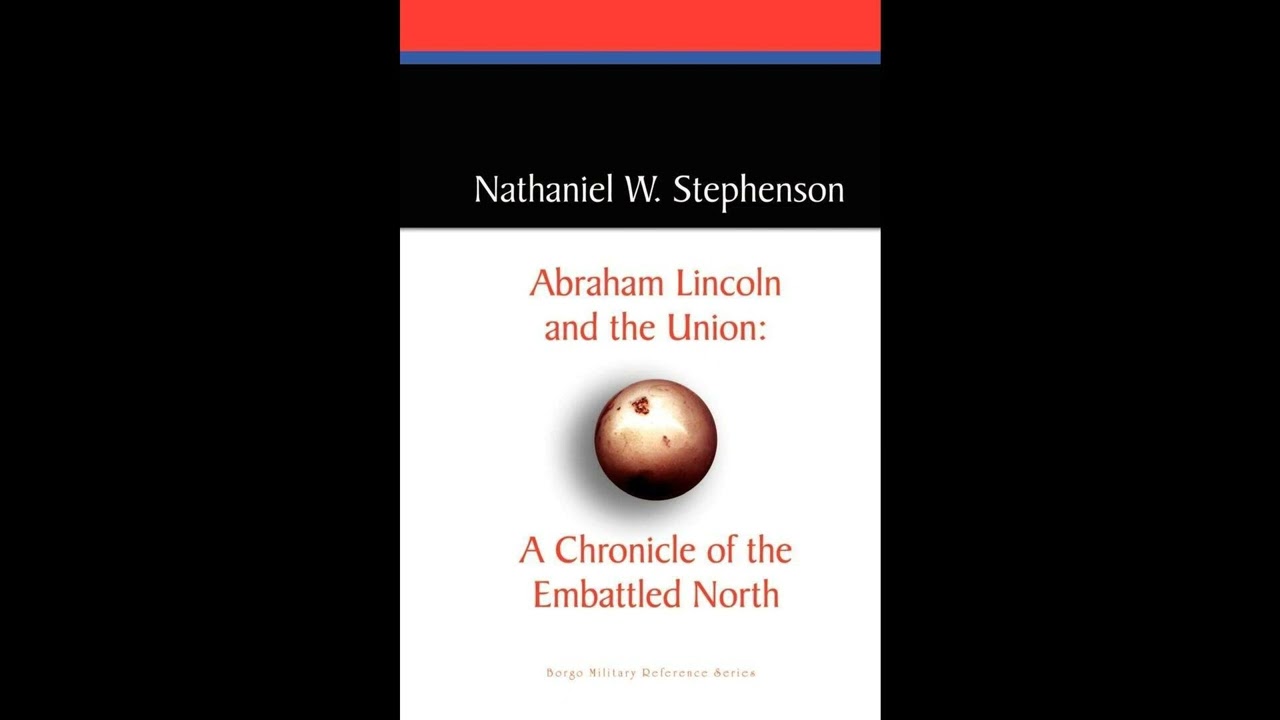
Abraham Lincoln and the Union: A Chronicle of the Embattled North
For anyone seeking to grasp the monumental struggle that forged modern America, Abraham Lincoln and the Union: A Chronicle of the Embattled North offers an unparalleled window into the crucible of the Civil War. This essential work stands as a cornerstone in understanding the leadership, the sacrifices, and the profound moral questions that defined a nation's fight for its very existence. More than just a recounting of battles and political maneuvers, it illuminates the human will to preserve an ideal, making its lessons on unity, resilience, and the cost of freedom resonate with urgent clarity even in our present day, reminding us that the principles upon which a society stands are never truly settled. The narrative transports listeners directly into the tumultuous years spanning Abraham Lincoln's election in 1860 through the eventual cessation of hostilities. It meticulously establishes the fragmented political landscape of a nation teetering on the precipice, detailing the immediate secession of Southern states and the escalating tensions that quickly spiraled into open conflict. Lincoln, presented not as a mythic figure but as a statesman burdened by immense responsibility, emerges as the central character. The chronicle tracks his cautious yet firm response to secession, his tireless efforts to rally a fractured North, and his strategic calculations as commander-in-chief, often against a backdrop of widespread public doubt and military setbacks. We witness the formative days of the Union war effort, the assembly of armies, and the initial, often bloody, engagements that underscored the war’s unprecedented scale and brutality. As the story progresses, the focus expands beyond Lincoln himself to encompass the broader Union experience. We encounter the generals—McClellan, Grant, Sherman—whose individual temperaments and strategies shaped the course of campaigns, along with the dedicated cabinet members who advised and occasionally challenged the president. Crucially, the account also gives voice to the spirit of the Northern populace: the abolitionists pressing for moral clarity, the industries transforming to meet wartime demands, and the millions of ordinary citizens whose fortitude on the home front and sacrifice in uniform ultimately sustained the Union cause through years of devastating conflict. The narrative meticulously details the strategic turning points, from the Emancipation Proclamation—a stroke of moral and military genius—to pivotal victories that slowly, painfully shifted the tide of the war, underscoring the extraordinary cost paid for national preservation. The "Unknown" author of Abraham Lincoln and the Union: A Chronicle of the Embattled North is best understood not as a singular biographical entity but as a representative voice from a particular historical moment. This work likely emerged in the decades immediately following the Civil War, when the memory of the conflict was still fresh and the need to synthesize its complex events into a cohesive national narrative became paramount. These early chronicles often drew upon contemporary reports, official documents, and personal testimonies to construct a comprehensive, often celebratory, account of the Union victory and Lincoln’s transformative leadership. Such works formed the bedrock of American historical understanding, preceding the specialized academic historiography of later centuries, and instead aimed to create a broad, accessible record for a populace grappling with the war’s aftermath and its profound implications for national identity. Its anonymous nature only heightens its status as a collective memory, a shared attempt to frame the meaning of the war for subsequent generations. This significant text articulates several enduring themes with striking clarity. Foremost among them is the theme of Leadership and Statesmanship under extreme duress. Lincoln’s patient handling of his often-quarrelsome generals, his steadfast commitment to the Union despite immense political opposition, and his ability to articulate the war’s higher moral purpose—as exemplified in his profound address at Gettysburg—demonstrate a singular command presence. Another core theme involves The Nature of Union and Disunion. The book unflinchingly portrays the ideological chasm that split the nation, examining the arguments for and against secession, and ultimately showcasing the fierce determination of the North to prove that a constitutional republic, founded on liberty, could endure. The vast sacrifices made by countless citizens, both on the battlefield and at home, underscore the depth of this commitment. Furthermore, the chronicle underscores the Moral Imperative of Freedom, particularly as the war progressed. What began largely as a fight to preserve the Union gradually transformed, under Lincoln’s leadership, into a crusade against slavery. The strategic and ethical complexities surrounding the Emancipation Proclamation are detailed, showing how this pivotal document not only weakened the Confederacy but also fundamentally reshaped the war’s moral landscape, inviting enslaved people to fight for their own liberation. Finally, the work powerfully enacts the theme of Perseverance and Sacrifice. Listeners are confronted with the protracted nature of the conflict, the devastating casualty lists from battles like Antietam or Fredericksburg, and the sheer grit required by soldiers and civilians alike to sustain a war effort spanning four arduous years. The narrative makes plain that victory was not inevitable, but rather the hard-won result of extraordinary, sustained national endurance. When this chronicle was likely first penned, the United States found itself in a period of intense reflection and rebuilding. The immediate post-war years, and indeed the late nineteenth century, were defined by the challenges of Reconstruction, the lingering scars of sectional animosity, and the critical need for a unified national narrative. Culturally, there was a widespread desire to memorialize the conflict, to understand its causes, and to celebrate the heroism of those who preserved the Union. Politically, the question of states' rights versus federal authority remained a potent undercurrent, even after the war’s resolution. In the literary world, this era saw the emergence of numerous historical accounts, memoirs, and patriotic literature, all contributing to the shaping of America’s collective memory of the Civil War. Abraham Lincoln and the Union fits squarely within this tradition, serving as an authoritative, if early, attempt to document and interpret the central conflict of the American story for a populace eager to comprehend its recent, traumatic past and secure its future. Listening to Abraham Lincoln and the Union: A Chronicle of the Embattled North as an audiobook offers a particularly immersive experience. The narrator’s voice becomes a steady, guiding presence through the complex history, bringing clarity to intricate political maneuvers and conveying the gravitas of Lincoln’s speeches and decisions. With several hours of run time, this format allows for deep, sustained engagement with the material, ideal for thoughtful listening during long drives or quiet evenings. Pay attention to the shifts in pacing, from the urgent descriptions of battle to the more reflective passages detailing Lincoln’s internal struggles. The voice given to historical figures, particularly the measured authority of Lincoln, helps listeners connect directly with the personalities who shaped these pivotal events, lending an air of immediacy to the crucial dialogues and pronouncements that determined the fate of a nation.
Enjoyed Abraham Lincoln and the Union: A Chronicle of the Embattled North? A few ways to support us
Audible & Amazon links are affiliate; we may earn a small commission at no extra cost.
About this production
Human narration by a volunteer reader from LibriVox.org, the public-domain audiobook project. LibriVox volunteers record literary works whose copyright has expired in the United States, releasing the resulting recordings into the public domain.
Abraham Lincoln and the Union: A Chronicle of the Embattled North by Nathaniel W. Stephenson. The underlying text is in the U.S. public domain. We do not republish any modern copyrighted edition, translation, or commentary.
The 4K cinematic visuals accompanying this audiobook are generated by an AI image model from prompts derived from the source text. No copyrighted photos, paintings, or stock footage are used. AI generation is disclosed on every video on our YouTube channel as required by YouTube's altered/synthetic content policy.
English subtitles are transcribed from the LibriVox recording with OpenAI Whisper. Translations into the 11 other supported languages are produced by Meta's NLLB-200 neural translation model. No human translator's copyrighted translation is used.
Questions about sourcing or rights? See our DMCA & Sourcing policy or contact us.
Enjoyed this audiobook?
If you'd like to own a copy of Abraham Lincoln and the Union: A Chronicle of the Embattled North or hear a professionally produced edition, the links below help support free audiobook production at no extra cost to you.
As an Amazon Associate we earn from qualifying purchases. Audible / print links are affiliate.