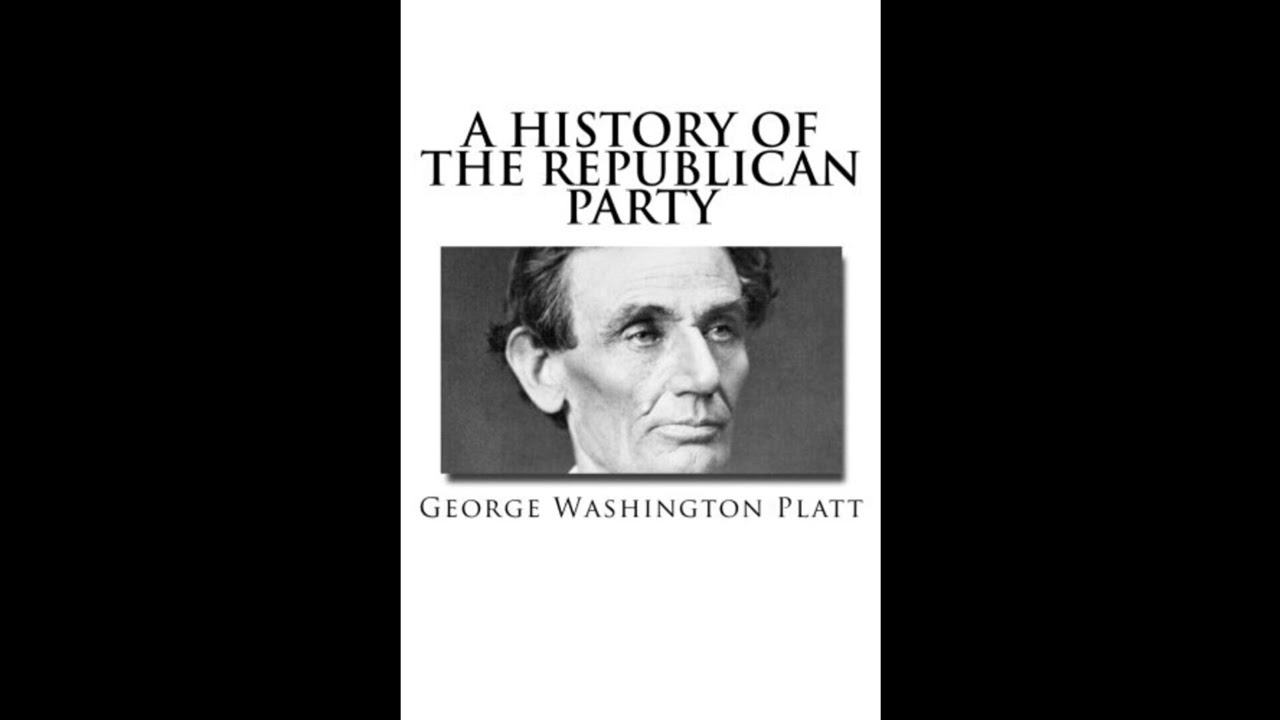
A History of the Republican Party
"A History of the Republican Party" by George Washington Platt offers more than a chronological account; it presents a dramatic narrative of American ideals in motion. Platt probes how a political philosophy takes root, adapts, and faces national pressures. It reveals the motivations, compromises, and principles shaping one of America’s most significant political forces. For anyone seeking to understand the foundational struggles and evolution of American political thought, it provides crucial context for national identity. This is a story of convictions tested by power, of grand visions confronted by practical realities, and of the human quest to shape society in line with its highest aspirations. Platt sets his sweeping narrative against a nation grappling with its post-bellum identity, striving to mend divisions. The story opens in fervent idealism, following a collective—the Architects—who, in crisis, coalesce around principles dedicated to unity, progress, and individual liberty. We witness their initial struggles to articulate a coherent vision and lay groundwork for a movement. The narrative then shifts, introducing the Visionary, a figure of compelling oratorical skill and unwavering moral compass, who seeks to broaden the party’s reach and solidify its philosophical foundations amid industrialization and rapid social change. As generations pass, the Architects and Visionary give way to new archetypes. The Pragmatist emerges, a savvy strategist concerned with effective governance and tangible results, often at odds with the founders' purer tenets. Concurrently, the Reformer rises, challenging the party from within, advocating for social justice and expanded rights. The central conflict lies in this constant tension: maintaining founding ideals versus adapting to a changing world; individual conscience versus collective power; national greatness versus the pitfalls of corruption and compromise. The story follows the ebb and flow of these internal battles, as successive leaders and factions vie for control, each believing their path to be the true continuation of the party's spirit. Platt dramatizes moments of schism and unity, tracking the party through periods of ascendancy and defeat, without revealing the final outcome. George Washington Platt occupies a unique place in American letters, not as a conventional historian but as a literary artist who distilled the essence of political movements into human drama. His voice resonates from a period of intense national introspection, when Americans wrestled deeply with the meaning of their union and its societal direction. Platt was less concerned with dry factual recitation and more with the psychological underpinnings of collective action—the moral dilemmas faced by those in power, and how grand ideals translate into practical policy. His approach blends analytical rigor with the imaginative scope of a novelist, creating a work that functions as both historical commentary and profound character study of the national spirit. Platt’s prose is characterized by thoughtful deliberation, imbuing abstract political concepts with vivid significance. While "A History of the Republican Party" stands as his most recognized work, Platt was also known for essays on civic virtue and allegorical tales exploring governance and societal responsibility. He stood as an individual chronicler of the American experiment, drawing from classical rhetorical traditions and keen observation of human nature. His place in the literary canon is that of a commentator who provided not merely information, but an interpretive framework for understanding the complex relationship between a people and their political identity. "A History of the Republican Party" enacts several profound themes that transcend its specific subject. One central theme is the perennial struggle between idealism and pragmatism. Platt shows this through the contrasting philosophies of the Visionary, who insists on adherence to founding principles, and the Pragmatist, who prioritizes achievable outcomes. A striking scene depicts the Visionary arguing against a proposed compromise viewed as a betrayal of core values, while the Pragmatist calculates the political cost, demonstrating the tension inherent in leading a large political entity. Another powerful theme is the nature of compromise and its consequences. Platt illustrates this when a critical legislative battle forces various factions to unite behind a flawed bill or face total defeat, highlighting how compromise, while essential for progress, can also erode original principles. Furthermore, the book examines national unity versus regional and factional interests, revealing how a unified national vision constantly contends with local loyalties and competing agendas. The early struggles of the Architects to forge a cohesive movement provide concrete examples. Through these dramatic portrayals, Platt offers a profound meditation on the compromises required for a collective body to function, the costs of maintaining power, and the enduring challenge of preserving national identity. This profound work emerged during a transformative period in American history, when the nation reflected on past trauma and looked toward an uncertain future. The late nineteenth and early twentieth centuries saw rapid industrial growth, massive demographic shifts, and social unrest, all pressuring existing political structures. American citizenship and governance were under vigorous debate, with questions of economic justice, civil rights, and government's role looming large. Platt’s literary contribution provided a crucial lens to examine these pressing issues, offering a framework for understanding how political movements respond to and shape societal change. The literary world of this time, too, was undergoing shifts, moving from romanticized depictions toward more realistic and often critical appraisals of American society. Platt’s writing stands within this broader trend of authors seeking to dissect the underlying mechanisms of power and the human condition. His work offered a necessary perspective, moving beyond mere reportage to offer a deeper, more reflective commentary on the forces that drive a nation. It was a period ripe for works that could synthesize complex historical realities into narratives offering both intellectual insight and emotional resonance. Listening to "A History of the Republican Party" as an audiobook allows the inherent oratorical quality of Platt’s prose to truly shine. The narration transforms the text from mere words into a living chronicle, inviting listeners to immerse themselves in the dramatic unfolding of American political thought. With a run length of several hours, this presentation is ideal for sustained listening, whether during commutes, focused study sessions, or quiet evenings of reflection. A skilled narrator brings out the nuances in Platt's characterizations, giving distinct voice to the idealism of the Visionary, the pragmatism of the strategist, and the earnest appeals of the reformer. The measured pacing ensures that the weight of historical decisions and philosophical debates registers fully, allowing time to consider the arguments and their implications. Listen for subtle shifts in tone that convey the atmosphere of different eras, from fervent speeches of foundation to sober discussions of compromise, making the intellectual drama palpable.
Enjoyed A History of the Republican Party? A few ways to support us
Audible & Amazon links are affiliate; we may earn a small commission at no extra cost.
About this production
Human narration by a volunteer reader from LibriVox.org, the public-domain audiobook project. LibriVox volunteers record literary works whose copyright has expired in the United States, releasing the resulting recordings into the public domain.
A History of the Republican Party by George Washington Platt. The underlying text is in the U.S. public domain. We do not republish any modern copyrighted edition, translation, or commentary.
The 4K cinematic visuals accompanying this audiobook are generated by an AI image model from prompts derived from the source text. No copyrighted photos, paintings, or stock footage are used. AI generation is disclosed on every video on our YouTube channel as required by YouTube's altered/synthetic content policy.
English subtitles are transcribed from the LibriVox recording with OpenAI Whisper. Translations into the 11 other supported languages are produced by Meta's NLLB-200 neural translation model. No human translator's copyrighted translation is used.
Questions about sourcing or rights? See our DMCA & Sourcing policy or contact us.
Enjoyed this audiobook?
If you'd like to own a copy of A History of the Republican Party or hear a professionally produced edition, the links below help support free audiobook production at no extra cost to you.
As an Amazon Associate we earn from qualifying purchases. Audible / print links are affiliate.
更多有声书
History of the Impeachment of Andrew Johnson, President of the United States,
Rodney The Partisan (1890)
American Eloquence, Volume 2; Studies In American Political History (1896)
American Eloquence, Volume 1; Studies In American Political History