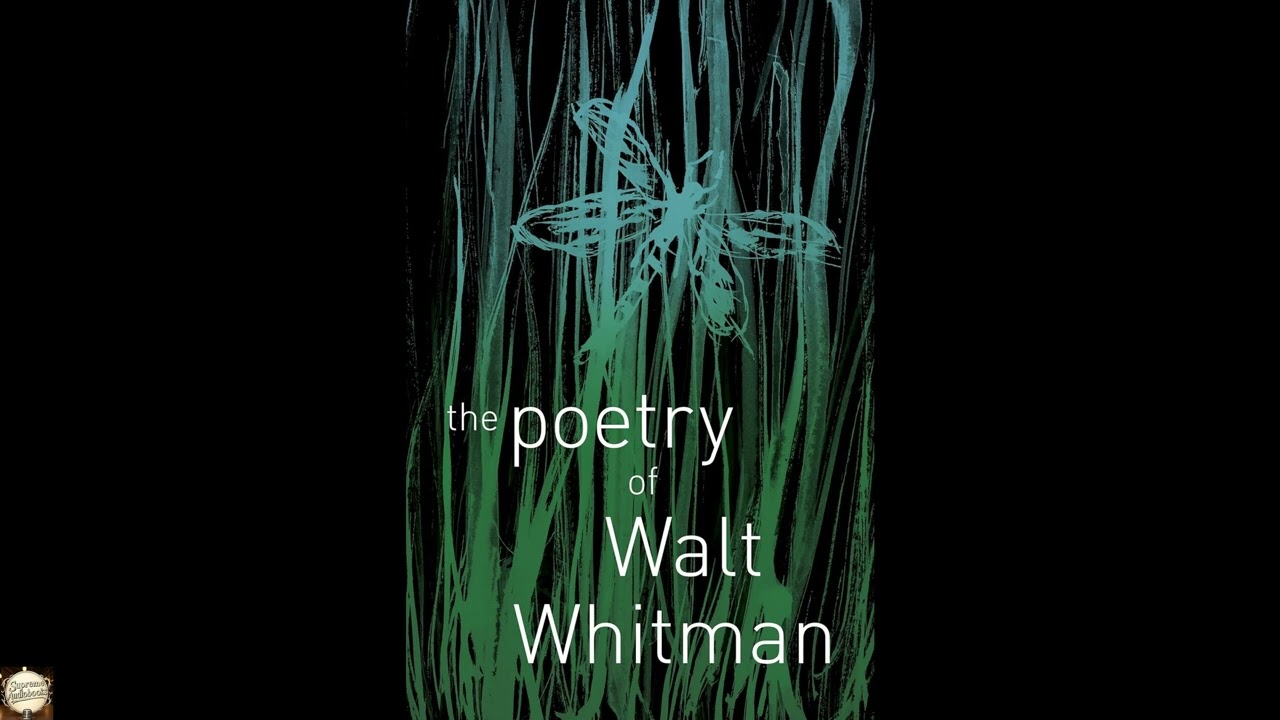
The Poetry of Walt Whitman
Step into the singular mind of Walt Whitman, the poet who dared to sing America into being with a voice unlike any before him. This collection, "The Poetry of Walt Whitman," gathers the foundational verses that reshaped literature, presenting a radical vision of self, nation, and cosmos that still resonates with profound clarity today. To listen to Whitman is to hear the very heartbeat of a nascent America – its clamor, its dreams, its contradictions, and its enduring promise – all channeled through a poet whose democratic spirit and boundless embrace of life sought to include every reader, every citizen, every soul. His lines offer not just verse, but an open invitation to see the world anew, a chance to connect with a spirit of generous humanity that feels urgently relevant in any age. The expansive project that largely defines Whitman's poetic output, most famously Leaves of Grass, unfolds less like a traditional story and more like an immersive experience, a vast panorama of a burgeoning nation seen through the eyes of an all-encompassing self. The setting is fundamentally mid-19th century America, stretching from the bustling ferry crossings of Brooklyn and Manhattan to the sprawling farms of the heartland, from the solitary musings by the sea to the grim realities of Civil War hospitals. There is no single "main character" in the conventional sense, but rather a central "I" — the poet himself, who simultaneously embodies the everyman, woman, and child, a voice that speaks for the collective spirit of humanity. This poetic persona encounters a diverse parade of individuals: the carpenter, the pilot, the prostitute, the president, the enslaved, the soldier, the mother. Each is given dignity and presence, becoming a vital part of the grand, interconnected whole. The central conflict, if one can call it that, is the perpetual human quest for meaning, for connection in a world of vast diversity and often jarring contrasts. It's the struggle to reconcile individual identity with universal belonging, to find spirituality in the mundane, and to sing a song that encompasses both the profound joys and deep sorrows of existence. The arc of this grand endeavor moves from an initial burst of self-assertion and celebratory cataloging of life in all its forms, through periods of national crisis and personal grief, ultimately settling into a more meditative, yet still profoundly affirming, reflection on death, love, and the enduring cycles of nature. The collection is a testament to an ongoing spiritual and physical growth, never truly concluding but perpetually offering new insights and expanding its embrace. Walt Whitman, born in 1819 on Long Island, New York, lived a life as varied and independent as his verse. His early years were spent largely in Brooklyn, where he worked as a printer, teacher, and journalist, absorbing the sights and sounds of urban life that would later infuse his poetry. He famously self-published the first edition of Leaves of Grass in 1855, a slender volume that instantly created a stir, receiving both fervent praise (most notably from Ralph Waldo Emerson) and harsh criticism for its unconventional form and frank subject matter. Throughout his life, he tirelessly revised, expanded, and reissued the collection, each edition growing larger and more comprehensive, becoming a lifelong artistic project that mirrored his own evolving vision of America. A pivotal period in Whitman's life came with the outbreak of the Civil War. He spent years in Washington D.C., visiting wounded soldiers in hospitals, offering comfort and care. These experiences profoundly shaped his later work, imbuing it with a deeper understanding of suffering, sacrifice, and the fragile bonds of human connection, giving rise to powerful elegies like "When Lilacs Last in the Dooryard Bloom'd" written in mourning for Abraham Lincoln. He is recognized as a central figure in American literature, often called the "father of free verse" for his revolutionary rejection of traditional poetic forms. He stands at the crossroads of Transcendentalism and the burgeoning Realism, a unique voice whose influence stretches into the modernist era and beyond. He died in Camden, New Jersey, in 1892, leaving behind a legacy that continues to challenge and inspire. Whitman's poetry enacts several powerful themes with startling directness. Foremost among them is the theme of Democracy and American Identity. He did not simply describe America; he sang it, elevating the common person, the laborer, the diverse populations of the burgeoning nation. In poems like "Song of Myself," he famously declares, "I celebrate myself, and sing myself, / And what I assume you shall assume, / For every atom belonging to me as good belongs to you." This sentiment encapsulates his belief in the inherent worth of every individual and the interconnectedness of all Americans, making him a profoundly optimistic and unifying voice amidst a nation grappling with its own identity. Another significant theme is The Body and Sexuality. Whitman spoke openly, often controversially for his time, about the physical self, celebrating its beauty, its sensuality, and its natural impulses. He saw the body not as something separate or base, but as divine, a vessel for the soul and a source of profound connection. His lines often portray a joyful, uninhibited embrace of physical touch and camaraderie, challenging the Victorian sensibilities of his era. He also dedicates considerable focus to Nature and Spirituality, finding a deep, immanent divinity in the natural world. The ubiquitous "leaves of grass" themselves become a metaphor for life, death, and resurrection, small blades connecting the human to the cosmic. He often situates his meditative moments within landscapes of ocean waves, starry nights, or the simple act of observing animals, seeing in them the same underlying spirit that animates humanity. Finally, Death and Immortality are recurrent motifs, particularly after his wartime experiences. Rather than fearing death, Whitman often presents it as a natural transition, a continuation of life's grand cycle, a gateway to another form of existence. This perspective offers a profound solace, framed not by traditional religious dogma, but by an expansive, humanistic spirituality. Whitman's voice emerged during a period of immense transformation and tension in American history. The mid-19th century was marked by rapid westward expansion, industrialization, and, most significantly, the escalating conflict over slavery that would culminate in the Civil War. Whitman began publishing Leaves of Grass in 1855, just as these divisions were reaching a fever pitch. His poetry, with its fervent embrace of democracy, its celebration of all peoples, and its insistent call for unity and brotherhood, can be seen as a direct artistic response to the fragmenting nation. He sought to create a truly "American" epic, a voice that could speak to and for the vast, diverse populace, distinct from European literary traditions. The literary world of the time was still largely dominated by British influences and traditional forms — rhyme, meter, and decorous subjects. Whitman's free verse, his sprawling lines, his catalogs of everyday life, and his frank discussions of the body and sex were revolutionary, a deliberate break from convention. His work was both a product of the intellectual ferment of Transcendentalism, which emphasized individual intuition and the inherent goodness of people and nature, and a prophetic voice anticipating the realism and modernism that would follow. He felt a deep imperative to articulate the spirit of his unique nation, and his poems stand as a testament to that powerful desire for an authentic American expression. Listening to "The Poetry of Walt Whitman" as an audiobook offers an unparalleled way to experience his monumental verse. Whitman himself intended his poems to be heard, to be declaimed, to resound with the oratorical power of an address to the nation. The long, rhythmic lines, which can sometimes feel daunting on the page, come alive when read by a skilled narrator. The breath and pacing of the human voice naturally articulate the expansive sweep of his catalogs and the intimate tenderness of his confessions. Listen for the cumulative effect of his imagery, how individual details build into a grand, inclusive vision. The narration allows for the cadences to wash over you, much like ocean waves, enabling a deeper connection with the poet's spirit of wonder, sorrow, and boundless affection for humanity. It allows the words to become a direct, personal conversation with a voice that, even more than a century later, still feels remarkably immediate and alive.
Enjoyed The Poetry of Walt Whitman? A few ways to support us
Audible & Amazon links are affiliate; we may earn a small commission at no extra cost.
About this production
Human narration by a volunteer reader from LibriVox.org, the public-domain audiobook project. LibriVox volunteers record literary works whose copyright has expired in the United States, releasing the resulting recordings into the public domain.
The Poetry of Walt Whitman by Walt Whitman. The underlying text is in the U.S. public domain. We do not republish any modern copyrighted edition, translation, or commentary.
The 4K cinematic visuals accompanying this audiobook are generated by an AI image model from prompts derived from the source text. No copyrighted photos, paintings, or stock footage are used. AI generation is disclosed on every video on our YouTube channel as required by YouTube's altered/synthetic content policy.
English subtitles are transcribed from the LibriVox recording with OpenAI Whisper. Translations into the 11 other supported languages are produced by Meta's NLLB-200 neural translation model. No human translator's copyrighted translation is used.
Questions about sourcing or rights? See our DMCA & Sourcing policy or contact us.
Enjoyed this audiobook?
If you'd like to own a copy of The Poetry of Walt Whitman or hear a professionally produced edition, the links below help support free audiobook production at no extra cost to you.
As an Amazon Associate we earn from qualifying purchases. Audible / print links are affiliate.