About William Dean Howells
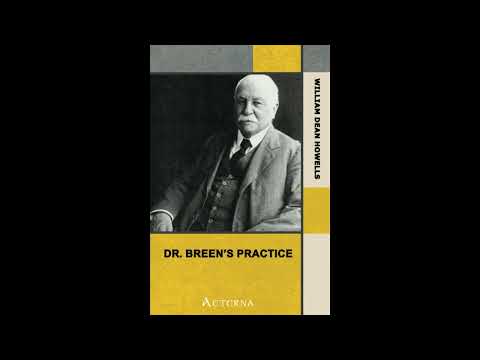
A pivotal figure in American letters who shaped the course of post-Civil War fiction, William Dean Howells brought a meticulous eye and a steady hand to the development of literary realism. Born in Martin's Ferry, Ohio, on March 1, 1837, and passing away in New York City on May 11, 1920, Howells lived a life deeply immersed in words. He was largely self-educated, working from a young age in the newspaper and printing offices his father managed. This practical schooling instilled in him a keen observation of daily life and a commitment to clear, accessible prose, skills that would define his extensive career.
Howells’s entry into the literary world began with journalism and poetry, but a fortuitous campaign biography of Abraham Lincoln in 1860 secured him a consulship in Venice. This four-year European sojourn, from 1861 to 1865, provided rich material and a broader perspective. Returning to the United States, he quickly found his place at the heart of the publishing establishment, first contributing to *The Nation* and then joining the prestigious *Atlantic Monthly*. He rose to become its editor-in-chief in 1871, a position he held for a decade, wielding immense influence as a critic and proponent of a new American literature grounded in realism. His first significant work that truly showcased his observational style was *Venetian Life*, a collection of essays and travelogues published in 1866, blending personal experience with sharp cultural commentary.
Over his prolific career, Howells penned dozens of novels, short stories, essays, and plays. His most notable novels precisely capture the nuances of American society in his time. *The Rise of Silas Lapham* portrays a newly wealthy businessman grappling with integrity and social acceptance in Boston. *A Modern Instance* dissects the painful dissolution of a marriage, a pioneering and unflinching look at divorce. *A Hazard of New Fortunes* chronicles the launch of a literary magazine in New York City, foregrounding the social and economic tensions of urban life. *Indian Summer* finds an American abroad navigating romance and expectation in Florence, while *The Minister’s Charge* follows a naïve country boy as he confronts the moral complexities of city living. His utopian novel, *A Traveler from Altruria*, offers a gentle but pointed critique of American capitalism and social stratification.
Howells’s writing style championed realism, focusing on the ordinary lives of middle-class Americans, their daily struggles, social interactions, and moral choices. He eschewed dramatic plots for detailed character studies and naturalistic dialogue, believing that true art lay in representing "the smiling aspects of life" as well as its harder realities. His themes often revolved around class distinctions, the corrupting influence of wealth, the evolution of marriage, and the search for ethical conduct in a changing world. For example, in *The Rise of Silas Lapham*, the protagonist's struggle to maintain his honesty in the face of financial ruin and social aspiration provides a deep examination of American business ethics and personal integrity.
Often called the "Dean of American Letters," Howells was not only a prolific author but also a tireless advocate for realism and for younger writers. He championed the works of Henry James and Mark Twain and mentored talents such as Stephen Crane and Frank Norris, effectively bridging the gap between the genteel literary traditions of the past and the emerging naturalist movement. His insistence on representing life as it was, with its everyday dilemmas and authentic speech, profoundly shaped the trajectory of American fiction. Listening to his works today offers a unique window into the moral landscape and social intricacies of 19th-century America, presented through the perceptive prose of its foremost realist.
More on Wikipedia →