Philosophy
81 audiolivros
Some questions simply refuse to stay silent within us. They persist, nagging at the edges of our thoughts, demanding answers about life’s meaning, the nature of right and wrong, the structure of reality itself, or the best way to live among others. We turn to philosophy not for quick answers but for a framework, a method of thought, a way to sharpen our own critical faculties. It offers not just theories, but a profound engagement with the human condition, an invitation to understand what it means to be, to know, to act. Listeners come to these works seeking clarity, intellectual rigor, and the profound satisfaction that comes from grappling with ideas that have shaped civilizations. They seek to understand the very foundations upon which our world is built, and perhaps, to build their own.
The origins of philosophy reach back to the ancient world, to minds that first dared to question mythological explanations and seek rational understanding. In the sixth century BCE, thinkers in Ionia, like Thales, Anaximander, and Heraclitus, began speculating about the fundamental substance of the cosmos, proposing water, the apeiron, or fire as primary elements. These early attempts to explain the world through observation and reason laid groundwork for later, more systematic inquiries. Socrates, living in fifth-century Athens, shifted focus from the cosmos to human conduct, famously declaring that "the unexamined life is not worth living." Through his relentless questioning, the Socratic method, he challenged his contemporaries to scrutinize their beliefs about justice, virtue, and piety. His student, Plato, preserved and expanded these dialogues, constructing elaborate metaphysical systems, political theories, and theories of knowledge, often featuring Socrates as a central character. Aristotle, Plato’s student, further codified philosophical inquiry, establishing logic as a formal discipline and making comprehensive studies in ethics, politics, metaphysics, and natural science, creating a vast body of work that influenced Western thought for millennia.
After the classical Greek period, philosophy continued its evolution through subsequent eras. The Hellenistic schools—Stoicism, Epicureanism, and Skepticism—offered practical philosophies for living a good life amidst societal change. During the medieval period, particularly in Europe, philosophy often intertwined with theology, as thinkers like Augustine of Hippo and Thomas Aquinas sought to reconcile faith with reason, using philosophical methods to understand divine truths and the nature of God. The Renaissance rekindled interest in classical texts, paving the way for the Enlightenment, a pivotal period where reason became the paramount tool for understanding the world. Figures like René Descartes, John Locke, and Immanuel Kant shifted focus to epistemology, political theory, and ethics, emphasizing individual liberty, empirical observation, and the limits of human knowledge. The nineteenth century brought forth German Idealism with Hegel, existentialist precursors like Kierkegaard and Nietzsche, and American Transcendentalism, which emphasized intuition, individualism, and a spiritual connection to nature. Each era built upon the last, refining arguments, introducing new questions, and constantly re-evaluating foundational assumptions.
Our public domain collection offers listeners direct access to many of these foundational texts. For instance, you can engage with the political and metaphysical dialogues of Plato, perhaps through his "Statesman" or "Sophist," both from around 360 BCE. These works capture the Socratic method, probing definitions of governance and the nature of being through rigorous, question-and-answer exchanges. A leap forward in political thought arrives with John Locke’s "The Second Treatise of Civil Government," published in 1689. Locke’s work articulates the concept of natural rights, the social contract, and the right to revolution, profoundly influencing modern democratic thought and the very structure of governance we see today.
Moving into the nineteenth century, Ralph Waldo Emerson’s "Representative Men: Seven Lectures," from 1850, provides a key insight into American Transcendentalism. Emerson examines figures like Plato, Swedenborg, Montaigne, Shakespeare, Napoleon, and Goethe, using them as lenses to consider genius, self-reliance, and the individual’s potential. From a different part of the world, Rabindranath Tagore’s "Sadhana: The Realization of Life," published in 1913, presents a perspective deeply rooted in Eastern philosophy, exploring themes of spiritual realization, the connection between humanity and the divine, and the inherent joy of existence. Leslie Stephen’s "Social Rights and Duties, Volume I (of 2) Addresses to Ethical Societies" from 1896, offers a look at late Victorian ethical thought, dissecting the moral obligations individuals hold within society. Finally, for a blend of scientific curiosity, deep introspection, and spiritual reflection, consider Sir Thomas Browne’s works like "Religio medici" (1643), "Hydriotaphia" (1658), and "A Letter to a Friend" (1672). Browne, a physician and philosopher, bridges the scientific rigor of his time with profound meditations on faith, mortality, and the human spirit, all rendered in a distinctive, eloquent prose.
When you turn to these philosophical audiobooks, expect a range of major themes. Epistemology, the study of knowledge, questions how we know what we know, and whether objective truth exists. Metaphysics investigates the fundamental nature of reality, asking what is truly real, what constitutes being, and the relationship between mind and matter. Ethics deals with moral principles, right conduct, and the good life, while political philosophy examines justice, the state, individual rights, and forms of government. Aesthetics considers beauty, art, and perception. Across these areas, you will find common conventions: rigorous argumentation, precise conceptual analysis, the use of logical deduction, and thought experiments designed to test the limits of an idea. Philosophers systematically dismantle assumptions, clarify concepts, and construct coherent systems of thought.
Philosophy, perhaps more than any other genre, finds a natural home in the audiobook format. Its origins are oral—Socrates taught through spoken dialogue, not written texts. Listening allows you to absorb complex arguments at a measured pace, letting profound ideas resonate and sink in. A skilled narrator gives distinct voices to different characters in a dialogue, clarifying who speaks and what perspective they represent, making dense discussions more accessible. The intonation, the emphasis, the deliberate pauses in an excellent narration can convey the nuance of an argument or the passion behind a philosophical position, bringing the text to life in a way silent reading sometimes cannot. This format makes abstract concepts tangible, allowing listeners to contemplate while walking, working, or simply closing their eyes, fostering a deeply personal and reflective experience.
We invite you to experience this rich tradition of thought yourself. With 79 titles awaiting your discovery, our collection stands ready to engage your intellect and broaden your perspective. Step into the minds of the world’s greatest thinkers, challenge your assumptions, and find new ways to understand the world and your place within it. The wisdom of centuries remains accessible, ready for you to hear.
A Handbook of Ethical Theory

A Lie Never Justifiable: A Study in Ethics
A Short History of Greek Philosophy
Alcibiades II
Also Sprach Zarathustra

An Enquiry into an Origin of Honour and the Usefulness of Christianity in War
An Examination Into and an Elucidation of the Great Principle of the Mediation
Ancient and Modern Celebrated Freethinkers Reprinted From an English Work, Entitled
Apology
Apology, Crito And Phaedo Of Socrates
Architecture and Democracy
COMMON SENSE How to Exercise It
Cobwebs of Thought
Cratylus

Creed and Deed: A Series of Discourses
Crime and Its Causes

Deductive Logic

Deutsche Liebe.
Discours de la méthode/Discourse on the Method English Edition
English Secularism: A Confession Of Belief

Eryxias
Essays Æsthetical
Estetica Come Scienza Dell'espressione E Linguistica Generale: Teoria E Storia
Euthydemus (Focus Philosophical Library)
Euthyphro
Flowers of Freethought (First Series)
Four-Dimensional Vistas
Friends and Helpers
Fundamentals of Prosperity: What They Are and Whence They Come
Good Sense
Gorgias

Heart of man

In the Fourth Year: Anticipations of a World Peace
Ingersollia: Gems Of Thought From The Lectures, Speeches, And Conversations Of Col.
Initiation Philosophique
Insights and Heresies Pertaining to the Evolution of the Soul

Ion

Is Civilization A Disease?

Joseph Smith as Scientist A Contribution to Mormon Philosophy

Kritik der praktischen Vernunft

L. Annaeus Seneca on Benefits
Laches
Leibniz's new essays concerning the human understanding : a critical exposition
Letters to Eugenia; Or, A Preservative Against Religious Prejudices
Life and Conduct
Life and Matter: A Criticism of Professor Haeckel's Riddle of the Universe
Lysis
Mankind In The Making
Memories And Studies
Meno
Modern French Philosophy: A Study of the Development Since Comte
Monism as Connecting Religion and Science: The Confession of Faith
Moral Philosophy: Ethics, Deontology, and Natural Law
Moral Principles in Education
On Heroes, Hero-Worship and the Heroic in History

On the sublime
PROTAGORAS By Plato
Parmenides
Phaedo
Phaedrus
Philosophy and Religion: Six Lectures Delivered at Cambridge
Poetics

Politics: A Treatise on Government
Pragmatism, a new name for some old ways of thinking; popular lectures on philosoph
Problems of Conduct: An Introductory Survey of Ethics
Progressive Morality: An Essay in Ethics
Reason the Only Oracle of Man Or A Compendious System of Natural Religion
Recent Tendencies in Ethics: Three Lectures to Clergy, given at Cambridge
Religio medici, Hydriotaphia, and the Letter to a friend
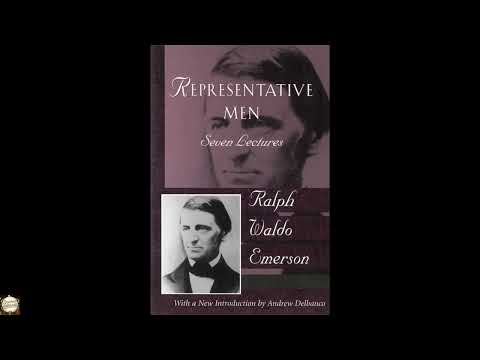
Representative Men: Seven Lectures
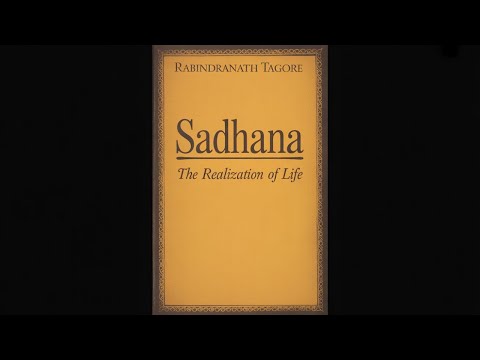
Sadhana: The Realization of Life
Social Rights and Duties, Volume I (of 2) Addresses to Ethical Societies
Sophist (Hackett Classics)
Standards of Life and Service
Statesman
THE PRINCIPLES OF AESTHETICS
The Education of Cyrus
The Second Treatise of Civil Government
The Way of Initiation
The morals of economic internationalism