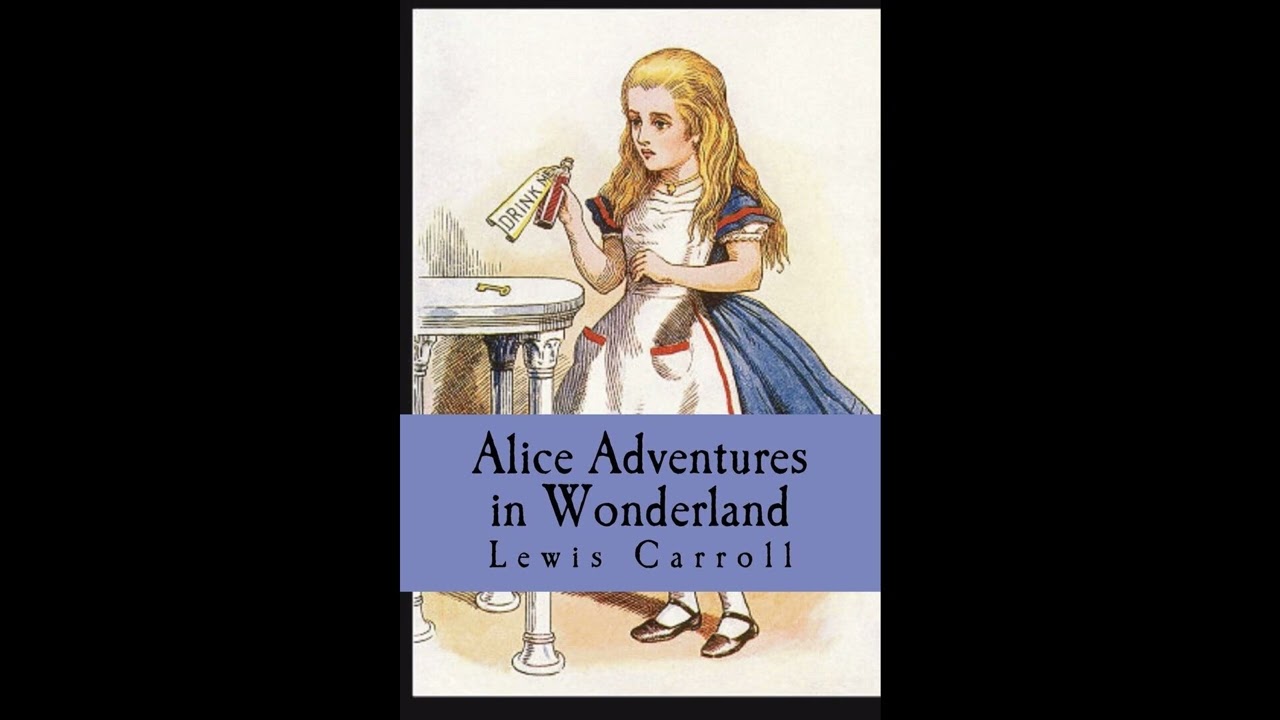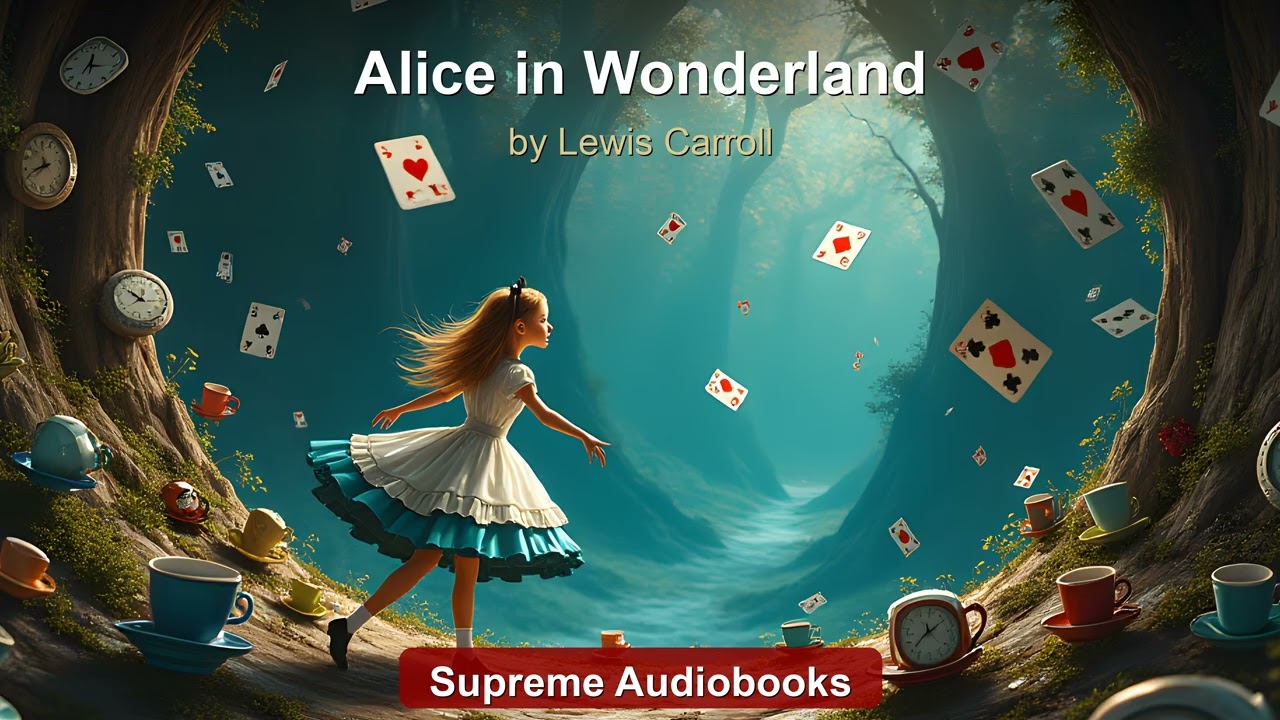
Alice in Wonderland
Forget everything you think you know about children's stories, about logic, about reality itself. Lewis Carroll's Alice in Wonderland, published in 1865, remains a cornerstone of the absurd, a looking-glass into a world where rules are made to be broken, where language dances on the edge of sense, and where a young girl's keen mind must grapple with the utterly nonsensical. This is more than just a whimsical tale; it is a foundational text of fantasy literature, a philosophical playground disguised as a dream, and a surprisingly resonant commentary on authority, identity, and the bewildering process of growing up. Its influence permeates popular culture, academic discourse, and our very understanding of imagination, making it as vital and thought-provoking today as it was over a century ago. The story begins on a languid summer afternoon, with young Alice sitting by a riverbank, feeling drowsy and bored as her older sister reads aloud from a rather dry book. Her attention is suddenly snagged by a White Rabbit in a waistcoat, consulting a pocket watch and exclaiming, "Oh dear! Oh dear! I shall be too late!" Driven by an insatiable curiosity, Alice follows the creature down a rabbit hole, tumbling into a fantastical realm known as Wonderland. Here, the ordinary laws of physics and decorum cease to apply. Alice finds herself shrinking and growing with alarming frequency, navigating a world where doors are too small, cakes offer magical transformations, and her own body often feels foreign and unwieldy. She encounters a bewildering array of creatures: a Dodo, a solemn mouse, and a Caterpillar who delivers cryptic advice while smoking a hookah. Her bizarre encounters continue as she stumbles upon the Mad Hatter’s tea party, an eternal celebration where time is stuck at six o'clock, and riddles have no answers. The Cheshire Cat, a grinning feline with the ability to disappear and reappear at will, offers Alice perplexing guidance, urging her to ask herself who she really is. Eventually, Alice finds herself at the court of the tyrannical Queen of Hearts, a monarch whose solution to any problem or perceived slight is the immediate execution of "Off with her head!" Surrounded by playing card soldiers and an air of constant peril, Alice becomes entangled in a bizarre game of croquet, using flamingos as mallets and hedgehogs as balls. As the madness around her intensifies, Alice strives to maintain her composure and rationality, desperately trying to find a way back to her own familiar world, or at least a semblance of order. The visionary mind behind Alice in Wonderland belonged to Charles Lutwidge Dodgson, better known by his pen name, Lewis Carroll. Born in Daresbury, Cheshire, England, in 1832, Dodgson was the eldest son in a family of eleven children. From an early age, he displayed a remarkable intellect and a gift for storytelling, often amusing his younger siblings with elaborate narratives and games. He pursued a distinguished academic career, becoming a lecturer in mathematics at Christ Church, Oxford, where he remained for most of his life. Despite being a shy man with a stammer, Dodgson had a remarkable affinity for children, particularly young girls, whom he often befriended and entertained with his imaginative tales and puzzles. The genesis of Alice can be traced to a boating trip on July 4, 1862, when Dodgson recounted an impromptu story to Alice Liddell, the daughter of the Dean of Christ Church, and her sisters. Alice was so taken with the tale that she asked him to write it down, a request that ultimately led to the publication of Alice's Adventures in Wonderland in 1865. Dodgson was also a pioneering photographer, known for his portraits of children and prominent Victorian figures, a hobby that further illustrated his keen eye for detail and his unconventional perspective. Though he published other works, including the sequel Through the Looking-Glass and the nonsense poem The Hunting of the Snark, it is his Alice books that secured his lasting legacy, making him one of the most beloved and studied authors of the Victorian era before his passing in 1898. One of the most profound themes that permeates Alice in Wonderland is the constant clash between logic and nonsense. Alice, a product of a structured Victorian upbringing, continually attempts to apply reason and learned rules to a world that utterly defies them. When she asks the Mad Hatter why a raven is like a writing-desk, expecting a sensible answer, she is met with only further illogic, highlighting the futility of her efforts. This relentless assault on conventional thought forces Alice, and by extension the reader, to question the very foundations of what we deem rational. Another prominent theme is the struggle for identity and self-discovery. Alice frequently undergoes physical transformations, shrinking and growing unpredictably, which leads her to repeatedly ask, "Who am I?" Her encounter with the Caterpillar, who demands to know "Who are you?", underscores this existential confusion, suggesting that identity is fluid and contingent, especially during the tumultuous period of childhood. The arbitrary nature of authority and rules is also central to the narrative. Wonderland is governed by capricious decrees, most notably from the hot-tempered Queen of Hearts, who orders executions for the slightest offense in a kingdom where justice is a fleeting concept. Her famous line, "Off with her head!", is uttered with startling frequency, demonstrating the terror and unreasonableness of unchecked power. This absence of reliable governance makes Alice’s quest for order even more desperate. The book can also be read as a comment on the bewildering transition from childhood to adulthood. Alice's attempts to navigate Wonderland's confusing social customs and nonsensical conversations mirror a child’s experience of trying to comprehend the often illogical rules and expectations of the adult world. She is constantly judged, dismissed, and put in her place by the inhabitants of Wonderland, mirroring the sometimes bewildering and disempowering experience of growing up. The mid-Victorian period in which Alice in Wonderland appeared was a fascinating time of contrasts in England. It was an era marked by rapid industrialization, scientific discovery – Darwin's On the Origin of Species had only recently been published – and a societal emphasis on order, duty, and moral rectitude. Yet, it was also a time of burgeoning interest in spiritualism, fantasy, and the inner life, perhaps as a counterpoint to the era's materialism and scientific rationalism. Children's literature, before Carroll, often served a didactic purpose, aiming to instill moral lessons or religious values. Alice broke radically from this tradition by prioritizing pure imagination and entertainment, offering a world that delighted in its own absurdity without needing to teach a specific lesson. It emerged as a playful rebellion against the earnestness of the age, a celebration of unfettered creativity and the power of nonsense to illuminate truths about logic and perception. To experience Alice in Wonderland as an audiobook is to grant this verbal playground the dimension it deserves. The skilled narrator's voice becomes Alice's own, conveying her youthful curiosity, her growing frustration, and her determined attempts at reasoning amidst the chaos. Listen closely for the distinct vocalizations that bring the bizarre inhabitants of Wonderland to life – the imperious squawking of the Queen of Hearts, the sleepy drawl of the Dormouse, the smooth, unsettling purr of the Cheshire Cat. The 3-hour and 35-minute runtime is perfectly suited for absorbing the intricate wordplay and witty dialogue that populate every scene. A good narration will allow the pacing to shift seamlessly from Alice's moments of wide-eyed wonder to the rapid-fire, often exasperating exchanges at the tea party, enhancing the dreamlike, sometimes unsettling, atmosphere that makes this story so enduring. It allows listeners to hear the rhythm and music of Carroll's language, emphasizing the puns, the philosophical riddles, and the sheer joy of verbal invention that often gets overlooked on the page.
Enjoyed Alice in Wonderland? A few ways to support us
Audible & Amazon links are affiliate; we may earn a small commission at no extra cost.
About this production
Human narration by a volunteer reader from LibriVox.org, the public-domain audiobook project. LibriVox volunteers record literary works whose copyright has expired in the United States, releasing the resulting recordings into the public domain.
Alice in Wonderland, first published in 1865 by Lewis Carroll. The underlying text is in the U.S. public domain. We do not republish any modern copyrighted edition, translation, or commentary.
The 4K cinematic visuals accompanying this audiobook are generated by an AI image model from prompts derived from the source text. No copyrighted photos, paintings, or stock footage are used. AI generation is disclosed on every video on our YouTube channel as required by YouTube's altered/synthetic content policy.
English subtitles are transcribed from the LibriVox recording with OpenAI Whisper. Translations into the 11 other supported languages are produced by Meta's NLLB-200 neural translation model. No human translator's copyrighted translation is used.
Questions about sourcing or rights? See our DMCA & Sourcing policy or contact us.
Enjoyed this audiobook?
If you'd like to own a copy of Alice in Wonderland or hear a professionally produced edition, the links below help support free audiobook production at no extra cost to you.
As an Amazon Associate we earn from qualifying purchases. Audible / print links are affiliate.