About G.K. Chesterton
A towering figure in early 20th-century English letters, Gilbert Keith Chesterton—known widely as G.K. Chesterton—carved out a unique place as a journalist, poet, critic, biographer, and novelist. He was born on May 29, 1874, in Campden Hill, Kensington, London, and passed away on June 14, 1936, in Beaconsfield, Buckinghamshire.
Chesterton’s early life saw him attend St. Paul’s School before enrolling at the Slade School of Art to train as an illustrator. While developing his artistic talents, he also pursued a keen interest in literature, history, and philosophy, finding himself drawn more to ideas and words than to visual art. This period of intellectual ferment laid the groundwork for his prolific writing career, shaping his distinctive voice and perspective.
His literary path began with a stint at a London publisher, soon transitioning into a prolific career as a freelance literary critic. He quickly gained recognition for his astute observations and lively prose, contributing to publications like the *Speaker* and the *Daily News*. Chesterton entered a publishing world buzzing with intellectual debate, often engaging publicly with contemporaries such as H.G. Wells and George Bernard Shaw. His early collections of poetry (*The Wild Knight*, 1900) and essays (*The Defendant*, 1901) established his reputation, but his first novel, *The Napoleon of Notting Hill* (1904), a work blending satire and prophecy, truly marked his arrival as a novelist.
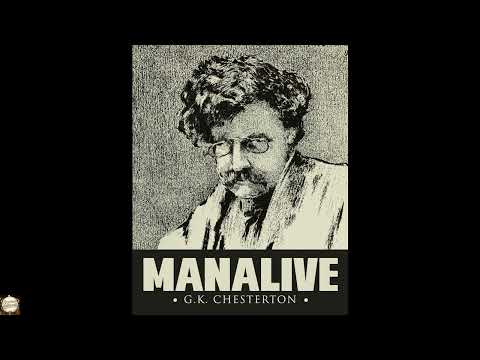
Throughout his career, Chesterton authored an astonishing array of books, each reflecting his unique worldview. *Orthodoxy* (1908) offers his paradoxical defense of Christian belief. *The Man Who Was Thursday* (1908) is a metaphysical thriller blending anarchism and philosophy. His enduring popularity owes much to the Father Brown detective stories, starting with *The Innocence of Father Brown* (1911), where a humble priest solves crimes through psychological insight. Listeners also find his inventive spirit in *Manalive* (1912), a novel about a man who revitalizes lives through unconventional, joyful actions. *A Miscellany of Men* (1912) showcases his talents as an essayist with keen observations on human types. His critical prowess shines in *The Victorian Age in Literature* (1913), providing a perceptive overview of 19th-century English literature.
Chesterton’s writing style is unmistakable, characterized by paradox, humor, and a deep appreciation for common sense and wonder. He often employed inverted statements to reveal hidden truths, challenging conventional wisdom with playful seriousness. A recurring theme across his works is the celebration of the ordinary as extraordinary, urging readers to see the miraculous in everyday life and to resist modern cynicism. He famously argued, for instance, that "the most incredible thing about miracles is that they happen," encapsulating his belief in a world full of potential marvel and meaning. He consistently advocated for tradition, democracy, and distributism, an economic theory emphasizing local ownership, opposing both unchecked capitalism and state socialism.
His profound influence stretches across the 20th century, shaping the thinking of many prominent writers and intellectuals. C.S. Lewis credited Chesterton as a key influence on his conversion to Christianity, while authors like Evelyn Waugh, Jorge Luis Borges, and Neil Gaiman have acknowledged his significant impact. Chesterton stands as a singular voice who championed joy, imagination, and faith in an age often perceived as rationalist. His writings continue to provoke thought and inspire delight, demonstrating the enduring power of his ideas and prose.
To hear his wisdom and wit articulated aloud offers a direct connection to a mind that saw the world with perpetual freshness.
More on Wikipedia →