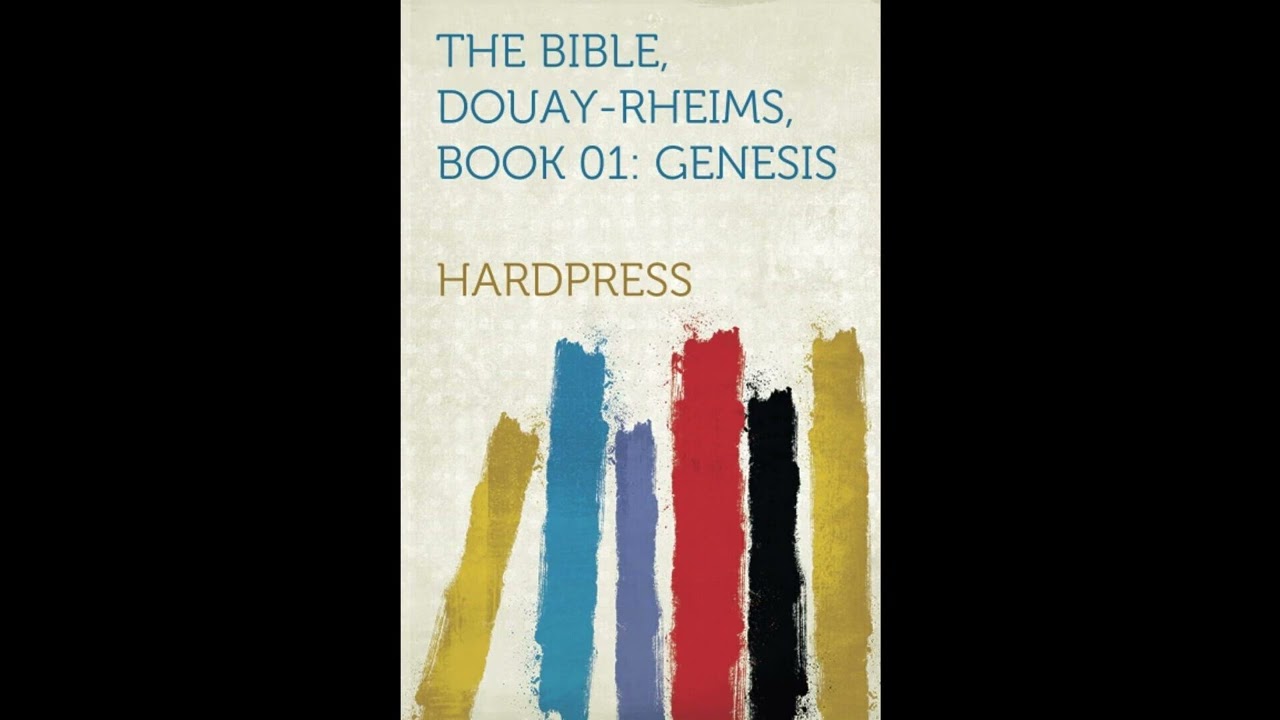
The Bible, Douay-Rheims, Book 01: Genesis
The book of Genesis stands as a foundational text, a profound influence on global thought, literature, and our understanding of human nature. It is the definitive origin story, presenting the creation of the universe, the emergence of humanity, and the very beginnings of our complex relationship with the divine. To engage with Genesis today is to encounter archetypal narratives that still shape our conversations about good and evil, family, justice, and the perennial quest for meaning, making it as relevant now as it was millennia ago. The narrative opens with an act of immense power: the creation of the heavens and the Earth, an ordered cosmos emerging from primordial chaos. We witness the formation of light, land, sea, and all life, culminating in humanity's creation in the Garden of Eden. Here, Adam and Eve confront a pivotal choice, leading to their expulsion and the introduction of suffering and mortality. The story then chronicles the first instances of sibling rivalry and murder with Cain and Abel, and the subsequent moral decay that prompts a cataclysmic flood, from which Noah and his family emerge to a renewed world under a divine promise. Following this new beginning, the story focuses on the patriarchs, starting with Abraham, called by the divine to leave his homeland for a promised land where his descendants will become a great nation. His story involves tests of faith, including the challenging request to sacrifice his son, Isaac. Through Isaac and his wife Rebekah, the lineage continues, leading to their twin sons, Jacob and Esau, whose contentious relationship is a central thread. Jacob, through cunning and a pivotal encounter, becomes the progenitor of the twelve tribes of Israel. The narrative concludes with Joseph, Jacob's beloved son, whose brothers' envy leads to his sale into slavery in Egypt. Joseph's dramatic rise to power as Pharaoh's chief administrator allows him to save his family from famine, orchestrating a profound reconciliation and setting the stage for their eventual settlement in Egypt. "The Bible, Douay-Rheims, Book 01: Genesis" presents an ancient work through a historically significant translation. The book of Genesis itself, while traditionally attributed to Moses, is understood by scholars as a compilation and editing of older oral traditions and written sources, developed over centuries in ancient Israel. Its primary importance lies not in a single author but in its emergence from a living, evolving tradition that shaped the foundational narratives of Western civilization. It stands as a testament to humanity's earliest inquiries into origins and purpose. This particular edition derives from the Douay-Rheims translation, a monumental effort by English Catholic scholars during the late sixteenth and early seventeenth centuries. Produced by English Catholic exiles on the European continent, the New Testament appeared in Rheims in 1582, with the Old Testament following in Douay in 1609-1610. This project aimed to provide an English version of the Bible based on the Latin Vulgate—the official text of the Roman Catholic Church. It served a crucial role for English-speaking Catholics during a time of intense religious conflict, offering a distinct scriptural voice against prevailing Protestant translations. Genesis, as a work of deep literary significance, enacts several powerful themes. One central theme is creation and order, vividly presented from its opening verses. The deliberate act of bringing light, land, and life from chaos underscores a divine intention to establish structure and purpose in the world. This initial order, however, quickly encounters disruption, leading to another core theme: the nature of sin and its consequences. The disobedience of Adam and Eve in the Garden introduces a profound rupture in their relationship with the divine, ushering in suffering and mortality. This theme continues through Cain's murder of Abel and the widespread moral decay culminating in the Flood, starkly illustrating how human choices impact the world. A further vital theme is covenant and promise. God's repeated establishment of covenants—with Noah after the Flood, symbolized by the rainbow, and most significantly with Abraham—forms the bedrock of the narrative. The Abrahamic covenant, promising countless descendants, a specific land, and universal blessings, drives the trajectory of subsequent generations. This highlights an enduring relationship between the divine and humanity, marked by both expectation and unwavering commitment. Additionally, the book provides compelling studies of family dynamics, from sibling rivalry to deep-seated conflicts and eventual reconciliation, underscoring the complexities of human connection. The Douay-Rheims translation arose from a turbulent period in English history: the aftermath of the Reformation. The late sixteenth and early seventeenth centuries saw England firmly Protestant, with Catholic recusants facing severe legal and social pressures. English Catholics, many in exile on the continent, needed an English Bible that adhered to Catholic doctrine and the Latin Vulgate, distinct from the popular Protestant versions like the Geneva Bible. This translation, therefore, was not merely an academic exercise but a critical act of cultural and religious preservation, providing a touchstone for their community and solidifying Catholic scriptural interpretation for generations. Listening to Genesis as an audiobook offers a unique opportunity to immerse oneself in this ancient text. Its narratives, originally transmitted orally, regain their intended power through a skilled narrator's voice. The careful pacing allows for thoughtful absorption of profound ideas, while the voice can distinguish characters and convey atmosphere, transforming a passive read into an active, auditory experience. This format encourages sustained reflection, making these foundational stories unfold with fresh immediacy, ideal for moments of contemplation or quiet listening.
Enjoyed The Bible, Douay-Rheims, Book 01: Genesis? A few ways to support us
Audible & Amazon links are affiliate; we may earn a small commission at no extra cost.
About this production
Human narration by a volunteer reader from LibriVox.org, the public-domain audiobook project. LibriVox volunteers record literary works whose copyright has expired in the United States, releasing the resulting recordings into the public domain.
The Bible, Douay-Rheims, Book 01: Genesis by HardPress. The underlying text is in the U.S. public domain. We do not republish any modern copyrighted edition, translation, or commentary.
The 4K cinematic visuals accompanying this audiobook are generated by an AI image model from prompts derived from the source text. No copyrighted photos, paintings, or stock footage are used. AI generation is disclosed on every video on our YouTube channel as required by YouTube's altered/synthetic content policy.
English subtitles are transcribed from the LibriVox recording with OpenAI Whisper. Translations into the 11 other supported languages are produced by Meta's NLLB-200 neural translation model. No human translator's copyrighted translation is used.
Questions about sourcing or rights? See our DMCA & Sourcing policy or contact us.
Enjoyed this audiobook?
If you'd like to own a copy of The Bible, Douay-Rheims, Book 01: Genesis or hear a professionally produced edition, the links below help support free audiobook production at no extra cost to you.
As an Amazon Associate we earn from qualifying purchases. Audible / print links are affiliate.