Stolen Treasure
Howard Pyle's name evokes a bygone era of swashbuckling heroes and daring adventures. "Stolen Treasure" delivers exactly that: a collection of tales plunging listeners into the sun-drenched, perilous world of buccaneers and privateers. These are not mere fables; they are vivid accounts filled with moral quandaries, the pursuit of riches, and the stark reality of life on the high seas. These stories resonate, reminding us of human fascination with freedom, wealth, and the grim consequences of living outside society's rules. From the moment sails unfurl, "Stolen Treasure" transports listeners to the Caribbean waters of the 17th and 18th centuries. The setting itself becomes a character—a vast, unpredictable expanse of sapphire seas, hidden coves, and jungle-choked islands, where treasure lies buried and danger lurks. We meet a colorful cast: hardened captains, cunning quartermasters, and desperate sailors. These men are driven by a singular obsession: the acquisition of gold, jewels, and power. Through audacious raids or cunning schemes, conflict often pits man against man, and man against the unforgiving elements. Each tale within this collection generally follows a similar arc. Conflict arises, often involving a coveted prize, a betrayal, or a desperate act of survival. Characters must make difficult choices, revealing their true nature—some demonstrating unexpected courage, others succumbing to greed or cowardice. The narrative builds through tense standoffs, frantic chases, and the ever-present threat of mutiny or discovery by the King's Navy. While outcomes vary, the tales consistently highlight the precariousness of a pirate's life, where fortune can turn instantly and triumph often comes with a steep price. The creative force behind "Stolen Treasure" was Howard Pyle, a pivotal figure in American illustration and literature. Born in Wilmington, Delaware, in 1853, Pyle began his career in the late 19th century, a period of burgeoning national identity and a growing demand for compelling visual storytelling. He quickly established himself as a master illustrator, his drawings and paintings gracing the pages of prominent magazines and books. Pyle was not merely an artist; he was a prolific author, writing the narratives for his stunning images. This dual talent allowed him to create fully realized worlds where text and art worked in seamless harmony. Pyle's influence extended beyond his published works. He founded an illustration school, the Brandywine School, mentoring artists like N.C. Wyeth and Frank Schoonover. His dedication to historical accuracy and a vivid sense of drama set a new standard for narrative illustration. While "Stolen Treasure" focuses on his pirate tales, Pyle is also celebrated for his retellings of The Merry Adventures of Robin Hood and The Story of King Arthur and His Knights, as well as original historical romances like Men of Iron. His work places him among the most important figures in American children's literature and the art world of the turn of the 20th century. He passed away in Florence, Italy, in 1911. The stories within "Stolen Treasure" pulsate with several powerful themes. One dominant thread is the allure and corruption of greed. Characters are driven by the insatiable desire for wealth, often leading them to commit heinous acts, betray trusted comrades, or sacrifice everything for a fleeting chance at riches. We see this in the frantic scramble for a newly discovered chest of doubloons, or the relentless pursuit of a legendarily wealthy galleon. Pyle consistently demonstrates that stolen treasure rarely brings true happiness or security, instead often leading to further peril and moral decay. Another prominent theme is the pursuit of freedom and the cost of lawlessness. The pirates reject societal constraints, opting for untamed liberty on the open ocean. Yet, this freedom is a double-edged sword, constantly shadowed by the threat of capture, summary justice, or violent death. Pyle frequently illustrates the grim consequences of living by one's own rules, showing how a life outside the law, while offering immediate gratification, often leads to isolation, paranoia, and a brutal end. Furthermore, courage versus cowardice comes to the fore in moments of intense peril. Howard Pyle's pirate stories emerged during a fascinating period in American history, roughly from the 1880s through the early 1900s. This was an era often called the "Golden Age of Illustration," a time when advancements in printing technology made it possible for periodicals and books to feature elaborate, high-quality images. Simultaneously, there was a widespread public appetite for adventure stories, especially those with historical settings. As America rapidly industrialized and modernized, there was a certain nostalgia for a romanticized past—a desire for tales of individual heroism and daring deeds. Pyle was perfectly positioned to satisfy this cultural hunger. He meticulously researched historical details, ensuring the costumes, ships, and settings in his stories and illustrations were accurate. This commitment to verisimilitude lent his imaginative narratives a grounding in reality, making the fantastical elements of pirate life feel more tangible. His work, including "Stolen Treasure," contributed to a broader literary trend of historical fiction that sought to entertain while also subtly educating and instilling moral rectitude through the dramatic portrayal of vice and virtue. The romantic appeal of pirates, with their defiance of authority, was ripe for reinvention. Listening to "Stolen Treasure" as an audiobook offers an immersive experience, suited to the episodic nature and descriptive prose of Pyle's writing. The narrator's voice becomes crucial, breathing life into diverse characters—from a gruff pirate captain to his crew's desperate pleas. The run length, several hours, allows for extended escape, perfect for long drives or closing your eyes and letting vivid scenes unfold. A skilled narration delivers rapid-fire dialogue with urgency, then slows to savor the ominous quiet before a storm or the hushed excitement of a treasure discovery. Pacing and vocal characterization transform Pyle's language into an almost cinematic atmosphere, making the creak of timbers, crash of waves, and clang of cutlasses feel immediate and visceral.
Enjoyed Stolen Treasure? A few ways to support us
Audible & Amazon links are affiliate; we may earn a small commission at no extra cost.
About this production
Human narration by a volunteer reader from LibriVox.org, the public-domain audiobook project. LibriVox volunteers record literary works whose copyright has expired in the United States, releasing the resulting recordings into the public domain.
Stolen Treasure by Howard Pyle. The underlying text is in the U.S. public domain. We do not republish any modern copyrighted edition, translation, or commentary.
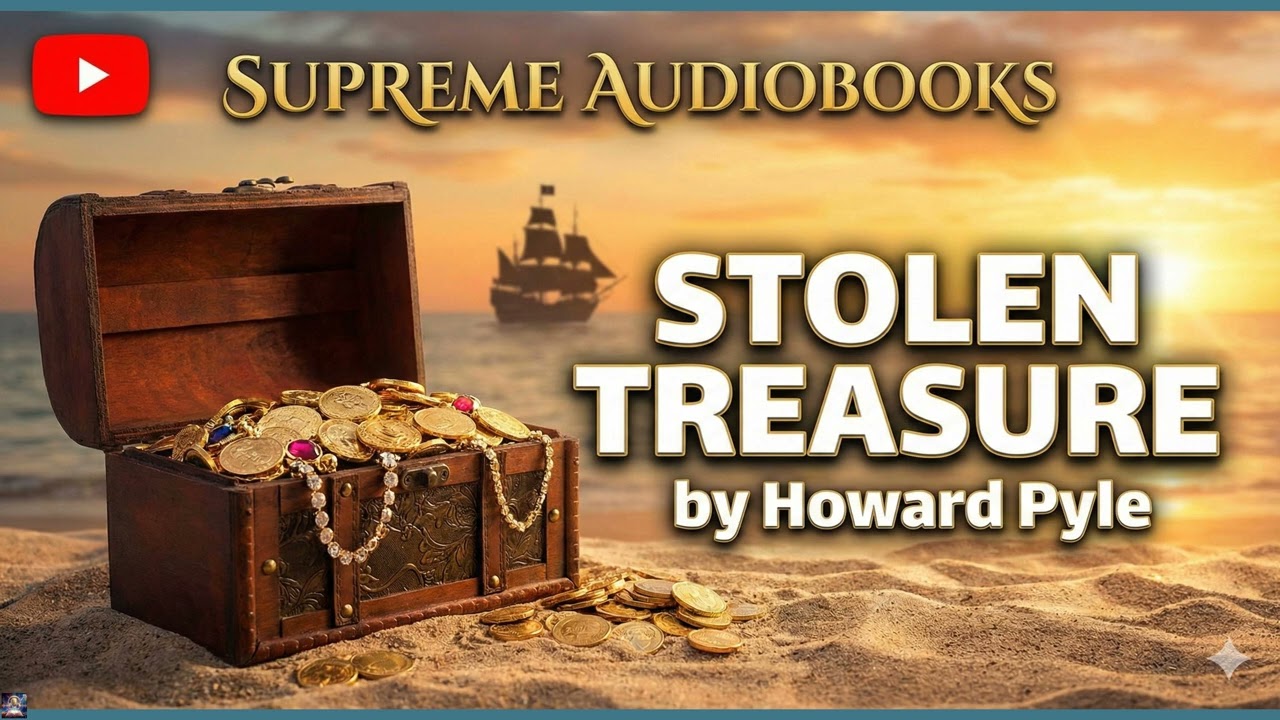
The 4K cinematic visuals accompanying this audiobook are generated by an AI image model from prompts derived from the source text. No copyrighted photos, paintings, or stock footage are used. AI generation is disclosed on every video on our YouTube channel as required by YouTube's altered/synthetic content policy.
English subtitles are transcribed from the LibriVox recording with OpenAI Whisper. Translations into the 11 other supported languages are produced by Meta's NLLB-200 neural translation model. No human translator's copyrighted translation is used.
Questions about sourcing or rights? See our DMCA & Sourcing policy or contact us.
Enjoyed this audiobook?
If you'd like to own a copy of Stolen Treasure or hear a professionally produced edition, the links below help support free audiobook production at no extra cost to you.
As an Amazon Associate we earn from qualifying purchases. Audible / print links are affiliate.