Emma
Jane Austen’s Emma, a novel that first graced readers in 1815, presents a dazzling portrait of a young woman convinced of her own sagacity, particularly in matters of the heart, only to discover the profound limitations of her perspective. It is a story not merely of matchmaking and manners, but of the essential human process of self-discovery, of learning to see clearly both oneself and others. Two centuries on, this comedic yet deeply insightful examination of ego, social standing, and true affection continues to resonate because it speaks to the universal struggle of growing up, acknowledging one’s faults, and finding genuine connection in a world often obscured by assumptions and prejudice. To listen to Emma today is to encounter a witty and wise companion who gently, but firmly, reminds us that the path to happiness often begins with humility. Our story introduces us to Emma Woodhouse, a young woman residing in the quaint village of Highbury, possessing all the advantages of beauty, intelligence, and a substantial personal fortune. With no immediate need to marry herself, Emma dedicates her considerable energies and self-assurance to arranging the romantic destinies of her acquaintances. Her most recent triumph, in her estimation, was orchestrating the marriage of her former governess, Miss Taylor, to Mr. Weston. This apparent success emboldens Emma, confirming her belief in her own unerring judgment and taste, and sets her on a course of further romantic meddling, much to the quiet chagrin of her closest friend and brother-in-law, Mr. Knightley. Emma soon takes under her wing the sweet, pretty, but socially less distinguished Harriet Smith, an orphan whose origins are somewhat obscure. Convinced that Harriet is destined for a match far superior to the honest farmer Mr. Robert Martin, who genuinely admires her, Emma persuades Harriet to refuse his proposal. Instead, Emma fancies Harriet might be a suitable match for the local vicar, Mr. Elton, misinterpreting his attentions and leading both Harriet and the vicar down a path of increasing misunderstanding. As Emma continues to navigate the complexities of village society, introducing new arrivals like the charming and enigmatic Frank Churchill and the accomplished but reserved Jane Fairfax, her well-meaning but often ill-conceived schemes create a cascade of social missteps and personal revelations, all while her own heart remains curiously blind to its true affections. Jane Austen, born in 1775 in Steventon, Hampshire, England, into a family of the gentry class, spent much of her life observing the very society she so brilliantly depicted in her novels. As the seventh of eight children of a clergyman, her existence was largely confined to the domestic sphere, providing her with ample opportunity to study the nuances of social interaction, courtship rituals, and the economic realities faced by women of her era. She began writing at a young age, producing lively satirical pieces for her family's entertainment, and later developed these into the polished novels for which she is celebrated. Though her publications initially appeared anonymously, under the moniker "A Lady," her keen intellect and distinctive style quickly garnered a readership. Austen lived a relatively short life, passing away in 1817 at the age of 41 in Winchester, but left behind a body of work that profoundly shaped English literature. Her novels, including Sense and Sensibility, Pride and Prejudice, Mansfield Park, Persuasion, and Northanger Abbey, are renowned for their incisive wit, social commentary, and masterful character development. Often considered a bridge between the eighteenth-century novel and the emerging realism of the nineteenth century, Austen carved out a unique place for herself, focusing on the domestic lives of the gentry rather than grand adventures or sweeping historical events. Her keen observations on class, manners, and the limited options available to women of her time, coupled with her narrative innovation, secured her enduring position as one of the most beloved and significant authors in the English literary canon. At its core, Emma is a profound exploration of self-deception and the growth of self-awareness. Emma begins the novel with an inflated sense of her own judgment, blind to her own feelings and the true intentions of those around her. Her misguided interference in Harriet’s life, pushing her away from Robert Martin and towards Mr. Elton, serves as a prime example of her inability to accurately assess character and situations. She fails to see the genuine affection and worth of some, while misinterpreting the flirtations or reserved natures of others. It is only through a series of humbling mistakes and the clear-eyed counsel of Mr. Knightley, who consistently sees through her follies, that Emma gradually sheds her illusions and begins to understand herself, her attachments, and her true place in the social order. Another central theme is the social hierarchy and its influence on individual destiny. Austen meticulously details the subtle but powerful distinctions within Highbury society, from the established gentry like the Woodhouses and Knightleys, to the more precarious positions of the Coles or the orphaned Harriet Smith. Emma's snobbery, particularly towards Harriet's admirer, Robert Martin, stems directly from her ingrained belief in the importance of appropriate social matching, viewing marriage as a means to maintain or elevate one's status. The narrative continually highlights how perceived rank, family connections, and financial prospects dictate social interaction and ultimately shape the futures of the characters, underscoring the stark realities of life for women, for whom a suitable marriage was often the only path to security and social standing. When Jane Austen was composing and publishing Emma in 1815, Britain was emerging from a period of immense upheaval. The Napoleonic Wars, which had dominated European politics for over a decade, had just concluded with the decisive Battle of Waterloo that very year. This era, known as the Regency period (1811-1820), was characterized by both social conservatism and a burgeoning cultural dynamism. While the upper echelons of society engaged in elaborate balls, visits, and the strict adherence to etiquette that Austen portrays so vividly, there was also an underlying current of change, particularly in economic structures and the beginnings of industrialization, though these larger forces are mostly felt implicitly in the novel's domestic focus. Literarily, Austen occupied a somewhat unique space. While Romantic poets like Lord Byron and Percy Bysshe Shelley were capturing the public imagination with their emphasis on emotion, nature, and the sublime, Austen offered a grounded, realistic, and often ironic portrayal of human behavior within circumscribed social settings. Her work provided a counterpoint to the more dramatic narratives prevalent at the time, establishing a form of the novel that centered on domestic life, psychological insight, and social satire. Emma itself was the last novel published during her lifetime, consolidating her reputation for wit and astute observation that would only grow in the decades following her passing. To experience Emma as an audiobook is to gain an immediate, intimate connection with Austen’s celebrated prose and her finely wrought characters. The novel’s length, a substantial 12 hours and 51 minutes, makes it an ideal companion for extended periods of activity, whether it's a long drive, a series of household tasks, or simply a quiet afternoon spent relaxing. A skilled narrator brings Austen’s nuanced dialogue and the subtle shifts in her characters' tones to life, allowing the listener to fully appreciate the author's renowned wit and irony, which often resides in the unspoken or the understated. One can more readily discern the layers of meaning in Mr. Knightley's steady advice, the underlying currents in Highbury's social exchanges, or Emma's own self-assured pronouncements, making the journey of her humbling and eventual enlightenment all the more impactful when heard rather than merely read.
Enjoyed Emma? A few ways to support us
Audible & Amazon links are affiliate; we may earn a small commission at no extra cost.
About this production
Human narration by a volunteer reader from LibriVox.org, the public-domain audiobook project. LibriVox volunteers record literary works whose copyright has expired in the United States, releasing the resulting recordings into the public domain.
Emma, first published in 1815 by Jane Austen. The underlying text is in the U.S. public domain. We do not republish any modern copyrighted edition, translation, or commentary.
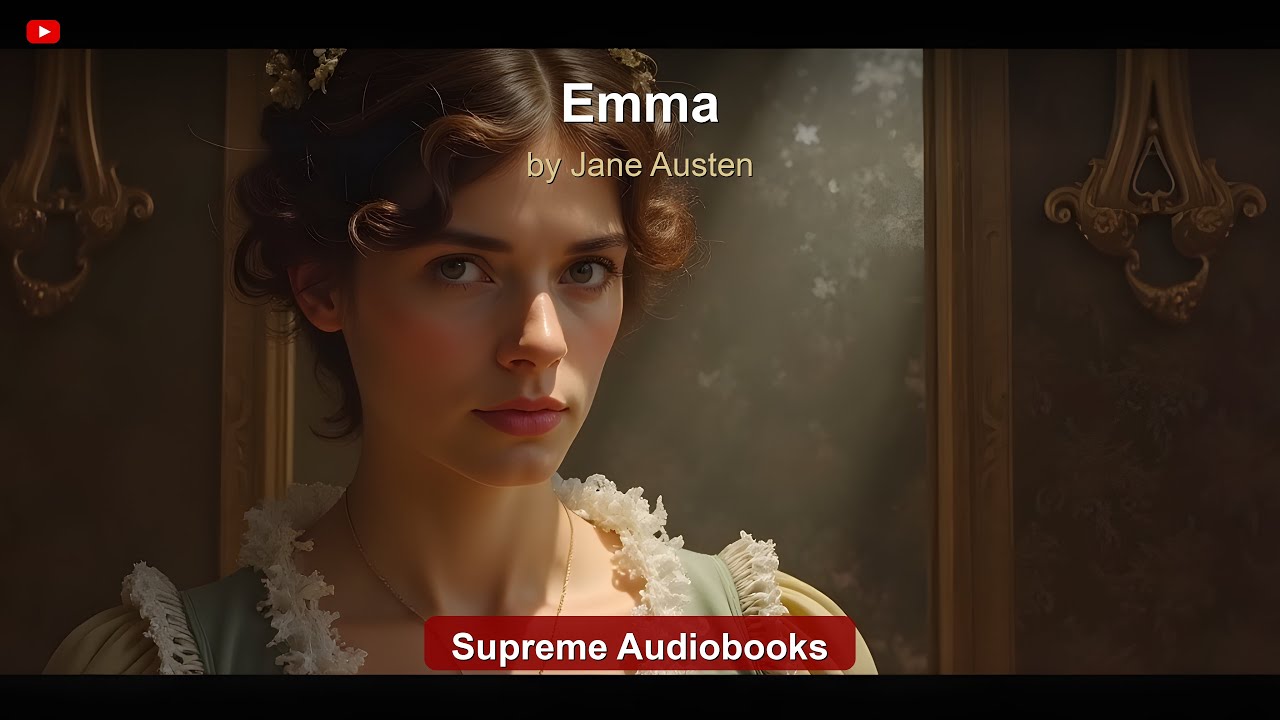
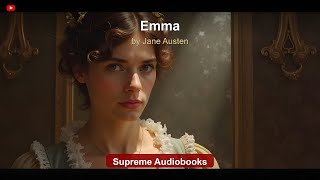
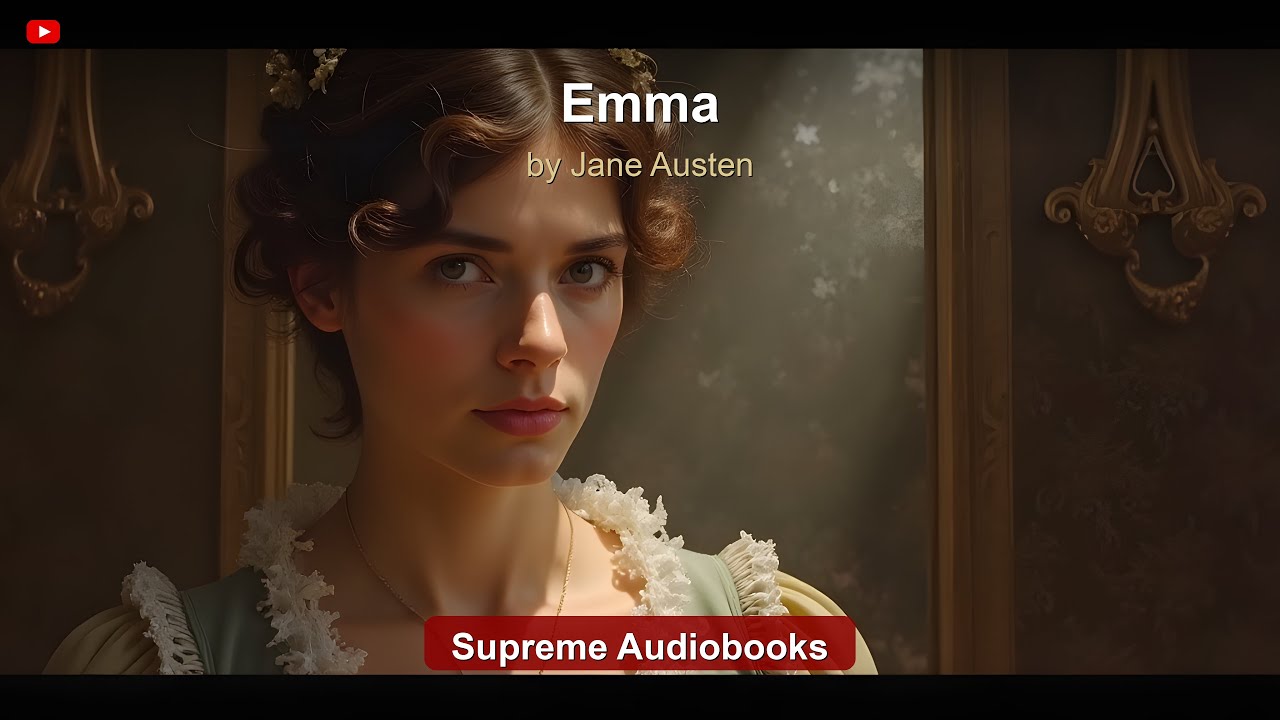
The 4K cinematic visuals accompanying this audiobook are generated by an AI image model from prompts derived from the source text. No copyrighted photos, paintings, or stock footage are used. AI generation is disclosed on every video on our YouTube channel as required by YouTube's altered/synthetic content policy.
English subtitles are transcribed from the LibriVox recording with OpenAI Whisper. Translations into the 11 other supported languages are produced by Meta's NLLB-200 neural translation model. No human translator's copyrighted translation is used.
Questions about sourcing or rights? See our DMCA & Sourcing policy or contact us.
Enjoyed this audiobook?
If you'd like to own a copy of Emma or hear a professionally produced edition, the links below help support free audiobook production at no extra cost to you.
As an Amazon Associate we earn from qualifying purchases. Audible / print links are affiliate.