Politics
43 ऑडियोबुक
The pulse of nations, the clash of ideologies, the very architecture of human societies—these echo through the pages and now, the spoken words, of political thought. Listeners turn to this genre not merely for historical record or philosophical treatise, but to grasp the foundational structures of power, justice, and governance that shape every life. It offers a vantage point to comprehend the ongoing conversation about how we organize ourselves, distribute authority, and strive for an ideal, or pragmatic, collective existence. Whether seeking to understand past revolutions, present dilemmas, or future possibilities, the exploration of politics provides a vital lens for interpreting the world and our place within it.
The origins of political inquiry stretch back to the dawn of organized civilization, with foundational texts emerging from ancient Greece. Thinkers like Plato, in his monumental work *The Republic*, meticulously constructed an ideal state, dissecting concepts of justice, education, and the roles of philosopher-kings. His student, Aristotle, offered a more empirical analysis in his work *Politics*, examining various constitutions and forms of government, categorizing their strengths and weaknesses based on observations of city-states. These seminal works established the framework for Western political thought, grappling with fundamental questions of citizenship, ethics in leadership, and the purpose of the state. The Roman era brought forth figures like Cicero, whose writings on law, duty, and republican governance emphasized civic virtue and the rule of law, extending the intellectual lineage that would influence subsequent generations.
As centuries progressed, the discourse evolved, influenced by shifts in power, religion, and scientific understanding. The Renaissance saw the emergence of figures like Niccolò Machiavelli, whose *The Prince* (1513) offered a starkly realistic, often controversial, guide to acquiring and maintaining political power, detaching governance from purely moral considerations. The Enlightenment era profoundly reshaped political thinking, with philosophers challenging divine right and championing individual liberty and social contracts. John Locke's *Two Treatises of Government* (1689) argued for natural rights and government by consent, laying groundwork for modern liberalism. Jean-Jacques Rousseau's *The Social Contract* (1762) introduced ideas of popular sovereignty and the general will, while Montesquieu’s *The Spirit of the Laws* (1748) advocated for the separation of powers, concepts that directly influenced the formation of democratic republics across the globe, most notably the United States.
Among the specific voices within our public domain catalog, listeners discover the raw mechanics of American machine politics in *Plunkitt of Tammany Hall* (1905). George Washington Plunkitt, a district leader, delivers candid, often humorous, lectures on "honest graft" and the practical, rather than theoretical, workings of urban political power at the turn of the 20th century. For a glimpse into the legal and social framework of liberty and economic policy, Frederic Bastiat's *The Law* (1850) stands as a concise yet powerful argument for individual rights and limited government, articulating principles of free markets and justice that resonate even today. From a more critical perspective on threats to the republic, Andrew B. Smolnikar’s *Secret Enemies of True Republicanism: Most Important Developments Regarding the Inn* (1862) offers a fascinating, albeit conspiratorial, look at perceived dangers to American democracy during a tumultuous period, highlighting the anxieties and debates of its time.
Expanding this collection, *Speeches of the Hon. Jefferson Davis, of Mississippi; Delivered During the Summer* (1858) provides a direct conduit to antebellum Southern political thought, offering essential context for understanding the ideological landscape leading to the Civil War through the words of a key figure. For those interested in the historical role of women in the political sphere, Sara Tytler’s *Political Women, Vol. 1* (1874) profiles influential figures who wielded power and influence, often behind the scenes, across different eras and cultures, challenging conventional narratives of political engagement. Further exploring the evolution of legal structures, Frederic Jesup Stimson's *Popular Law-making: A Study of the Origin, History, and Present Tendencies of Law* (1912) offers a detailed academic examination of how laws are created, interpreted, and adapted, illuminating the processes that shape public policy and individual rights. Even within fiction, political themes emerge, as seen in Anthony Hope’s novel *Quisanté* (1900), which portrays the rise and fall of a brilliant but morally ambiguous politician, using storytelling to dissect ambition, public opinion, and the compromises inherent in political life.
The texts within this genre typically address core concepts such as the ideal form of government, the balance between individual liberty and collective good, the nature of power, and the mechanisms of law and justice. Listeners can expect to encounter arguments for and against various economic systems—capitalism, socialism, protectionism—and their intersection with political governance. Themes of revolution and reform, citizenship and duty, corruption and integrity, often intertwine. The genre’s conventions frequently involve rigorous argumentation, historical analysis, philosophical debate, and the detailed exposition of governmental structures or political theory. Whether engaging with polemics, historical accounts, or philosophical treatises, the underlying pursuit remains a deeper understanding of human society and its contested frameworks.
The audiobook format proves particularly well-suited for this kind of material. The spoken word allows listeners to absorb complex arguments at a reflective pace, enabling a deeper consideration of the often-dense philosophical or historical concepts presented. A skilled narrator can convey the gravitas, passion, or subtle irony within a politician's speech, a philosopher's treatise, or a historical document, breathing life into the words of figures like Jefferson Davis or the incisive critiques of Bastiat. This oral delivery creates an atmosphere of engagement, transforming potentially dry academic prose into an immersive experience. It allows for the unfolding of political debates as if one were present at their original articulation, making the study of power dynamics, legal frameworks, and societal structures more immediate and compelling.
We invite you to immerse yourself in the rich discussions that have shaped civilizations. With 43 titles available in this genre, a wealth of knowledge awaits, offering insights into the enduring questions of governance, freedom, and human aspiration. Discover the ideas that continue to influence our world, presented in the accessible and engaging medium of audio.
100%: The Story of a Patriot
A History of the Republican Party
A Letter to Sir Samuel Shepherd, Knt., His Majesty's Attorney-General, Upon the Sub
A Letter to the Society for the Suppression of Vice, on Their Malignant Efforts to P- Full Audiobook
A Practical Illustration of Woman's Right to Labor: A Letter from Marie E. Zakrzewsk- Full Audiobook

A Traveler from Altruria: Romance
Civil Government of Virginia
Correspondence & Conversations of Alexis de Tocqueville with Nassau William Senior f- Full Audiobook
Count The Cost: An Address To The People Of Connecticut, On Sundry Political Subject- Full Audiobook
Culture and Anarchy
Defenders of Democracy: Contributions From Representative Men and Women of Letters a- Full Audiobook
Democracy: An American Novel
Dictatorship Vs: Democracy (Terrorism and Communism) a Reply to Karl Kautsky, By Le
Discourses on the First Decade of Titus Livius
Economic Sophisms
Fighting for Peace

Germany and The Next War
History of the Impeachment of Andrew Johnson, President of the United States,
How Members of Congress Are Bribed
Imperial Federation: The Problem of National Unity (Classic Books)
Imperium In Imperio: A Study Of The Negro Race
Laurier: A Study in Canadian Politics
Lincoln's Inaugurals, Addresses and Letters
Manifest der Kommunistischen Partei Manifesto of the Communist Party
Napoleon the Little

Neutral Rights and Obligations in the Anglo-Boer War
New Worlds for Old: A Plain Account of Modern Socialism
On the Duty of Civil Disobedience (The Classic Collection)
Our Changing Constitution

Peace Theories and the Balkan War (Classic Books)

Peaceless Europe
Plunkitt of Tammany Hall
Political Women, Vol. 1
Popular Law-making: A Study of the Origin, History, and Present Tendencies of Law
Protection and Communism
Quisanté
Reform and Politics. Part 2 from The Works of John Greenleaf Whittier, Volume VII
Secret Enemies of True Republicanism: Most Important Developments Regarding the Inn
Speeches of the Hon. Jefferson Davis, of Mississippi; Delivered During the Summer
The Government And Administration Of The United States
The Laws of War: Affecting Commerce and Shipping
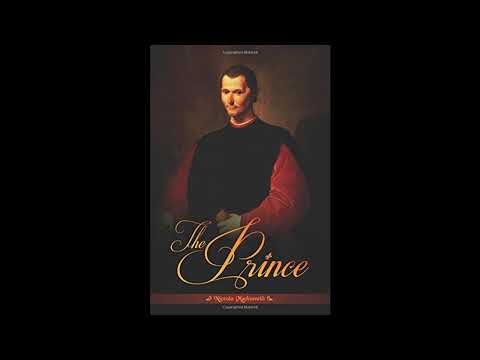
The Prince