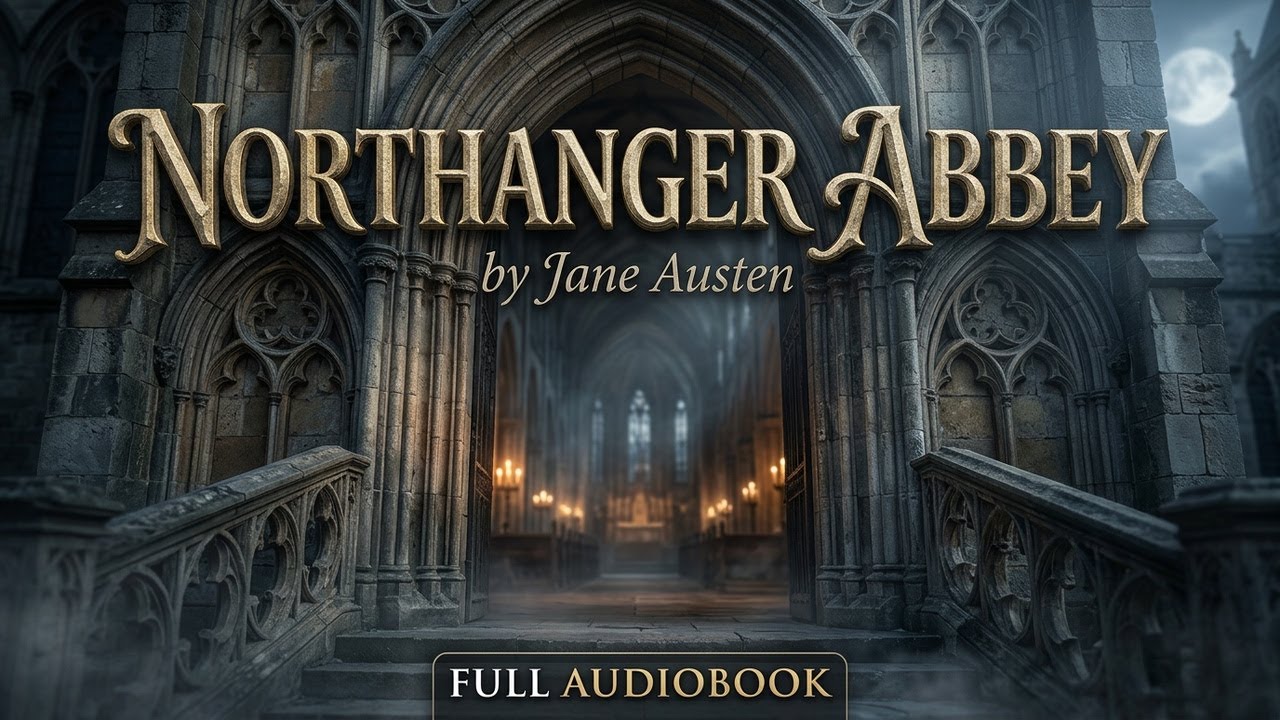
Northanger Abbey
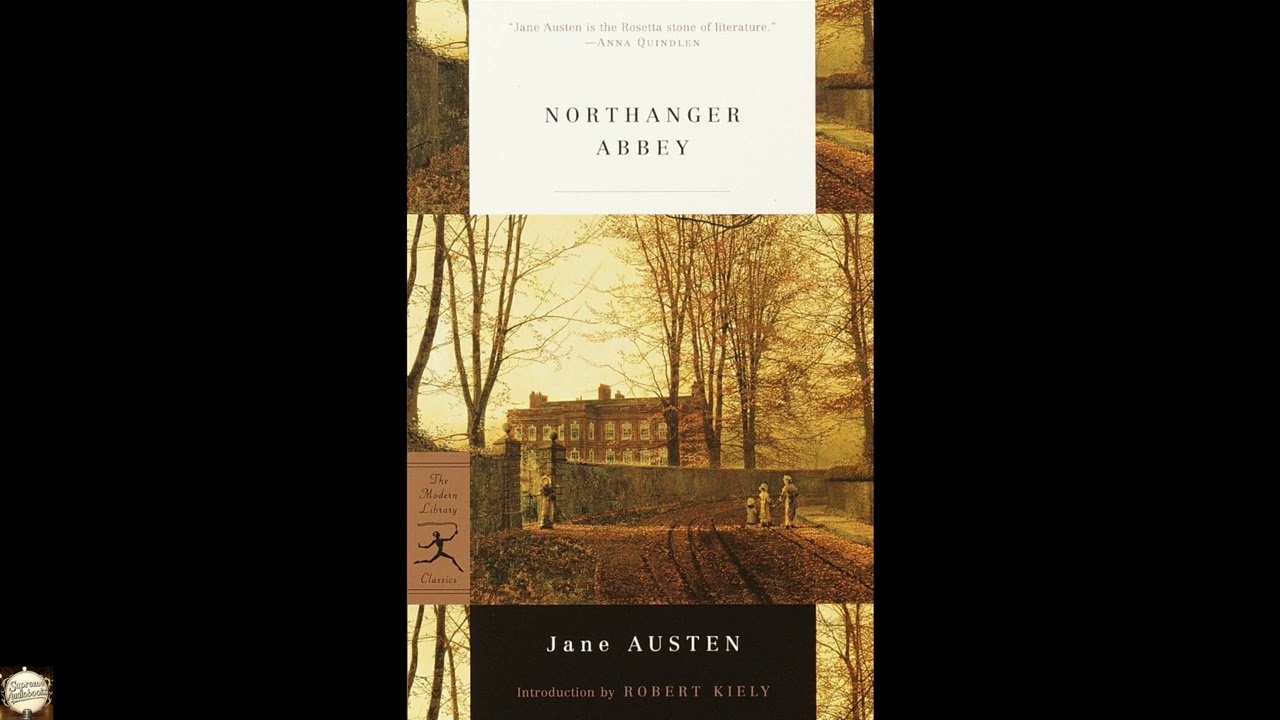
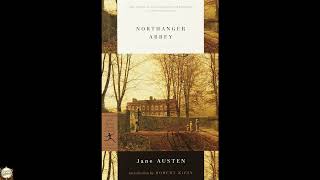
Jane Austen’s Northanger Abbey offers a delightful invitation into the world of a young woman whose imagination runs wild, entangled with the popular fiction of her day. It stands as a clever and often hilarious social satire, gently mocking the sensationalism of Gothic novels while charting a protagonist's awakening to the complexities of real life. For anyone who has ever been swept away by a book, or found themselves mistaking fantasy for reality, this tale resonates with a universal charm, reminding us that sometimes the most profound lessons are learned through the most amusing misunderstandings. Our story introduces Catherine Morland, a young woman of modest means and even more modest experience, emerging from the quiet countryside to the bustling, fashionable city of Bath. Catherine's only real exposure to the wider world comes from the pages of the popular, thrilling Gothic novels she devours—tales filled with crumbling castles, sinister secrets, and heroines facing unimaginable perils. In Bath, she quickly forms a friendship with Isabella Thorpe, a vivacious but ultimately superficial young woman, and meets her brother, the boisterous John Thorpe. More significantly, Catherine encounters the witty and intelligent Henry Tilney and his kind sister, Eleanor, representatives of a more refined social circle. As Catherine navigates the unfamiliar intricacies of Bath society, she finds herself drawn to Henry, whose sharp mind and playful manner intrigue her. When the Tilney family invites her to their ancestral home, Northanger Abbey, Catherine’s literary obsessions take hold. Her mind, so accustomed to the dramatic conventions of Mrs. Radcliffe’s novels, immediately begins to overlay the ordinary country estate with the brooding atmosphere of her favorite thrillers. She begins to suspect dark deeds and hidden secrets within the Abbey’s walls, seeing omens and mysteries where none exist, all while her affections for Henry grow amidst her fantastical musings. The mind behind this charmingly astute novel was Jane Austen, born in 1775 in Steventon, Hampshire, a daughter of a clergyman. Her life, though outwardly quiet and circumscribed within the bounds of England's gentry class, was rich with observation and intellectual curiosity. Largely educated at home, she possessed a formidable wit and a keen understanding of human nature. Austen began writing in her youth, producing playful parodies and sketches that honed her distinctive voice. Though she wrote during a period of great societal upheaval, her novels typically focused on the domestic lives, social rituals, and romantic entanglements of the landed gentry, often published anonymously under the simple designation "by a Lady." During her lifetime, Austen saw the publication of Sense and Sensibility, Pride and Prejudice, Mansfield Park, and Emma, each cementing her reputation, though her identity remained largely unknown to the general public until after her death. She passed away tragically young in 1817, at the age of 41, leaving behind a body of work that would come to define the English novel of manners. Her novels, including Northanger Abbey and Persuasion—both published posthumously in 1817—are celebrated for their sharp social commentary, realistic portrayal of character, and the subtle yet profound examinations of women’s roles, marriage, and financial security in Georgian and Regency England. She occupies an enduring place in literary history for her innovative use of free indirect discourse and her ability to weave profound emotional truth into sparkling social comedy. Northanger Abbey expertly enacts several significant themes, perhaps most notably the contrast between imagination and reality. Catherine Morland, steeped in Gothic literature, consistently attempts to superimpose fictional scenarios onto her actual experiences. For instance, upon arriving at Northanger Abbey, her mind immediately constructs a narrative of secret passages and a tyrannical patriarch, leading her to search for hidden clues and eventually even to suspect General Tilney of having murdered his wife. This delightful misapplication of literary tropes is gently but firmly corrected by Henry Tilney, who encourages her to view the world with a discerning eye rather than through the distorted lens of sensational fiction. Another central theme is the education of a young woman and the development of her judgment. Catherine begins the story as a sheltered, somewhat ignorant girl, easily swayed by the superficial charm of the Thorpe family and prone to flights of fancy. Her experiences, particularly her disillusionment with Isabella Thorpe's fickle affections and her own embarrassing misinterpretations at Northanger, serve as crucial lessons. Through these trials, guided by Henry’s steady influence and her own maturing reflections, Catherine learns to distinguish genuine character from pretense, and to understand the nuances of social interaction, progressing from naive innocence to a more discerning awareness of the world’s complexities. This novel emerged into a literary landscape increasingly dominated by the novel form, particularly the then-popular—and often sensational—Gothic novel. Authors like Ann Radcliffe and Matthew “Monk” Lewis captivated readers with tales of terror, crumbling ruins, and supernatural occurrences. Austen, ever perceptive of her cultural surroundings, seized upon this trend not just to entertain, but to critically engage with it. While Northanger Abbey was published in 1817, it was actually one of Austen’s earliest completed works, initially titled Susan and sold for publication as early as 1803. Its prolonged publication delay means that it satirizes a literary fashion that was arguably at its peak when she first wrote it, providing both a critique of the genre’s excesses and a charming reminder of the allure it held for young readers of the era. Beyond its literary satire, the book reflects the social structure of late 18th and early 19th-century England, where marriage was often a pragmatic necessity for young women, determining their social standing and financial security. The novel offers a glimpse into the limited options available to women of the gentry class, whose primary means of advancement or stability lay in securing a suitable husband. Austen portrays the anxieties and calculations surrounding such matches, showing how family fortunes, social connections, and individual character—or lack thereof—played a significant role in dictating a young woman's destiny. Listening to Northanger Abbey as an audiobook offers a singular opportunity to immerse oneself in Austen’s witty prose and keen social observations. Across its 8 hours and 5 minutes, a skilled narrator breathes life into Catherine’s youthful exuberance, Henry’s dry humor, and the wonderfully exaggerated personalities of the Thorpe family, making each character distinctive and memorable. The pacing of the narration can perfectly capture the slow build of Catherine’s imaginative terrors at Northanger Abbey, followed by the gentle deflation of her expectations, allowing the listener to fully appreciate the novel’s comedic timing and the subtle shifts in atmosphere. The clarity of dialogue and the nuanced portrayal of each voice enhance the social satire, turning what might be a silent chuckle into an audible delight as Austen’s brilliant observations unfold directly into your ears.
Enjoyed Northanger Abbey? A few ways to support us
Audible & Amazon links are affiliate; we may earn a small commission at no extra cost.
About this production
Human narration by a volunteer reader from LibriVox.org, the public-domain audiobook project. LibriVox volunteers record literary works whose copyright has expired in the United States, releasing the resulting recordings into the public domain.
Northanger Abbey, first published in 1817 by Jane Austen. The underlying text is in the U.S. public domain. We do not republish any modern copyrighted edition, translation, or commentary.
The 4K cinematic visuals accompanying this audiobook are generated by an AI image model from prompts derived from the source text. No copyrighted photos, paintings, or stock footage are used. AI generation is disclosed on every video on our YouTube channel as required by YouTube's altered/synthetic content policy.
English subtitles are transcribed from the LibriVox recording with OpenAI Whisper. Translations into the 11 other supported languages are produced by Meta's NLLB-200 neural translation model. No human translator's copyrighted translation is used.
Questions about sourcing or rights? See our DMCA & Sourcing policy or contact us.
Enjoyed this audiobook?
If you'd like to own a copy of Northanger Abbey or hear a professionally produced edition, the links below help support free audiobook production at no extra cost to you.
As an Amazon Associate we earn from qualifying purchases. Audible / print links are affiliate.