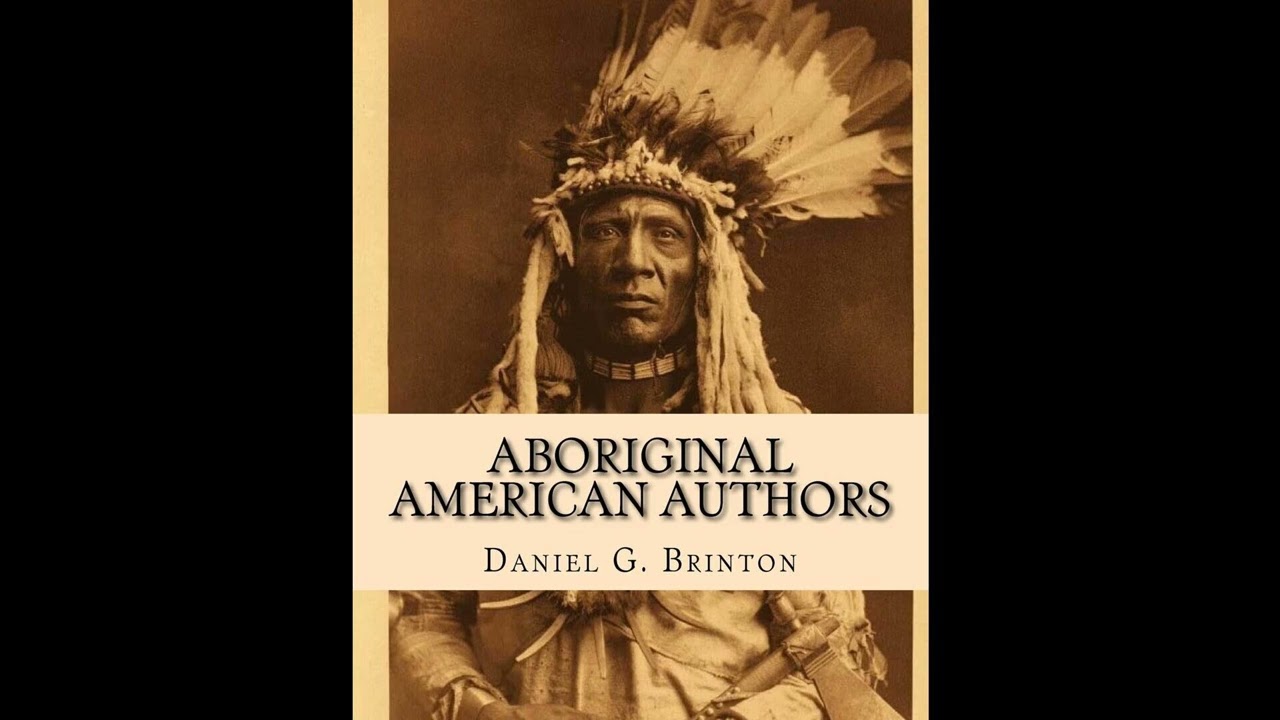
The authors referred to are such as belong to the aboriginal stock of the continent, and have used a European alphabet to express their thoughts.
Context: Brinton states this in his 'Introductory Remarks' to define the specific scope of 'Aboriginal American Authors' he includes in his study, clarifying that he focuses on Indigenous individuals who adopted European writing systems.
This collection is the first in any language, and is offered as a contribution to the history of literature in the United States.
Context: Brinton makes this claim in the introduction, asserting the groundbreaking nature of his work. He positions it as an initial scholarly effort to document and analyze the literary contributions of Indigenous peoples within the broader American literary landscape.
They reveal a general level of intellectual capacity rather above what has been current belief respecting the aborigines.
Context: Brinton offers this observation early in the work, suggesting that his study will challenge prevailing negative stereotypes about Indigenous intelligence. He frames the collected works as evidence of significant intellectual capability.
Original compositions treating aboriginal themes in an aboriginal spirit are exceedingly rare in this list.
Context: This is a critical observation Brinton makes about the content of the works he examines. He highlights that most Indigenous writings he found were influenced by or adapted from European forms, rather than being purely traditional in theme or style.
The ability to master a foreign script and apply it to their native tongue indicates no mean intellectual power.
Context: Brinton writes this to emphasize the significant achievement of Indigenous authors in adopting new writing systems. He views this linguistic adaptation as a clear sign of their considerable mental acumen.
The stimulus to literary production has, in a large proportion of cases, come from the missionaries and educators.
Context: Brinton notes the significant role of external influences on Indigenous literary output. He identifies Christian missionaries and educators as primary catalysts for the adoption of literacy and subsequent writing among Native peoples.
It is rather a bibliographic contribution than a literary history in the modern sense.
Context: Brinton clarifies the specific nature of his work in the introduction. He emphasizes that his primary goal is to catalog and describe existing texts by Indigenous authors, rather than to provide a deep critical analysis of their literary merit or historical development.
Many of these productions are hymns, sermons, or translations of the scriptures, testifying to the strong religious influence.
Context: Brinton describes the common types of literature he encountered in his research. He points out the prevalence of religious texts, which further underscores the impact of missionary efforts on Indigenous literary expression.
The general impression left on the reader will be that the aboriginal mind has by no means been sterile in the sphere of letters.
Context: Brinton concludes a section with this statement, aiming to leave a positive impression of Indigenous intellectual capabilities. He seeks to counter any preconceived notions of a lack of literary creativity among Native Americans.
These authors illustrate the effect of alien civilization upon the native character and intellectual expression.
Context: Brinton uses this statement to frame the broader analytical purpose of his collection. He sees the works of these Indigenous authors as valuable case studies for understanding how Indigenous cultures respond to and integrate external influences.